The foundation of any high-performance optical system is the raw material. Even the most advanced optical design cannot overcome the physical limitations of poor-quality glass. Engineers rely on optical glass to provide the baseline for transmitting, refracting, and reflecting light with absolute precision. Improper material selection introduces severe engineering and financial risks. You might face chromatic aberration, thermal failure, excessive weight in portable or aerospace systems, and degraded transmission. We must carefully evaluate material properties to prevent system failure in the field. This guide provides a technical framework for engineering and procurement teams. It helps you evaluate, specify, and source the right materials that align with specific performance requirements. You will learn how to balance optical clarity, mechanical strength, and environmental resistance for your next project.
- Material Purity Dictates Performance: Optical glass differs fundamentally from standard glass through strict control over refractive index, dispersion, and internal homogeneity.
- The Refractive Index/Abbe Number Matrix: Selecting the right lens material requires balancing light-bending power against chromatic dispersion.
- Environmental and Mechanical Realities: Thermal expansion, density, and chemical resistance are just as critical as optical clarity in industrial applications.
- Coatings are Non-Negotiable: Bare optical glass rarely meets modern transmission requirements; anti-reflective and protective coatings are integral to the final specification.
Defining Optical Glass vs. Standard Industrial Glass
The Baseline of Optical Quality
Precision optics demand stringent manufacturing controls that go far beyond standard glass production. Manufacturers utilize specialized process features to ensure melt consistency, precise annealing, and accurate molding. They often melt the raw materials in platinum or specialized refractory crucibles to prevent contamination. Continuous stirring during the melt phase ensures the chemical composition remains uniform throughout the entire batch. These controls create a fundamental difference between standard industrial glass and precision optical materials. Standard glass often contains internal defects that are acceptable for architectural use but disastrous for imaging. Optical manufacturing eliminates striae, bubbles, and micro-inclusions. These defects cause light scattering and severe wavefront errors. Achieving high homogeneity ensures the material behaves predictably across its entire volume. Engineers specify homogeneity classes to guarantee the refractive index variation remains within parts-per-million tolerances.
The annealing process also separates optical grades from commercial grades. Fine annealing involves cooling the glass block at an extremely slow, controlled rate. This process relieves internal stresses that cause birefringence. Birefringence splits a light beam into two distinct rays, ruining image resolution. A poorly annealed blank will also warp during cutting and polishing. We require isotropic materials for high-end imaging systems. You cannot achieve this level of structural uniformity with standard float glass processes.
Core Functions in Precision Optics
Optical materials serve specific primary functions depending on their shape and composition. Lenses focus or diverge light to form images on a sensor or retina. Prisms fold or invert light paths within compact spaces, such as binoculars or periscopes. Mirrors reflect light to redirect optical systems or gather light in telescopes. Optical windows serve as transparent barriers. They protect sensitive internal electronics from harsh external environments. They do this without introducing optical distortion or focal shift. The specific function dictates the required glass grade and specification tolerances. High-resolution imaging requires tighter tolerances than simple protective covers.
Consider the role of a protective window on a deep-sea submersible or an aerospace sensor payload. The window must withstand immense pressure differentials and abrasive environments. Yet, it must transmit light without altering the wavefront. If the window flexes under pressure, it acts as a weak lens, shifting the system's focus. We must calculate the required thickness based on the material's modulus of rupture and Poisson's ratio. This ensures the window remains flat and optically neutral under operational loads.
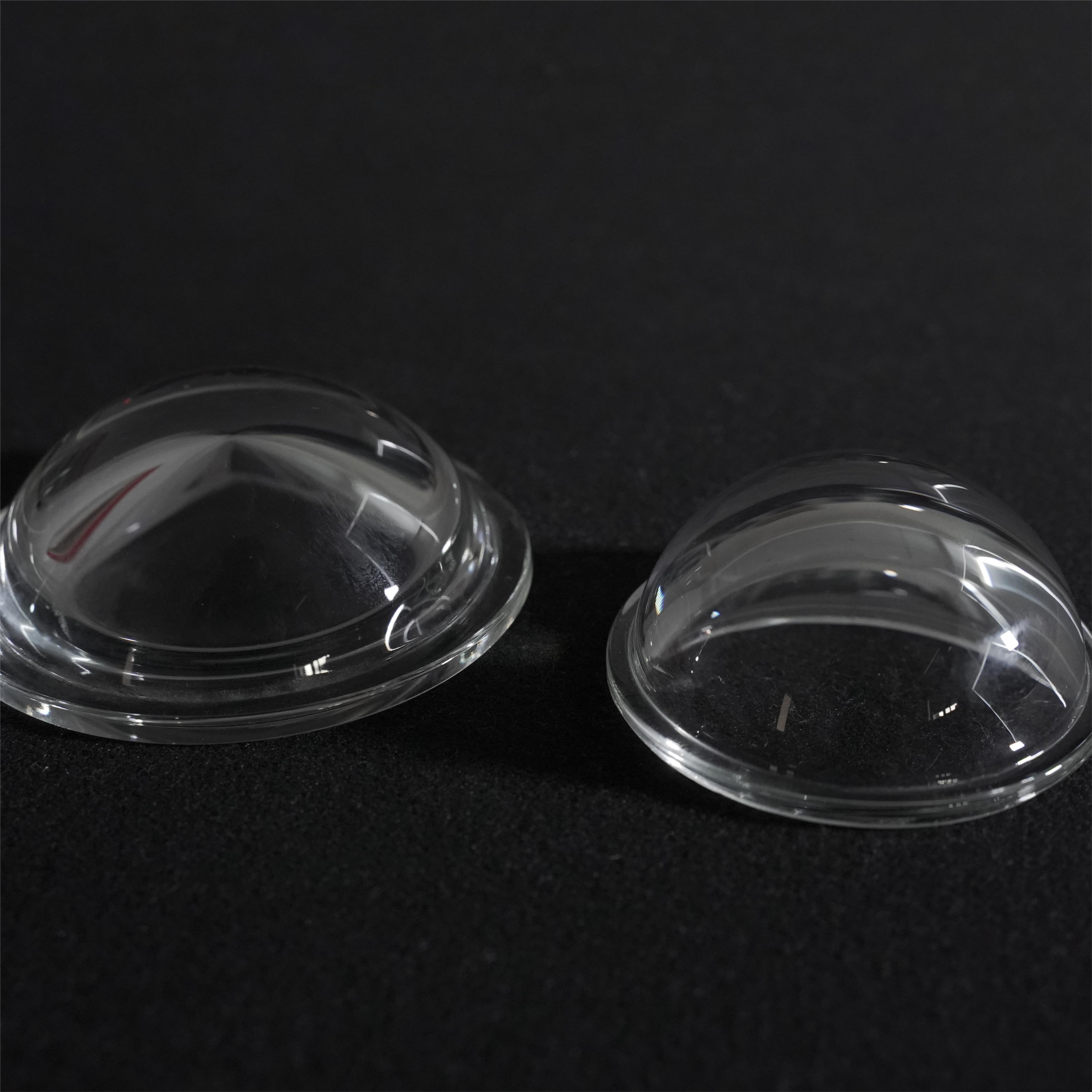
Core Evaluation Dimensions for Lens Materials
Refractive Index (nd) and Light Bending Power
The refractive index measures how much a material bends light as it enters from a vacuum or air. It directly impacts lens thickness and surface curvature. Higher index materials allow for thinner, lighter lenses to achieve the same focal length. This is a primary design trade-off. However, high-index materials often introduce higher dispersion. They also typically incur higher manufacturing costs due to the rare earth elements required in the melt. Engineers must balance physical profile requirements with optical performance.
When designing a compact camera objective, space is severely limited. A standard index glass like N-BK7 (nd = 1.516) might require steep curves to achieve the necessary optical power. Steep curves are harder to manufacture and introduce spherical aberration. Switching to a high-index glass like N-LASF9 (nd = 1.850) allows for shallower curves. This reduces spherical aberration and physical thickness. However, the designer must now manage the increased chromatic dispersion inherent to the high-index material.
Abbe Number (Vd) and Chromatic Dispersion
The Abbe number measures a material's chromatic dispersion. It indicates how the refractive index varies with different wavelengths of light. A lower Abbe number means higher dispersion. There is an inverse relationship between refractive index and Abbe number. High-index materials usually exhibit worse dispersion. This causes color fringing in imaging systems, where different colors focus at different planes. Designers use specific material combinations to correct this aberration.
We quantify dispersion using the Vd value, calculated from the refractive indices at the Fraunhofer d, F, and C spectral lines. A Vd value above 50 generally indicates low dispersion. A value below 50 indicates high dispersion. When white light passes through a high-dispersion lens, the blue wavelengths bend more than the red wavelengths. This longitudinal chromatic aberration ruins image sharpness. We mitigate this by pairing a positive lens made of low-dispersion glass with a negative lens made of high-dispersion glass.
Wavefront Integrity and Infinity Focus Maintenance
Spatial variations in the refractive index cause wavefront degradation. Poor homogeneity distorts the light passing through the glass. This has a severe practical impact on imaging systems. It causes an inability to maintain precise infinity focus. It also leads to a noticeable degradation of the Modulation Transfer Function (MTF). High-quality materials maintain wavefront integrity for sharp imaging. We measure this integrity using interferometry, looking for peak-to-valley errors across the clear aperture.
If a glass blank has a refractive index gradient from its center to its edge, it acts as a weak, unintended lens. This gradient alters the optical path length of rays passing through different zones. In a laser targeting system, this wavefront distortion causes the beam to diverge or wander. The system loses its ability to focus energy onto a tight spot at infinity. Specifying a high homogeneity class (e.g., H4 or H5) guarantees the index variation remains below 2 x 10^-6, preserving the wavefront.
Transmission Spectra (UV, Visible, IR)
Different glass types absorb specific wavelengths of light. You must match the glass transmission curve to the system's operational wavelength. Standard glass blocks ultraviolet light. You must avoid standard materials for UV applications. Infrared systems require entirely different substrates. Evaluating the transmission spectra prevents signal loss and system inefficiency. We look at internal transmittance data, which excludes surface reflection losses, to judge the raw material's capability.
For a fluorescence microscope operating at 365nm, standard N-BK7 is useless because its transmission drops off sharply below 400nm. We must specify fused silica or specialized UV-transmitting glasses. Conversely, a thermal imaging camera operating in the 8-12 micron band cannot use silica-based glass at all. It requires materials like Germanium or Zinc Selenide. Matching the substrate to the spectral band is the first step in any optical design process.
Density, Lens Diameter, and Weight Constraints
The physical weight of the optical assembly depends on material density and lens diameter. Larger clear apertures exponentially increase mass. Glass density becomes a critical pass/fail metric in weight-sensitive applications. Aerospace systems, drones, and wearable devices require lightweight solutions. Selecting a lower density lens material helps meet strict weight constraints without sacrificing optical power.
Consider a large aerial reconnaissance lens with a 200mm front element. If we use a dense flint glass (density > 4.5 g/cm3), the front element alone could weigh several kilograms. This shifts the center of gravity and requires heavier mounting hardware and stronger stabilization motors. By redesigning the system to utilize lighter crown glasses (density ~ 2.5 g/cm3) where possible, we drastically reduce the payload weight. We must always calculate the volume and mass of each element during the material selection phase.
| Property | Impact on System | Design Consideration |
| Refractive Index (nd) | Lens thickness and surface curvature | High index reduces physical weight but increases dispersion. |
| Abbe Number (Vd) | Color fringing (chromatic aberration) | Requires pairing different glasses to correct focal shifts. |
| Density (g/cm3) | Total assembly weight and center of gravity | Critical for aerospace payloads and portable devices. |
| Homogeneity | Wavefront distortion and MTF degradation | Specify high classes for laser and high-res imaging. |
| Internal Transmittance | Signal strength and image brightness | Match the material to the specific operational wavelength band. |
Categorizing Optical Glass by Application and Performance
Crown Glass vs. Flint Glass
Optical materials fall into two foundational categories based on their position on the Abbe diagram. Crown glass features a low refractive index and low dispersion. Flint glass features a high refractive index and high dispersion. Engineers combine them to create achromatic doublets. This combination corrects chromatic aberration effectively. It forms the basis of most broadband imaging systems. The positive crown element provides the focusing power, while the negative flint element corrects the color spread.
Historically, the distinction came from the manufacturing process. Crown glass was blown into a crown shape, while flint glass used crushed flint as a silica source. Today, the distinction is purely numerical. Glasses with an Abbe number greater than 50 (or 55 for lower indices) are crowns. Those below are flints. We use hundreds of variations, such as Barium Crowns (BaK) or Lanthanum Flints (LaF), to fine-tune optical designs. Each sub-category offers a specific balance of index and dispersion.
Fused Silica and Quartz
Fused silica and quartz excel in high-stress environments. They handle high-power laser applications reliably due to their high laser damage threshold. They offer superior UV transmission compared to standard materials, remaining clear down to 200nm. They also possess an exceptionally low Coefficient of Thermal Expansion (CTE). This makes them highly stable under extreme temperature fluctuations. When a system must operate in a vacuum chamber or a high-altitude environment, fused silica is often the only viable choice.
The low CTE of fused silica (around 0.5 x 10^-6 /K) means it barely changes shape when heated or cooled. This is vital for large astronomical mirrors or precision reference flats. If a mirror substrate expands unevenly, the reflected wavefront distorts. Fused silica maintains its figure under thermal loads. Furthermore, its high purity eliminates the microscopic absorption centers that cause thermal lensing in high-power laser systems.
Specialty and Infrared Glasses
Advanced applications require specialty materials outside the standard visible spectrum. Chalcogenide glasses, Germanium, and Fluorite serve unique roles. They are essential for thermal imaging and infrared optics. They also provide ultra-low dispersion for specialized visible systems. Standard materials fail completely in these specific use cases because they are opaque to infrared wavelengths. We must use these exotic materials to build lenses for night vision, heat-seeking sensors, and CO2 laser delivery systems.
Germanium is the workhorse of the mid-to-long wave infrared (MWIR and LWIR) bands. It has a massive refractive index (around 4.0), allowing for very thin lenses. However, it is completely opaque to visible light and highly temperature-sensitive. At elevated temperatures, Germanium suffers from thermal runaway, becoming opaque to IR light as well. In these hot environments, we switch to Chalcogenide glasses. Chalcogenides offer better thermal stability and can be molded, reducing manufacturing time for complex aspheric shapes.
Engineering Trade-Offs and Overall Value Factors
Optical Performance vs. Machinability
A material's Knoop hardness directly affects manufacturing costs and lead times. Softer, high-performance glasses are harder to polish accurately. They are more prone to scratching during handling and assembly. They are also more expensive to yield in high volumes because the polishing process takes longer and requires specialized slurries. Engineers must weigh optical benefits against production realities. Specifying a soft fluorophosphate glass might perfect the optical design, but it will drastically increase the scrap rate.
Harder glasses, like fused silica or sapphire, take longer to grind but hold their shape exceptionally well during polishing. They achieve superior surface roughness (measured in angstroms) and tight surface figure tolerances. Softer glasses tend to "sleek" or scratch easily. Opticians must use slower spindle speeds and softer pitch laps to work them. We always review the stain resistance and acid resistance ratings alongside hardness to determine how the glass will behave in the optical shop.
Thermal Stability vs. Optical Clarity
Temperature fluctuations impact both refractive index and physical shape. The change in index over temperature (dn/dT) affects focal stability. The CTE dictates physical expansion. Selecting thermally stable materials often requires a trade-off. You may have to accept lower baseline transmission to achieve thermal stability. Athermalization is the process of designing an optical system that maintains focus across a wide temperature range.
We achieve athermalization by balancing the dn/dT and CTE of the glass elements with the expansion of the metal housing. If the housing expands and moves the lenses apart, the glass's refractive index must change just enough to compensate for that movement. Sometimes, the glass with the perfect dn/dT for athermalization has poor transmission in the desired waveband. We must then decide whether to accept the transmission loss or implement an active, motorized focus mechanism to compensate for thermal drift.
Bare Glass vs. Advanced Optical Coatings
Bare glass has severe physical limitations. Reflection loss at each interface degrades overall performance. A standard glass surface reflects about 4% of incident light. Cumulative transmission loss in multi-element systems is significant. Binoculars or compound camera lenses are virtually unusable without anti-reflective coatings. Coatings improve overall transmission and protect the substrate. However, they introduce new variables. You must consider coating adhesion, laser damage threshold, and thermal mismatch between the coating and the substrate.
In a system with 10 lens elements (20 surfaces), bare glass would transmit only about 44% of the light. The reflected light bounces around inside the barrel, creating ghost images and reducing contrast. We apply thin-film dielectric coatings to reduce surface reflection to below 0.5% per surface. We also apply protective hard coatings to soft glasses to improve their durability. The coating engineer must match the coating materials to the glass substrate's CTE to prevent the coating from crazing or peeling under thermal stress.
Implementation Risks and Mitigation Strategies
Environmental Degradation and Chemical Resistance
Moisture and chemical exposure pose significant risks in harsh environments. Humidity can cause staining or dimming on glass surfaces. This is known as "glass disease," where water leaches alkali ions from the glass matrix. You must mitigate these risks during the design phase. Specify appropriate climatic resistance classes for your materials. Utilize protective windows to shield sensitive internal components from salt fog, acidic rain, or industrial solvents.
Glass manufacturers provide chemical resistance data, including climatic resistance (CR), stain resistance (FR), acid resistance (SR), and alkali resistance (AR). A glass with a poor CR rating will quickly develop a cloudy film if left in a humid environment. We mitigate this by placing sensitive glasses deep inside sealed, nitrogen-purged optical barrels. We use highly resistant materials, like sapphire or fused silica, for the external objective lenses and protective windows.
Mechanical Stress and Mounting Considerations
Mounting optics too tightly introduces severe risks. It causes stress-induced birefringence, which distorts light and ruins polarization states. Shock and vibration also induce mechanical stress during transport or operation. Proper optomechanical design is the primary mitigation strategy. Utilize athermalization techniques to manage expansion. Select materials with appropriate tensile strength for the application. Use elastomeric potting compounds to isolate the glass from metal housings.
When a metal retaining ring clamps down on a glass lens, it exerts radial and axial forces. If the temperature drops, the metal housing shrinks faster than the glass, increasing the compressive load. This stress alters the refractive index locally, creating a wavefront error. We design flexure mounts or use RTV silicones to absorb this differential expansion. We also calculate the maximum allowable stress based on the glass's fracture toughness to ensure it survives shock testing.
Supply Chain and Lead Time Realities
Specifying rare or proprietary glass melts introduces supply chain risks. Single-source manufacturers can cause severe production delays if a specific melt fails quality control. You must ensure supply chain resilience from the start. Design systems using standard, cross-referenced glass equivalents. Use equivalent materials from major manufacturers to maintain production flexibility. Do not lock your design into a glass type that is only poured once every two years.
Optical design software allows us to substitute equivalent glasses from different catalogs (e.g., Schott, Ohara, Hoya, CDGM). While the exact refractive index might vary by a few digits in the fourth decimal place, we can usually re-optimize the lens curvatures to accommodate the equivalent material. We always check the melt frequency and availability status of a glass before finalizing the design. Specifying "preferred" or "standard" glasses ensures steady availability and lower raw material costs.
Conclusion
Selecting precision optics is not a search for a perfect material. It requires balancing optical, mechanical, and environmental variables for your specific use case. You must evaluate the entire system's operational envelope before committing to a glass type. Follow these actionable next steps to finalize your material selection:
- Define your operational wavelength and transmission requirements to eliminate incompatible substrates immediately.
- Determine the necessary refractive index and dispersion limits to achieve your optical resolution targets.
- Calculate the physical weight constraints based on density and clear aperture to ensure mechanical feasibility.
- Review the chemical resistance and thermal properties to guarantee survival in the intended environment.
- Consult with an optical manufacturing partner early in the design phase to verify machinability and supply chain availability.
FAQ
Q: What is the exact difference between optical glass and regular industrial glass?
A: Optical materials undergo stringent manufacturing controls to ensure high homogeneity and precise refractive index control. They utilize advanced process features like continuous stirring and fine annealing to eliminate internal defects like striae, bubbles, and birefringence. Regular industrial glass lacks these controls, leading to light scattering, wavefront distortion, and unpredictable optical performance.
Q: How do density and lens diameter affect the selection of optical glass?
A: Density and lens diameter directly dictate the final weight of the optical assembly. Larger clear apertures exponentially increase mass. This is crucial for mobile and aerospace applications, where weight constraints are strict. Selecting lower density materials helps meet these critical weight requirements without sacrificing optical power.
Q: Why are optical coatings necessary for precision optics and multi-element systems?
A: Bare glass loses light to surface reflection at every interface. In multi-lens systems like binoculars, this cumulative loss severely degrades image brightness and contrast. Anti-reflective coatings are mandatory to maximize light transmission, eliminate ghost images, and make complex optical systems usable.
Q: Why does low-quality optical glass degrade infinity focus and image clarity?
A: Low-quality materials suffer from poor homogeneity and internal defects. These spatial variations in the refractive index distort the incoming wavefront. This distortion leads to focal shift, severe image degradation, and an inability to maintain precise infinity focus across the field of view.
Q: What is the best lens material for infrared applications?
A: Standard glass blocks infrared wavelengths. Infrared applications necessitate specialized materials that transmit IR light effectively. Common choices include Germanium, Zinc Selenide, and Chalcogenide glasses. The specific choice depends on the exact IR band, thermal environment, and required mechanical durability.
Q: Can optical glass degrade over time?
A: Yes, it can degrade due to environmental factors. High humidity can cause "glass disease" or surface staining, which ruins transmission by leaching ions from the glass matrix. It is crucial to evaluate chemical resistance ratings and specify appropriate protective coatings or windows for harsh environments.
Q: How do you measure the quality of a finished optical glass component?
A: Quality is measured using standard metrology techniques. Interferometry assesses surface accuracy and wavefront distortion. Spectrophotometry verifies the transmission spectra across specific wavelengths. Visual inspection under controlled lighting evaluates surface defects like scratches and digs according to MIL-PRF-13830B standards.
 English
 العربية
 Français
 Русский
 Español
 Português
 Deutsch
 italiano
 日本語
日本語 한국어
한국어 Nederlands
 Tiếng Việt
 ไทย
ไทย Polski
 Türkçe
 አማርኛ
አማርኛ ພາສາລາວ
 ភាសាខ្មែរ
 Bahasa Melayu
 ဗမာစာ
ဗမာစာ தமிழ்
தமிழ் Filipino
 Bahasa Indonesia
 magyar
 Română
 Čeština
 Монгол
 қазақ
қазақ Српски
 हिन्दी
 فارسی
فارسی Kiswahili
 Slovenčina
 Slovenščina
 Norsk
Norsk Svenska
 українська
 Ελληνικά
 Suomi
Suomi Հայերեն
 עברית
עברית Latine
 Dansk
Dansk اردو
اردو Shqip
Shqip বাংলা
বাংলা Hrvatski
 Afrikaans
 Gaeilge
 Eesti keel
 Māori
Māori


