Material failure in high-stress engineering environments leads to catastrophic operational downtime, equipment damage, and severe safety liabilities. Engineers must balance optical clarity and environmental monitoring requirements with extreme mechanical load, impact, and thermal stress demands where standard annealed glass fails. Standard glazing materials simply cannot survive the dynamic forces present in modern heavy-duty applications. When a viewing port blows out on a pressurized chemical reactor or a heavy machinery cabin shatters under impact, the resulting damage halts production and endangers personnel.
This technical evaluation compares tempered glass against alternative solutions, focusing on structural capabilities, implementation constraints, and compliance with strict safety standards. You will learn how to specify the correct glass substrate, navigate fabrication limitations, and mitigate spontaneous breakage risks in critical infrastructure projects. We base this analysis on field-tested engineering principles and direct site implementation experience.
- Thermal tempering induces permanent compressive surface stress, allowing the material to withstand up to 24,000 PSI and extreme thermal shock.
- Raw material composition (such as soda-lime silicate vs. specialty borosilicate substrates) dictates the baseline thermal and chemical performance prior to the tempering process.
- Strict fabrication sequencing is required: all cutting, drilling, and edging must be finalized before the tempering process to prevent immediate structural failure.
- Material selection depends heavily on specific compliance standards for safety glass across architectural, mining, and heavy manufacturing applications.
- Engineers must evaluate the trade-offs between fully tempered glass, heat-strengthened glass, and laminated alternatives to optimize for both cost, structural load, and failure-mode containment.
The Engineering Physics of Tempered Glass
Raw Material Substrates
Engineering applications require specific baseline materials before thermal processing begins. Soda-lime silicate serves as the standard substrate for most commercial and industrial applications. It offers excellent optical clarity and baseline durability for standard structural glazing. Specialized environments demand advanced formulations. Borosilicate glass provides superior resistance to extreme thermal gradients, making it the standard for high-temperature sight glasses. Aluminosilicate formulations deliver exceptional chemical resistance and surface hardness for aggressive chemical processing environments. You must select the correct raw substrate based on environmental exposure before initiating the tempering sequence, as the thermal treatment locks in the base material's chemical properties.
Thermal Tempering Process Mechanics
The tempering process transforms fragile annealed glass into a highly durable structural material. Fabricators heat the cut and edged glass panels in a specialized furnace. Temperatures reach approximately 600°C to 620°C. The glass becomes slightly plastic at this stage, allowing internal stresses to relax. High-pressure air nozzles then rapidly cool the glass surfaces in a process called quenching. The outer surfaces cool and contract immediately, forming a rigid skin. The inner core remains hot and cools much slower, pulling against the already-solidified outer layers.
Compressive vs. Tensile Stress Profiles
This differential cooling rate creates a permanent state of locked-in stress. The rapidly cooled outer surfaces go into deep compression. The slowly cooling inner core goes into tension to compensate. Fully tempered glass requires a minimum surface compression of 10,000 PSI. This compressive layer acts as a structural shield. Applied forces must first overcome this massive compressive stress before they can exert tension on the glass structure. In field applications, this means a panel can take a significant physical strike or wind load without the surface tension ever reaching the point of failure.
Fragmentation and Failure Modes
The locked-in stress profile dictates how the material behaves upon failure. When a severe impact penetrates the compressive surface layer, the entire panel releases its stored energy instantly. The glass fractures into small, relatively harmless, dice-like fragments. It does not break into sharp, jagged shards. This predictable fragmentation pattern defines it as a true safety glass. It protects operators and bystanders from severe laceration hazards. We rely on this specific failure mode in high-traffic areas to ensure that if a panel does fail, the resulting debris field does not cause secondary injuries.
Baseline Performance Metrics
Engineers rely on strict performance thresholds when specifying materials. Fully tempered panels exhibit a mechanical strength capable of withstanding up to 24,000 PSI. The modulus of rupture increases significantly compared to untreated glass. Thermal shock resistance improves dramatically. The material can survive sudden temperature differentials of up to 250°C without fracturing. These metrics form the baseline for structural glazing calculations. When designing a curtain wall or a heavy equipment enclosure, these numbers dictate the required panel thickness and the maximum allowable unsupported span.
| Performance Metric | Standard Annealed Glass | Fully Tempered Glass | Field Application Benefit |
| Mechanical Strength | ~3,500 PSI | Up to 24,000 PSI | Withstands heavy wind loads and physical impacts. |
| Thermal Shock Resistance | ~40°C differential | Up to 250°C differential | Survives rapid heating/cooling in industrial ovens. |
| Surface Compression | Minimal | > 10,000 PSI | Resists surface scratching and point-load failures. |
Framing the Core Problem: When Standard Industrial Glass Fails
Vulnerabilities to Wind Pressure and Thermal Stress
Standard annealed glass lacks the structural integrity for dynamic industrial environments. High wind loads cause significant panel deflection. This deflection creates bending stress that easily exceeds the low tensile strength of untreated glass. Localized thermal gradients cause similar failures. When one section of an annealed panel heats up in direct sunlight while the edges remain cool inside an aluminum frame, thermal expansion occurs unevenly. This creates severe thermal stress cracking, often starting at the edge and running straight through the center of the panel.
Impact Resistance Deficits in Heavy Machinery
Heavy machinery operates in hostile environments. Mining excavators, forestry harvesters, and manufacturing loaders face constant hazards. Flying debris, extreme mechanical vibrations, and direct projectile impacts easily destroy standard glass. An operator cabin glazed with annealed glass offers zero protection against a deflected rock or a snapped steel cable. The lack of impact resistance directly threatens operator survival. We have seen standard glass fail from simple gravel kick-up on construction sites, proving it entirely inadequate for heavy equipment.
Dangerous Fragmentation Behavior
When standard industrial glass fails, the results are catastrophic. Annealed glass breaks into large, heavy, and razor-sharp shards. A structural failure at height results in lethal, high-velocity shard dispersion. These jagged pieces act as guillotines. They sever cables, destroy sensitive equipment, and cause fatal injuries to personnel below. You cannot use non-tempered materials where human interaction or equipment proximity is a factor. The risk profile is simply too high for any responsible engineering design.
The Cost of Non-Compliance
Utilizing non-rated glass materials in high-traffic zones carries immense risk. Building codes and industrial safety regulations strictly mandate rated safety materials. Non-compliance leads to severe legal liabilities following an accident. Regulatory bodies will halt operations immediately upon discovering unrated glazing in critical areas. Engineers must specify compliant materials to protect the facility from both physical and legal disasters. Replacing unrated glass after a failed inspection costs significantly more than specifying the correct material during the initial design phase.
- Identify all high-traffic zones requiring safety glazing.
- Calculate maximum expected wind and impact loads.
- Determine thermal gradient exposure for exterior panels.
- Verify local building code requirements for fragmentation.
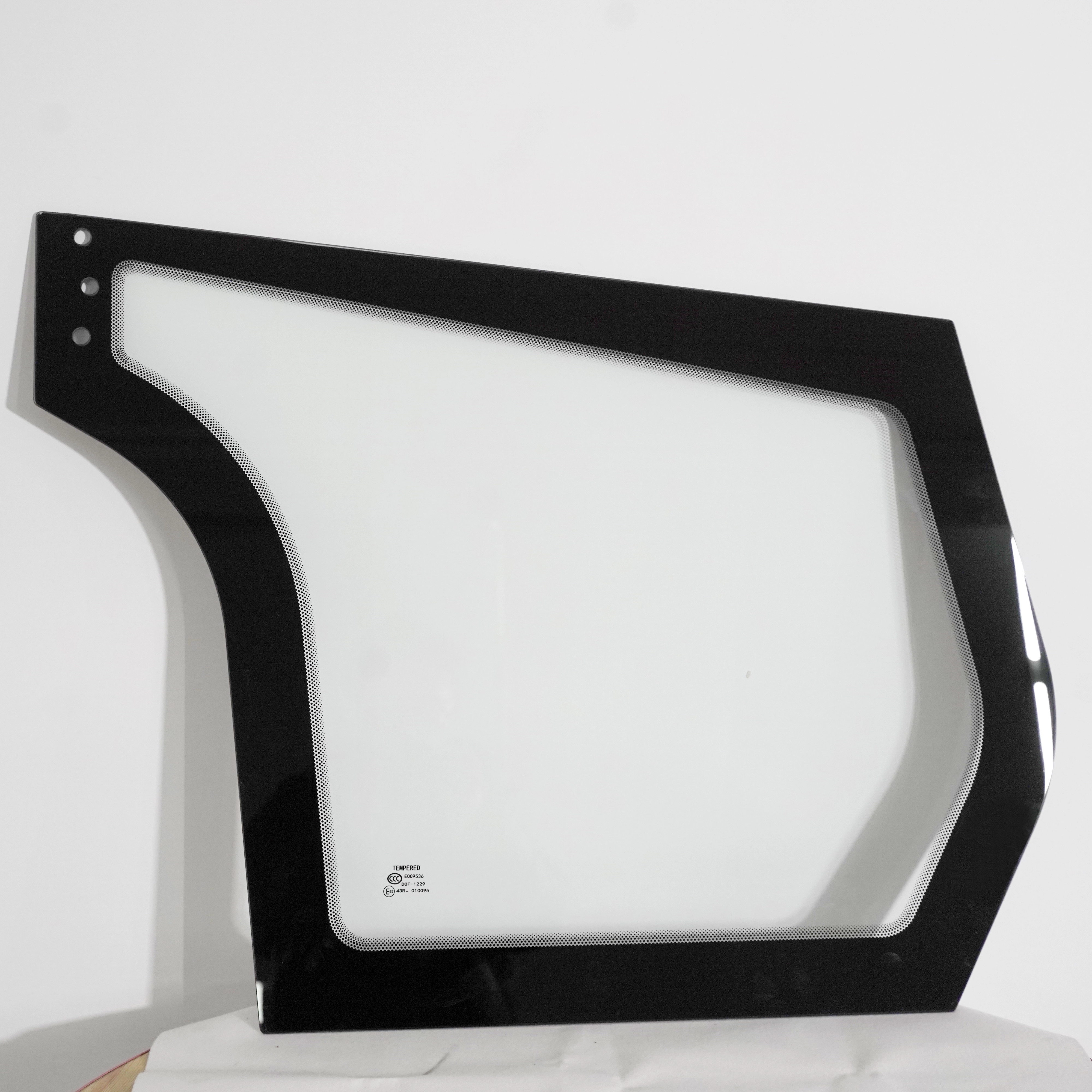
Evaluation Dimensions: Matching Glass Specifications to Engineering Outcomes
Mechanical Strength and Load-Bearing Capacity
The 24,000 PSI threshold directly translates to superior load-bearing capabilities. Engineers utilize this strength for structural glazing applications. Point-supported facades rely on the material to transfer wind and dead loads back to the building structure through specialized stainless steel spiders. Floor panels and stair treads require massive static load resistance. You must calculate the exact panel thickness required to manage expected dynamic loads without exceeding the material's deflection limits. A 12mm tempered panel behaves vastly differently under a point load than a 6mm panel, requiring precise engineering calculations.
Thermal Shock and Temperature Differentials
Industrial processing facilities generate extreme heat. Industrial ovens, chemical reactors, and high-intensity lighting systems subject viewing ports to rapid temperature cycling. Tempered Glass handles these rapid temperature differentials safely. It resists the thermal stress that would instantly shatter standard glass. Exterior building envelopes also benefit. The material withstands the thermal shock of sudden rainstorms hitting sun-baked facades. We frequently specify this material for boiler sight glasses where internal temperatures fluctuate wildly compared to the ambient room temperature.
Optical Clarity vs. Distortion
The thermal tempering process inherently alters the optical properties of the glass. As the hot glass travels over ceramic rollers in the furnace, it develops slight surface waves. Engineers call this roller wave distortion. You must specify acceptable tolerances for bow and warp during the design phase. Anisotropy, or strain patterns, may appear as dark spots under polarized light. These optical phenomena are unavoidable byproducts of the required structural strengthening. When designing high-end architectural facades, we orient the roller waves horizontally to minimize visual disruption from ground level.
Environmental and Chemical Resistance
Industrial contexts expose materials to harsh degradation. Abrasive environmental particulates scratch and weaken standard surfaces. Chemical exposure in processing plants degrades inferior substrates. Acidic washdowns used for facility sanitation require highly resilient viewing panels. Properly specified tempered substrates maintain their surface integrity and optical clarity despite continuous exposure to these aggressive environmental factors. For extreme chemical environments, we combine the tempering process with a borosilicate substrate to achieve maximum longevity.
Industrial and Architectural Applications
Heavy Industry and Mining Equipment
Heavy industry demands uncompromising material performance. Operator cabins on mining dump trucks require thick, high-impact safety barriers. Protective blast shields in quarry operations utilize multi-layer tempered configurations. Heavy machinery cabins rely on the material to protect operators from flying rock, snapped chains, and environmental hazards. The glass must survive continuous heavy vibration without fatiguing. We mount these panels using heavy-duty rubber gaskets to isolate the glass from the rigid steel frames, preventing vibration-induced edge failure.
Architectural Glass in High-Wind Load Environments
Modern building design relies heavily on structural glazing. Building facades and structural curtain walls utilize large-format panels to resist hurricane-force wind loads. Skylights demand high load-bearing capacity to support snow loads and maintenance personnel. High-traffic commercial entryways require durable architectural glass to withstand constant physical impact and thermal cycling. The material provides both structural integrity and aesthetic clarity. In coastal regions, we specify thicker tempered panels to meet strict missile-impact testing requirements for hurricane zones.
Transportation and Transit Engineering
Transit engineering presents unique dynamic challenges. Marine vessels endure massive wave impacts and constant hull flexing. Railway cars face extreme pressure fluctuations when entering tunnels at high speeds. Off-highway utility vehicles navigate rough terrain, subjecting their cabins to intense torsional stress. Engineers specify tempered panels for these applications to ensure passenger safety and maintain structural envelope integrity. The glass must flex slightly with the vehicle frame without reaching its breaking point.
Manufacturing and Processing Facilities
Automated manufacturing environments require clear, durable physical barriers. Chemical viewing ports allow operators to monitor dangerous reactions safely. High-temperature furnace enclosures utilize specialized tempered substrates to contain heat while providing visibility. Automated robotic assembly lines require protective safety barriers. These barriers prevent personnel from entering active robotic work envelopes while allowing continuous visual monitoring of the production line. We use modular tempered panels in aluminum extrusions to build these safety cells quickly and securely.
Conceptual Trade-offs and Value-Influencing Factors
Fully Tempered vs. Heat-Strengthened Glass
Engineers must choose between different heat-treating processes based on application requirements. Fully tempered panels offer surface compression exceeding 10,000 PSI. They break into small, safe dice. Heat-strengthened glass undergoes a slower cooling process. It achieves a surface compression between 3,500 and 7,500 PSI. Heat-strengthened glass avoids the risk of spontaneous breakage. However, it breaks into larger shards and does not qualify as a safety glazing material on its own. We use heat-strengthened glass in spandrel applications where safety glazing is not mandated, but thermal stress resistance is required.
Tempered vs. Laminated Safety Glass
Selecting the right safety material involves evaluating post-breakage behavior. Tempered panels offer superior standalone structural integrity and impact resistance. However, once broken, the panel vacates the opening entirely. Laminated glass utilizes a polymer interlayer sandwiched between glass plies. It retains glass fragments after breakage, maintaining a physical barrier. Engineers often specify hybrid configurations. A tempered-laminated hybrid provides both extreme impact resistance and post-breakage containment. We mandate tempered-laminated glass for overhead skylights to prevent glass from falling onto occupants if a panel breaks.
Cost Implications of Pre-Fabrication
Implementing tempered solutions requires rigorous upfront planning. You cannot modify the glass on-site. This limitation necessitates precise CAD engineering and site surveying before fabrication begins. Any dimensional error discovered during installation requires a complete panel remanufacture. This strict pre-fabrication requirement increases initial engineering costs. However, it ensures exact tolerances and superior structural performance upon final installation. We spend extra time verifying field measurements to avoid the costly delays associated with re-ordering tempered panels.
| Glass Type | Surface Compression | Breakage Pattern | Thermal Shock Resistance | Safety Glazing Rating |
| Fully Tempered | > 10,000 PSI | Small, blunt dice | High (up to 250°C) | Yes |
| Heat-Strengthened | 3,500 - 7,500 PSI | Large, interlocking pieces | Medium (up to 130°C) | No |
| Standard Annealed | < 3,500 PSI | Sharp, jagged shards | Low (approx. 40°C) | No |
Implementation Risks and Mitigation Strategies
The "No Post-Tempering Modification" Rule
You must finalize all physical modifications before the glass enters the tempering furnace. The "no post-tempering modification" rule is absolute. Attempting to cut, drill, or edge-polish a tempered panel will cause immediate and explosive shattering. The locked-in stress releases instantly upon surface penetration. Engineers must verify all fabrication drawings, hole locations, and edge clearances meticulously before signing off on production. We require sign-off from both the structural engineer and the installation foreman before releasing shop drawings to the fabricator.
Spontaneous Breakage Risks
Spontaneous breakage presents a critical risk in high-consequence applications. Microscopic nickel sulfide (NiS) inclusions can form during raw glass manufacturing. These inclusions expand slowly over time, eventually causing the tempered panel to shatter without any applied load. You mitigate this risk through heat-soaking (HST). The fabricator places the tempered panels in a testing oven at 290°C for several hours. This process forces defective panels containing NiS inclusions to break in the factory, ensuring only sound panels reach the job site. We mandate heat-soaking for all inaccessible exterior glazing.
Edge Damage Vulnerability
The edges of a tempered panel remain its most vulnerable structural point. An impact to the face of the glass requires massive force to cause failure. A minor impact to the edge can shatter the entire panel easily. Design strategies must isolate the glass edges from hard surfaces. Engineers utilize protective framing, setting blocks, and dense neoprene gaskets. These components absorb structural movement and prevent direct contact between the glass edge and the metal framing. During installation, we use specialized suction cups and edge protectors to maneuver the panels safely.
Supply Chain and Vendor Certification
Material quality relies entirely on the fabricator's process control. You must establish strict criteria for auditing glass fabricators. Ensure the vendor complies with international industrial standards. Require certification for ANSI Z97.1, CPSC 16 CFR 1201, EN 12150, and ASTM C1048. Sourcing reliable industrial glass demands verifiable testing data. Request documentation for roller wave distortion limits, compression testing, and heat-soak validation before approving a supplier. We physically inspect the fabricator's tempering furnace and quality control logs before awarding large contracts.
Conclusion
- Audit current material failure points across your facility to identify areas requiring immediate glazing upgrades.
- Finalize all dimensional tolerances, hole placements, and CAD drawings before submitting orders to the fabricator.
- Request technical data sheets and compliance certificates from certified industrial glass fabricators for prototype testing.
- Implement mandatory heat-soaking protocols for any installations located in high-altitude, high-temperature, or hard-to-access environments.
FAQ
Q: What is the maximum continuous operational temperature tempered glass can withstand?
A: Fully tempered glass can typically withstand continuous operational temperatures up to 250°C (482°F). It handles rapid thermal shock and significant temperature differentials far better than standard annealed glass, making it suitable for industrial ovens and processing viewing ports.
Q: Can tempered glass be cut, drilled, or beveled after the thermal tempering process?
A: No. Any attempt to cut, drill, or modify the edges of tempered glass will cause the panel to shatter instantly. All fabrication work must be completed precisely before the glass enters the tempering furnace.
Q: What is the structural difference between fully tempered glass, heat-strengthened glass, and safety glass?
A: Fully tempered glass has surface compression over 10,000 PSI and shatters into safe dice, qualifying as safety glass. Heat-strengthened glass has lower compression (3,500–7,500 PSI), breaks into larger shards, and does not qualify as safety glass on its own.
Q: How does thermal tempering affect the optical quality and distortion levels of architectural glass?
A: The tempering process introduces minor optical distortions. As the hot glass moves over ceramic rollers, it develops slight surface waves known as roller wave distortion. It may also show strain patterns, called anisotropy, visible under polarized light.
Q: Why is heat-soaking recommended for critical industrial tempered glass applications?
A: Heat-soaking accelerates the expansion of microscopic nickel sulfide (NiS) inclusions. This destructive testing process forces defective panels to shatter in the factory oven, drastically reducing the risk of spontaneous breakage after installation in the field.
Q: What PSI can industrial-grade tempered glass withstand compared to standard annealed glass?
A: Industrial-grade fully tempered glass can withstand mechanical loads up to 24,000 PSI and requires a minimum surface compression of 10,000 PSI. Standard annealed glass typically fails at loads under 3,500 PSI.
 English
 العربية
 Français
 Русский
 Español
 Português
 Deutsch
 italiano
 日本語
日本語 한국어
한국어 Nederlands
 Tiếng Việt
 ไทย
ไทย Polski
 Türkçe
 አማርኛ
አማርኛ ພາສາລາວ
 ភាសាខ្មែរ
 Bahasa Melayu
 ဗမာစာ
ဗမာစာ தமிழ்
தமிழ் Filipino
 Bahasa Indonesia
 magyar
 Română
 Čeština
 Монгол
 қазақ
қазақ Српски
 हिन्दी
 فارسی
فارسی Kiswahili
 Slovenčina
 Slovenščina
 Norsk
Norsk Svenska
 українська
 Ελληνικά
 Suomi
Suomi Հայերեն
 עברית
עברית Latine
 Dansk
Dansk اردو
اردو Shqip
Shqip বাংলা
বাংলা Hrvatski
 Afrikaans
 Gaeilge
 Eesti keel
 Māori
Māori


