In precision engineering, a component’s failure often begins at a microscopic edge defect. Selecting the right methodology is rarely about simply cutting material. It requires managing internal stress, controlling micro-cracks, and balancing initial tooling investments against secondary finishing requirements. Whether you manufacture chemically strengthened touch panels, thick laminated viewing windows, or micro-optical lenses, your chosen approach directly dictates structural integrity.
Precision glass processing aligns fabrication techniques to distinct material properties. A minor edge flaw can cause catastrophic failure during extreme thermal or mechanical loads. This guide breaks down the core industrial fabrication methodologies available today. We examine traditional mechanical scoring alongside advanced subtractive tools like water jets and ultra-short pulse lasers. We also explore precision thermal molding for high-volume optics. You will learn how to align these distinct manufacturing capabilities with strict operational tolerances.
Key Takeaways
- Mechanical & CNC: Best for cost-effective, high-volume linear cuts, but necessitates secondary edge finishing.
- Water Jet: The premier "cold cut" solution for thick, laminated, or complex geometries, guaranteeing zero heat-affected zones (HAZ).
- Laser Filamentation: Ideal for ultra-thin and chemically strengthened glass, yielding zero micro-cracks and frequently eliminating the need for post-processing.
- Precision Molding: Requires high initial tooling investment but delivers unmatched unit economics for high-volume micro/nano optics.
- Supplier Evaluation: True cost is measured in Total Cost of Ownership (TCO), where yield rates and end-to-end capabilities (cutting, drilling, washing, coating) outweigh raw machining speed.
Establishing Evaluation Criteria for Precision Glass Processing
Before selecting a manufacturing method, teams must build a rigorous evaluation framework. Different materials respond uniquely to mechanical force and thermal energy. You cannot apply a single fabrication standard across all substrate types.
Material Matrix and Thermal Properties
Assess compatibility based on chemical composition and the Glass Transition Temperature (Tg). Standard float materials behave differently than engineered substrates. For instance, borosilicate offers excellent thermal shock resistance. Fused silica provides superior ultraviolet transmission. Aluminosilicate dominates the consumer electronics sector due to its chemical strengthening capabilities. Each variant demands specific tooling. High-Tg materials generally require highly specialized abrasive components or distinct laser wavelengths.
Thickness and Geometry Constraints
You must map your chosen method directly to dimensional constraints. Processing techniques exhibit strict functional boundaries. A femtosecond laser performs flawlessly on a 0.05 mm display panel. However, it fails completely when applied to a 10 mm fused block. Conversely, heavy-duty abrasives destroy ultra-thin substrates instantly. Evaluate your geometry. Intricate inner contours and sharp internal radii rule out traditional scoring entirely.
Defect Tolerance and Heat-Affected Zones (HAZ)
Determine your application's sensitivity to micro-cracks. Aerospace and medical devices operate under strict defect tolerances. Any subsurface micro-crack acts as a propagation point for eventual shattering. You must also evaluate thermal stress vulnerability. Thermal processing induces a Heat-Affected Zone (HAZ). If your material cannot tolerate localized heating without warping or altering its refractive index, you must specify a "cold" processing method.
Post-Processing Dependency
Evaluate edge quality immediately following the primary cut. Many fast fabrication methods leave jagged or micro-fractured edges. These raw edges require mandatory secondary grinding, washing, or polishing steps. Factoring in these secondary steps is crucial. Eliminating post-processing often justifies a higher initial machining cost.
Best Practices for Method Evaluation
- Always request edge-quality sample runs before finalizing equipment or vendor selection.
- Document acceptable micro-crack thresholds in your initial engineering drawings.
- Align processing methods with downstream chemical strengthening steps to prevent spontaneous breakage.
Mechanical Scoring and CNC Glass Cutting Constraints
Mechanical scoring remains the backbone of high-volume architectural and automotive fabrication. However, precision engineering requires a nuanced understanding of its physical limitations.
The Fissure Principle
Mechanical operations do not actually "cut" material. They rely on controlled fissure generation. Machines drag a dense tungsten carbide wheel across the surface. This action creates a microscopic score line. Following this scoring phase, the system applies localized mechanical pressure. The material subsequently breaks along the predefined fissure. Understanding this two-step mechanism is vital for controlling yield rates.
Operational Realities
Execution demands absolute consistency. The machine must complete a single continuous pass. Repeated scoring over the same line creates critical micro-fractures. These fractures compromise edge strength instantly. Furthermore, operators must precisely match tool angles to the specific material thickness. Standard operations utilize 120° to 124° wheel angles. Thinner substrates require sharper angles to prevent lateral cracking.
Limitations in Glass Machining
While standard CNC glass cutting provides rapid throughput for flat sheets, it presents major limitations. It almost universally causes micro-chipping along the breakout edge. This micro-chipping renders the method unsuitable for complex inner contours. Additionally, applying this technique to chemically strengthened substrates poses severe risks. The internal tension of strengthened panels causes them to shatter unpredictably when mechanically scored. Therefore, parts must undergo mechanical shaping before any chemical strengthening occurs.
Common Mistakes in Mechanical Scoring
- Applying excessive downward pressure, which causes lateral splintering rather than a clean fissure.
- Failing to utilize appropriate cutting fluids, leading to accelerated carbide wheel degradation.
- Attempting sharp internal radii cuts without drilling relief holes first.
Advanced Subtractive Methods: Water Jet vs. Laser Cutting
When mechanical scoring falls short, engineers turn to advanced subtractive technologies. Water jets and ultra-short pulse lasers dominate the high-precision landscape. They serve entirely different use cases.
Water Jet (The Cold Alternative)
Water jet systems utilize highly pressurized water mixed with abrasive garnet particles. The system forces this mixture through a tiny jeweled orifice at pressures exceeding 60,000 PSI.
Use Case: This technology excels with thick blocks, multi-layer laminates, and intricate external profiles. It easily handles ballistic-grade panels and architectural composites.
Benefit: The primary advantage is zero thermal stress. Because it erodes material mechanically without generating heat, it eliminates the HAZ entirely. This "cold cut" guarantees no heat-induced shattering or warping. It preserves the integrity of pre-applied optical coatings and laminated interlayers.
Ultra-Short Pulse (USP) Laser Cutting
USP lasers represent the pinnacle of precise glass machining. Instead of burning or melting material (traditional ablation), picosecond or femtosecond lasers modify the internal structure. They create microscopic void arrays deep within the substrate. This process is known as filamentation.
Use Case: USP lasers dominate consumer electronics manufacturing. They efficiently process ultra-thin substrates ranging from 0.05 mm to 10 mm. They also handle chemically strengthened panels with ease.
Benefit: Filamentation achieves a highly vertical, micro-crack-free edge. By avoiding mechanical force, the laser maintains massive inherent part strength. This clean separation frequently eliminates the need for secondary edge grinding or intensive washing.
Comparison Chart: Subtractive Methodologies
| Method | Optimal Thickness | Thermal Stress (HAZ) | Best Application |
| CNC Mechanical Scoring | 1 mm – 12 mm | None | High-volume straight cuts on flat, unstrengthened sheets. |
| Abrasive Water Jet | 5 mm – 150+ mm | None (Cold Cut) | Thick laminates, ballistic panels, complex geometries. |
| USP Laser (Filamentation) | 0.05 mm – 10 mm | Extremely Low | Consumer electronics, wearables, chemically strengthened displays. |
High-Volume Formations: Precision Glass Molding (PGM)
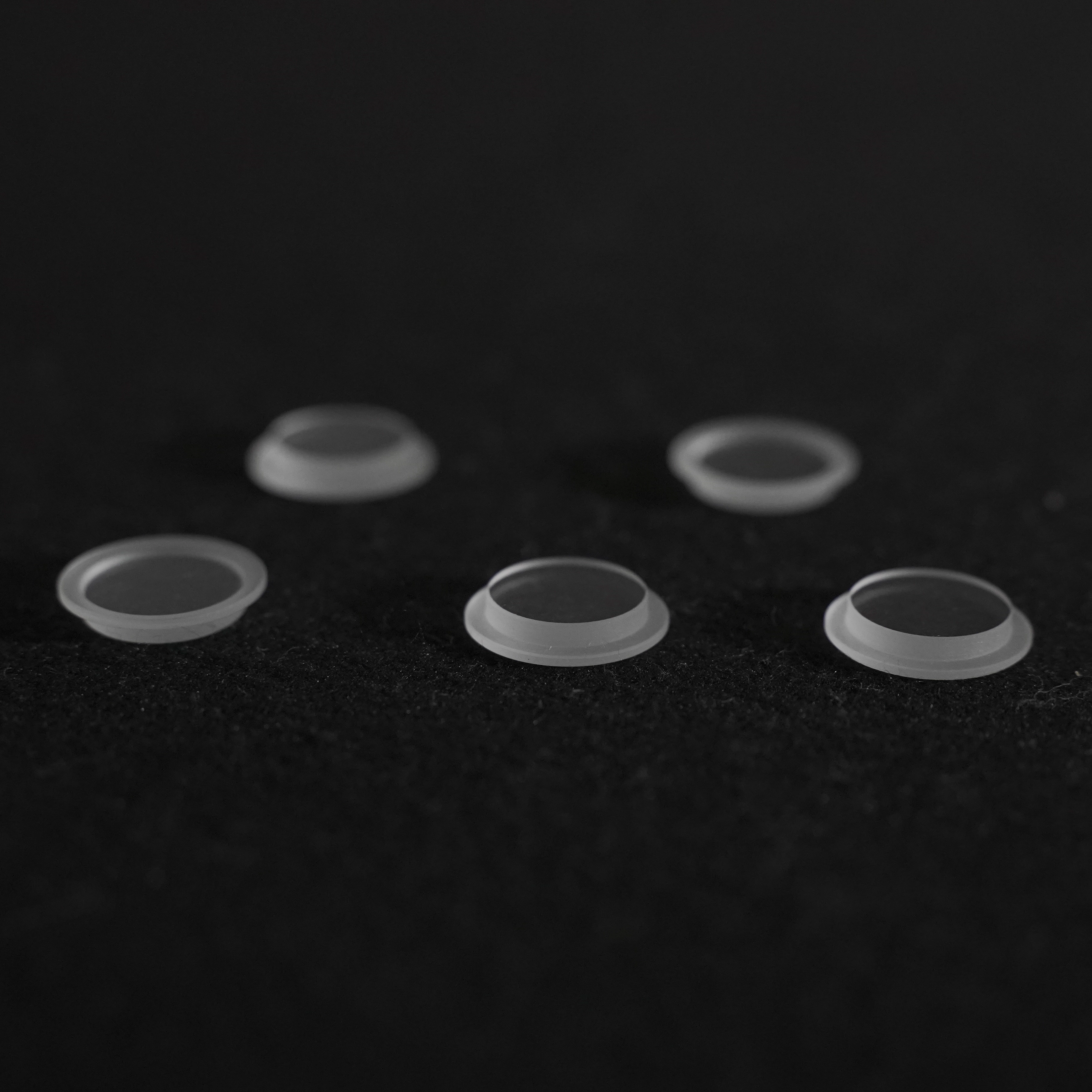
Subtractive methods shape flat panels effectively. However, three-dimensional optical components demand a different approach. Precision Glass Molding (PGM) replaces cutting with thermal forming.
Mechanism over Subtraction
Manufacturing micro-lenses, Fresnel arrays, and micro-gratings via mechanical grinding is prohibitively slow. PGM solves this by heating a preform above its Tg. The system then presses the softened material between high-precision molds. This replicates complex nano-structures instantly. At scale, molding drastically reduces unit costs compared to continuous grinding and polishing.
Mold Material Selection
The success of PGM depends entirely on mold durability. Engineers select mold materials based on the target material's Tg and specific expansion coefficients.
- Tungsten Carbide (WC): This serves as the industry workhorse for high-temperature forming. Through ultra-precision grinding, WC molds achieve an astonishing 5nm surface roughness. They withstand immense pressure but often require protective coatings to prevent adhesion.
- Silicon Carbide (SiC): Engineers use SiC for its exceptional chemical inertness and thermal shock resistance. It maintains structural rigidity at extreme temperatures.
- Glassy Carbon (GC): GC offers distinct anti-adhesion properties. It prevents molten material from sticking to the mold cavity. Furthermore, it boasts an extremely low thermal expansion coefficient, maintaining tight dimensional stability during heating cycles.
Risk Mitigation in Thermal Forming
PGM requires massive initial tooling investments. A single precision mold can cost tens of thousands of dollars. This demands rigorous thermal cycling analysis. Engineers must calculate precise annealing curves. If the molded component cools too rapidly, internal stress fractures will destroy the part. Controlled cooling phases ensure molecular relaxation, preserving ultimate structural strength and refractive consistency.
The Role of Surface Polishing in Optical Performance and Strength
A component is only as strong as its weakest edge. Relying on a raw, unfinished cut introduces unacceptable volatility into precision assemblies.
Edge as a Failure Point
Mechanical strength relies heavily on edge finishing. Micro-cracks act as stress concentrators. When a device bends or drops, these microscopic flaws propagate instantly, shattering the entire panel. Appropriate finishing eliminates these concentrators. It restores structural integrity and makes the component safe for handling.
Finishing Standards and Profiles
You must specify the correct edge profile based on function.
- Seamed Edges: A fast, functional treatment. Grinding belts quickly knock off sharp corners. This prevents handling injuries but offers minimal aesthetic value.
- Pencil Grind: Creates a smooth, rounded edge. Commonly used in furniture and exposed architectural panels. It highly resists impact.
- Flat Polish: Produces a sleek, transparent, chamfered edge. This is mandatory for display covers and premium optical components.
Surface Polishing & Washing
Beyond structural safety, meticulous surface polishing dictates the final optical performance. Polishing removes subsurface damage left by rough grinding. It restores total transparency and maximizes light transmission. Following polishing, components enter automated washing lines. Modern washing systems must achieve absolute "residue-free drying." Any microscopic slurry residue left behind will bake into the surface during tempering. This contamination severely degrades subsequent anti-reflective or oleophobic optical coatings.
Evaluating Supplier Capabilities and Production Integration
Securing a low price per piece means nothing if reject rates cripple your assembly line. You must evaluate potential fabrication partners based on holistic production capabilities.
End-to-End Integration
Prioritize vendors operating seamless end-to-end equipment configurations. A fragmented supply chain introduces massive risk. When one facility handles CNC cutting, another performs precision drilling, and a third manages automated washing, dimensional errors compound rapidly. Integrated suppliers link these processes seamlessly. Data flows from the scoring table directly to the grinding wheels, ensuring exact dimensional compliance.
Automation & Quality Control
Assess your supplier's commitment to automation. Manual handling remains the leading cause of edge chipping and surface scratching. Facilities employing automated robotic loading drastically reduce these handling risks. Furthermore, you must verify their optical testing protocols. Leading suppliers utilize inline laser micrometers and automated optical inspection (AOI) cameras. These systems detect microscopic flaws before the part ever reaches the washing or coating phase. Rigorous quality control guarantees reliable, high-yield production runs.
Conclusion
Choosing the correct fabrication methodology prevents catastrophic field failures and controls manufacturing budgets. The optimal method always functions as a balanced equation involving material properties, substrate thickness, and acceptable defect thresholds.
- Default to laser filamentation when processing thin, chemically strengthened displays to avoid micro-cracks entirely.
- Specify abrasive water jets for thick, temperature-sensitive laminates to eliminate thermal stress.
- Invest in precision thermal molding when scaling high-volume micro-optics to achieve superior unit economics.
- Ensure you mandate strict edge polishing and residue-free washing to protect downstream optical coatings.
Before committing to high-volume production, advise your procurement and engineering teams to demand edge-quality samples. Secure yield-rate data and verify automated inspection protocols to guarantee seamless product launches.
FAQ
Q: Why can't tempered glass be processed with standard CNC glass cutting?
A: Tempered glass holds massive internal tension. It balances compressive surface stress with internal tensile stress. Scoring the surface compromises this delicate equilibrium. Once a tool breaches the compressive layer, the entire pane shatters instantly into blunt fragments. All cutting, drilling, and edge grinding must occur strictly before the tempering process begins.
Q: Does laser glass cutting eliminate the need for surface polishing?
A: For specific thicknesses and applications, yes. USP laser filamentation on thin substrates creates a completely vertical, crack-free edge. This pristine finish easily bypasses traditional rough grinding. However, strict optical requirements for high-end lenses or prisms may still demand light surface polishing to achieve absolute optical clarity.
Q: How does a water jet cut differ from mechanical scoring in terms of structural stress?
A: Mechanical scoring physically crushes the surface to start a fissure. This inherent trauma leaves residual micro-cracks along the edge. Conversely, water jet cutting erodes the material via high-velocity abrasives. It generates zero heat and applies no bending force. This leaves a frosted but structurally stress-free edge, ideal for brittle composites.
 English
 العربية
 Français
 Русский
 Español
 Português
 Deutsch
 italiano
 日本語
日本語 한국어
한국어 Nederlands
 Tiếng Việt
 ไทย
ไทย Polski
 Türkçe
 አማርኛ
አማርኛ ພາສາລາວ
 ភាសាខ្មែរ
 Bahasa Melayu
 ဗမာစာ
ဗမာစာ தமிழ்
தமிழ் Filipino
 Bahasa Indonesia
 magyar
 Română
 Čeština
 Монгол
 қазақ
қазақ Српски
 हिन्दी
 فارسی
فارسی Kiswahili
 Slovenčina
 Slovenščina
 Norsk
Norsk Svenska
 українська
 Ελληνικά
 Suomi
Suomi Հայերեն
 עברית
עברית Latine
 Dansk
Dansk اردو
اردو Shqip
Shqip বাংলা
বাংলা Hrvatski
 Afrikaans
 Gaeilge
 Eesti keel
 Māori
Māori


