Material failure in extreme thermal environments carries severe engineering and operational risks. Catastrophic shattering, chemical contamination, and unplanned production downtime can quickly derail critical industrial processes. Sourcing materials that simultaneously offer extreme thermal stability, optical transparency, and chemical purity without exceeding project budgets is a persistent challenge for engineers and facility managers. When operational environments exceed the thermal limits of standard soda-lime or borosilicate glass, specialized high-performance materials become necessary. Quartz Glass provides a robust solution for these demanding conditions. We evaluate the technical properties, primary use cases, and implementation risks associated with deploying these components in high-heat applications. You need reliable data to make informed material selection decisions for your facility.
- Thermal Thresholds: Quartz glass maintains structural integrity, shape retention, and transparency at continuous operating temperatures up to 1200°C, with a softening point near 1660°C.
- Thermal Shock Resistance: An exceptionally low coefficient of thermal expansion (CTE) makes it highly resistant to rapid, extreme temperature fluctuations.
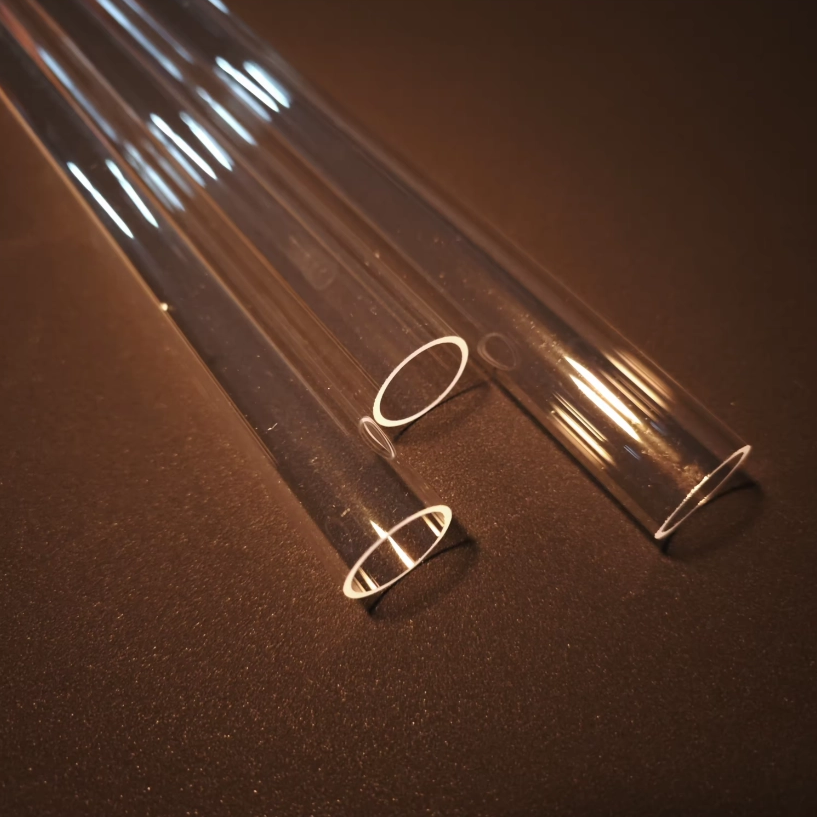
- Application Specificity: It is the industry standard for specific high-purity applications, including semiconductor manufacturing (quartz tubes) and industrial furnace glass viewports.
- Cost vs. Value: While carrying a higher upfront procurement cost than alternative glasses, its chemical inertness, deformation resistance, and longevity in harsh environments often yield a lower long-term operational expense.
The Mechanics of Quartz Glass Heat Resistance
High-temperature materials must meet strict baseline success criteria. You need structural stability, minimal outgassing, and optical clarity. Evaluating how quartz glass performs against these criteria requires understanding its fundamental thermal mechanics. We look at the physical properties that allow it to survive where standard glass melts or shatters.
Thermal Expansion and Shock Tolerance
The physics behind the exceptional heat resistance of this material lies in its near-zero coefficient of thermal expansion (CTE of ~5.5 × 10⁻⁷/°C). This extremely low expansion rate allows the material to survive rapid heating and cooling cycles. Conventional glass or ceramics would instantly shatter under the same conditions. When exposed to severe thermal shock, the internal stresses generated within the structure remain well below its tensile strength. You can pull a component from a 1000°C furnace and plunge it into cold water without fracturing it.
| Material | Coefficient of Thermal Expansion (CTE) | Thermal Shock Resistance |
| Soda-Lime Glass | ~90 × 10⁻⁷/°C | Poor |
| Borosilicate Glass | ~33 × 10⁻⁷/°C | Moderate |
| Fused Quartz | ~5.5 × 10⁻⁷/°C | Excellent |
Continuous vs. Peak Operating Limits
Understanding the thermal limits requires distinguishing between several key temperature thresholds. You cannot treat peak limits as continuous operating temperatures without risking deformation.
- The strain point occurs around 1075°C. Internal stresses begin to relieve over hours.
- The annealing point is near 1140°C. Stress relief happens in minutes.
- The softening point reaches approximately 1660°C. The material deforms under its own weight.
Realistic continuous operating thresholds typically range from 1100°C to 1200°C. Short-term exposure limits can push up to 1300°C. You must ensure the duration is brief and the structural load is minimal during these peak exposures.
Dimensional Stability and Deformation Resistance
Under high thermal load, the material retains its exact shape and dimensions without sagging or warping. As it approaches its softening point, its mechanical behavior shifts. Load-bearing limitations become apparent. Proper structural support is critical when operating near the 1200°C continuous limit. You must prevent gradual deformation over time by supporting long spans and minimizing mechanical stress.
Optical Transparency Under High Thermal Load
High temperatures impact light and spectral transmission in many materials. High-purity variants maintain optical clarity and resist discoloration under sustained extreme heat. This sustained transparency is vital for applications requiring visual monitoring. You need precise optical measurements inside heated chambers, and this material delivers that consistency.
Primary Applications in High-Temperature Environments
Specific formats map directly to distinct industrial applications. They solve unique thermal and chemical challenges across various sectors. We see these components deployed in environments where failure is not an option.
Industrial Furnace Glass and Viewports
In metallurgy, incineration, and chemical processing, this material serves effectively as sight glass and industrial furnace glass. Engineers balance the need for maintaining optical transparency for real-time monitoring with the necessity of resisting extreme radiant heat. Viewport designs operating at elevated temperatures must account for pressure and vacuum resistance requirements. You must ensure safe and reliable observation without compromising the pressure vessel integrity.
Semiconductor Manufacturing and Processing
The semiconductor industry relies heavily on the quartz tube for oxidation, diffusion, and chemical vapor deposition (CVD) processes. Material purity plays a critical role in these environments. Trace impurities cause wafer contamination and doping failures at elevated temperatures. Ultra-pure components are indispensable in semiconductor fabrication facilities.
Laboratory and Chemical Reactor Equipment
High-temperature distillation, crucibles, and combustion tubes frequently utilize these components. The material exhibits remarkable chemical inertness when exposed to highly reactive acids, halogens, and organic solvents at high heat. This resistance ensures that experimental results and chemical syntheses remain uncontaminated by the reaction vessel itself. You can process aggressive chemicals at 1000°C without degrading the container.
Evaluating Quartz Glass Against Alternative Materials
Comparing options against other high-temperature materials helps guide informed procurement decisions. You must base these choices on performance requirements and project constraints.
Quartz Glass vs. Borosilicate Glass
Borosilicate glass typically fails around 500°C. It is unsuitable for extreme thermal environments. For mid-tier temperature requirements up to 450°C, borosilicate offers a favorable cost-to-performance ratio. When temperatures exceed 500°C, you must upgrade to ensure structural survival and operational safety.
Fused Quartz vs. Synthetic Fused Silica
Fused quartz derives from natural crystal. Synthetic fused silica originates from chemical precursors. Synthetic silica offers superior purity, deeper UV transmission, and better bubble-free quality. These advantages come at a significantly higher price point. You must evaluate whether the specific application demands the enhanced properties of synthetic silica or if standard fused quartz suffices for your thermal requirements.
Chemical Inertness under Thermal Load
The material maintains its chemical resistance at temperatures exceeding 1000°C. Many advanced ceramics or specialty metals oxidize or outgas at these temperatures. It does have chemical vulnerabilities at high temperatures. Accelerated corrosion occurs when exposed to alkaline solutions, basic slags, or certain metal oxides. You require careful environmental control to prevent premature degradation.
Quartz vs. Sapphire and Advanced Ceramics
Edge cases exist where this material is insufficient. Extreme alkaline environments or continuous operating temperatures exceeding 1200°C demand alternative solutions. In these scenarios, the extreme cost of sapphire or alumina ceramics is justified. You need them to prevent rapid material degradation and ensure long-term reliability in those specific harsh conditions.
Implementation Risks and Mitigation Strategies
Deploying these components in industrial settings involves practical realities. You must manage inherent risks to maximize component lifespan and maintain safety standards.
The Risk of Devitrification
Devitrification is the phase change from a glassy state to a crystalline state (cristobalite) at temperatures above 1150°C. Catalysts for devitrification include surface contamination from alkali metals, fingerprints, or atmospheric dust. Mitigation protocols involve proper handling with clean gloves. You must implement strict pre-heating cleaning procedures using hydrofluoric or nitric acid to remove all surface contaminants.
Design Thinking and Structural Support
Structural design challenges arise when supporting long tubes to prevent sagging at temperatures exceeding 1100°C. Engineers must design joints, flanges, and gaskets to accommodate different rates of thermal expansion. You have to account for the difference between the component and its metal housing to prevent stress fractures during thermal cycling.
Machining and Fabrication Constraints
Machining, cutting, laser-processing, and polishing is difficult and costly due to hardness and brittleness. Specifying standard dimensions rather than custom-molded, highly-toleranced components helps control engineering costs. You reduce lead times significantly by designing around standard available geometries.
Lifecycle and Maintenance
Establishing realistic lifespan expectations in continuous high-heat environments is essential for maintenance planning. Implementing inspection routines helps identify surface degradation. You should use polariscopes or micro-crack detection techniques to find devitrification patches or micro-fractures before catastrophic failure occurs.
Conclusion
This material remains the undisputed optimal choice for operational profiles demanding simultaneous extreme heat resistance, optical clarity, and chemical purity. When evaluating materials for environments exceeding 500°C but remaining below 1200°C, it offers unmatched dimensional stability and thermal shock survival.
- Assess your continuous operating temperatures to ensure they remain strictly below the 1200°C threshold.
- Implement mandatory handling and acid-cleaning protocols for all personnel to prevent devitrification.
- Design structural supports and expansion joints specifically tailored for the low CTE of the material.
- Submit CAD drawings for custom fabrication quotes to accurately gauge project requirements and lead times.
FAQ
Q: What is the maximum temperature quartz glass can withstand?
A: It withstands continuous operating temperatures between 1100°C and 1200°C. Short-term exposure limits reach up to 1300°C. The softening point, where it deforms under its own weight, occurs at approximately 1660°C.
Q: Why is a quartz tube preferred in semiconductor furnaces?
A: Semiconductor furnaces require materials offering extreme heat resistance, dimensional stability, and ultra-high purity. It prevents wafer contamination and doping failures during high-temperature processes like oxidation and chemical vapor deposition.
Q: Does quartz glass lose its transparency at high temperatures?
A: High-purity variants retain optical transparency and shape at elevated temperatures. Devitrification or surface contamination causes cloudiness and opacity over time if you do not properly maintain and clean the material.
Q: How does quartz glass differ from standard glass in heat resistance?
A: It lacks the fluxing agents found in standard soda-lime glass. This absence results in a significantly higher melting point and a much lower coefficient of thermal expansion, granting superior thermal stability.
Q: Can quartz glass survive rapid temperature changes?
A: Yes, it exhibits exceptional thermal shock resistance due to its extremely low coefficient of thermal expansion. It withstands severe and rapid temperature fluctuations, such as water quenching from red heat, without shattering.
Q: What causes devitrification in industrial furnace glass?
A: Devitrification is triggered by high temperatures combined with surface contaminants like sodium, potassium, or oils from fingerprints. These contaminants act as catalysts, causing crystallization, which leads to opacity and structural weakness.
Q: Is synthetic fused silica better than fused quartz for high temperatures?
A: Both materials share similar thermal properties. Synthetic fused silica offers higher optical purity, deeper UV transmission, and lower trace metal content. It is preferable for highly sensitive applications, despite the higher price point.
 English
 العربية
 Français
 Русский
 Español
 Português
 Deutsch
 italiano
 日本語
日本語 한국어
한국어 Nederlands
 Tiếng Việt
 ไทย
ไทย Polski
 Türkçe
 አማርኛ
አማርኛ ພາສາລາວ
 ភាសាខ្មែរ
 Bahasa Melayu
 ဗမာစာ
ဗမာစာ தமிழ்
தமிழ் Filipino
 Bahasa Indonesia
 magyar
 Română
 Čeština
 Монгол
 қазақ
қазақ Српски
 हिन्दी
 فارسی
فارسی Kiswahili
 Slovenčina
 Slovenščina
 Norsk
Norsk Svenska
 українська
 Ελληνικά
 Suomi
Suomi Հայերեն
 עברית
עברית Latine
 Dansk
Dansk اردو
اردو Shqip
Shqip বাংলা
বাংলা Hrvatski
 Afrikaans
 Gaeilge
 Eesti keel
 Māori
Māori


