In high-precision optical systems, the margin for error in light manipulation is virtually zero. Selecting the wrong component compromises the entire system's data integrity and output. Engineering and procurement teams often face challenges in optimizing system performance when balancing the need for precise light control against the need for focal accuracy. This imbalance frequently leads to over-specified parts, budget overruns, or degraded imaging clarity.
Distinguishing industrial, scientific-grade optical components from consumer ophthalmic eyewear is critical. Prescription contact lenses, commercial sunglasses, and standard eyeglass lenses are engineered for subjective human visual correction. In contrast, machine vision, scientific research, and automated inspection demand rigorous, quantifiable tolerances to avoid specification errors. Resolving these inefficiencies requires a strict technical evaluation of how Optical Filters and optical lenses fundamentally differ in function, mechanism, and application. This guide breaks down the technical distinctions to inform precise component specification.
- Distinct Mechanisms: Optical lenses manipulate the path of light via refraction to form or focus images, whereas optical filters manipulate the properties of light by selectively transmitting, absorbing, or reflecting specific wavelengths.
- System Synergy: High-performance imaging systems rarely use these components in isolation; achieving optimal imaging clarity requires pairing aberration-corrected lenses with application-specific filters.
- Specification Priorities: Lens selection hinges on focal length, numerical aperture, and field of view. Filter selection depends on center wavelength, bandwidth (e.g., specifying a precise bandpass filter), and optical density.
- Implementation Risks: Improper integration, such as ignoring the angle of incidence on interference filters or failing to account for lens-induced chromatic aberrations, will severely degrade the signal-to-noise ratio.
Defining the Core Functions in Optical Systems
What Are Optical Lenses?
Optical lenses are engineered primarily to bend, or refract, light. By altering the trajectory of incoming photons, lenses force light beams to converge to a specific focal point or diverge to cover a wider area. This refractive capability forms the foundation of image formation, optical magnification, and beam collimation in complex optical assemblies. When you set up a machine vision camera on a factory floor, the lens is the component responsible for capturing the physical geometry of the part under inspection and projecting it accurately onto the camera sensor.
Engineers evaluate lenses based on several strict metrics. Focal length determines the distance over which light converges, directly impacting the working distance of the system. The refractive index of the glass or polymer substrate dictates how sharply the light bends, while the Abbe number measures the material's dispersion, indicating how much chromatic aberration the lens will introduce. High-index glass allows for thinner lens profiles, which is useful in space-constrained instrument housings.
It is necessary to separate industrial imaging lenses from consumer prescription lenses. Industrial lenses focus light onto a digital sensor, such as a CCD or CMOS array, demanding uniform resolution across a flat field. Consumer lenses correct human visual refractive errors, prioritizing center sharpness and lightweight materials over absolute geometric accuracy across the entire field of view. An industrial lens must maintain strict modulation transfer function (MTF) performance from the center to the very edge of the sensor.
What Are Optical Filters?
While lenses change where light goes, optical filters change what light passes through the system. Their primary function is selective light control based on specific parameters like wavelength, polarization state, or overall intensity. They isolate target signals from background noise, reduce specular glare, and protect sensitive digital sensors from damaging ultraviolet or infrared radiation. If you are inspecting a weld seam using a red laser, a filter ensures the camera only sees the red laser line, blocking out the bright blue and white sparks from the welding process.
Filter performance relies on quantifiable metrics rather than physical curvature. Transmission percentage indicates how much of the desired light successfully passes through the component. Blocking depth, measured in Optical Density (OD), defines the filter's ability to reject unwanted wavelengths. Cut-on and cut-off frequencies establish the exact spectral boundaries where the filter transitions from transmitting to blocking. A high-performance filter might transition from 90% transmission to OD4 blocking within a span of just a few nanometers.
Scientific filters differ vastly from consumer filters. A hard-sputtered interference filter used in a fluorescence microscope utilizes dozens of microscopic dielectric layers to achieve razor-sharp wavelength separation. Consumer sunglasses or blue-light blocking eyewear rely on simple dyed plastics or basic coatings that offer broad, imprecise attenuation designed merely for human eye comfort. You cannot use a consumer-grade colored glass filter in a precision LiDAR system and expect reliable data return.
Optical Filters vs. Optical Lenses: Key Technical Differences
Mechanism of Action: Refraction vs. Transmission, Absorption, and Reflection
Lenses rely on physical geometry and material density to alter the trajectory of photons. When light passes from air into a denser medium like a glass or polymer substrate, its speed decreases, causing the light wave to bend. The exact curvature of the lens surfaces—whether convex or concave—dictates the angle of refraction, allowing engineers to calculate precise focal planes. Manufacturing these surfaces requires precision grinding and polishing to achieve specific surface figure and surface quality tolerances.
Filters utilize entirely different physical principles. Absorptive filters use dyed glass substrates that convert specific unwanted wavelengths into minute amounts of heat, allowing the remaining spectrum to pass. Interference filters employ thin-film dielectric coatings. These coatings create constructive and destructive interference patterns, reflecting out-of-band photons back toward the source while allowing in-band photons to transmit through the substrate unhindered. The coating process involves vacuum deposition techniques like ion-beam sputtering to ensure layer thickness is accurate to the nanometer.
Impact on Imaging Clarity and Resolution
Lenses dictate the spatial resolution and geometric sharpness of a system. Their performance is mapped using an MTF chart, which illustrates how well the lens reproduces varying levels of detail and contrast from the object to the sensor. Aberrations in the lens design directly cause blurring, distortion, or color fringing at the edges of the image. A poorly designed lens will make a perfectly square grid look like a barrel or a pincushion.
Filters dictate spectral resolution and contrast. By eliminating out-of-band optical noise, they ensure the sensor only records the data that matters. In a machine vision setup inspecting red LEDs, a filter blocking all ambient blue and green factory light drastically increases the contrast of the red signal. This makes the image appear clearer to the software algorithm even though the filter itself does not focus the light. Without the filter, the sensor would saturate from the overhead fluorescent lights, masking the LED signal entirely.
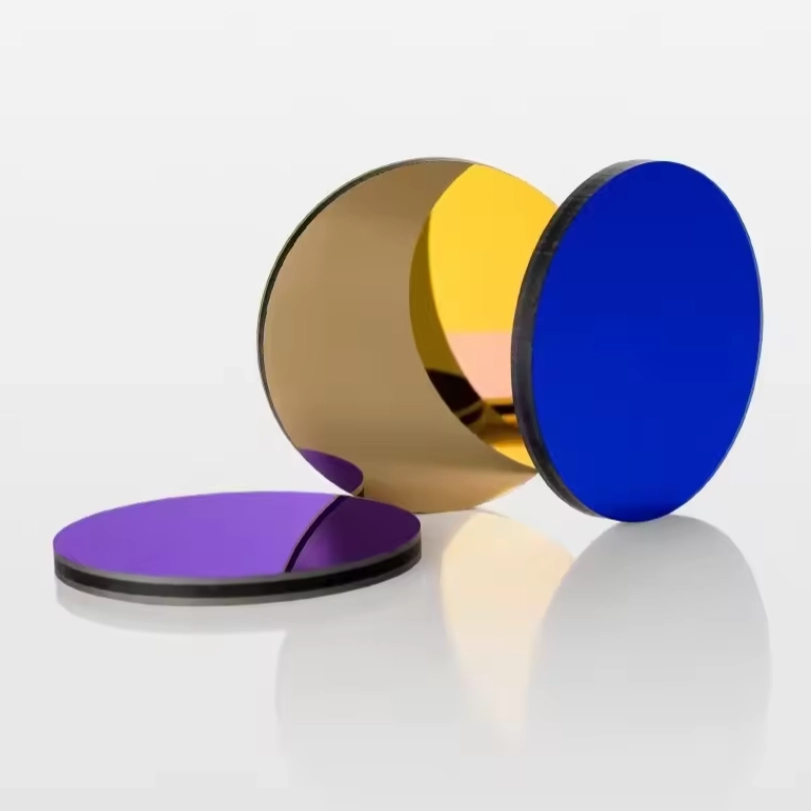
Positional Dependency in the Optical Path
The placement of a lens in an optical assembly determines the focal plane, magnification ratio, and overall working distance. Moving a lens even a fraction of a millimeter along the optical axis changes where the image resolves. Lens positioning is absolute and dictates the physical dimensions of the camera or instrument housing. Optomechanical engineers spend significant time designing lens barrels and retaining rings to hold these elements perfectly centered and spaced.
Filter placement is constrained by different rules, primarily the Chief Ray Angle (CRA) and the angle of incidence. Interference filters are highly sensitive to the angle at which light strikes them. If placed in a converging light path (such as directly in front of a small sensor behind a wide-angle lens), the varying angles of incidence will cause the filter's transmission band to shift toward shorter wavelengths. This spectral shift degrades performance, meaning high-precision filters are often best placed in front of the objective lens where light rays are relatively parallel.
| Feature | Optical Lenses | Optical Filters |
| Primary Function | Bending and focusing light (Refraction) | Selective wavelength transmission/blocking |
| Key Metrics | Focal length, Refractive index, Abbe number | Transmission %, Optical Density (OD), Bandwidth |
| Mechanism | Surface curvature and material density | Thin-film interference or substrate absorption |
| System Impact | Spatial resolution and magnification | Spectral resolution and signal contrast |
| Positional Sensitivity | Determines focal plane and working distance | Sensitive to angle of incidence (spectral shift) |
Evaluating Optical Filters for Light Control Applications
Categorizing Filter Technologies
Understanding the specific categories of filter technologies allows engineers to match the component to the exact environmental and spectral demands of the application.
- Bandpass Filters: These components isolate specific spectral bands while blocking higher and lower frequencies. Specifying a precise bandpass filter is standard practice in fluorescence microscopy and machine vision to capture specific emission lines.
- Edge Filters (Longpass/Shortpass): These define sharp cut-on or cut-off boundaries. A longpass filter transmits wavelengths longer than the target point, while a shortpass filter transmits shorter wavelengths. They are frequently used to separate excitation and emission light in analytical instruments.
- Neutral Density (ND) Filters: These provide uniform attenuation of light intensity across a broad spectrum. They prevent sensor saturation in bright environments without altering the color balance of the image. ND filters are common in outdoor imaging systems facing direct sunlight.
- Polarizing Filters: These eliminate specular reflections and enhance contrast by blocking specific polarization states of light. Industrial polarizers are manufactured to exact extinction ratios, unlike consumer sunglasses which offer minimal control. They are essential for inspecting highly reflective surfaces like machined metal or glass.
Success Criteria for Filter Selection
Selecting the correct filter requires matching its transmission profile to the digital sensor's quantum efficiency and the illumination source's emission spectrum. If an LED emits at 850nm, the filter must offer peak transmission at exactly 850nm to maximize signal capture. You must also account for the bandwidth of the LED, which might span 20nm to 40nm, ensuring the filter's passband is wide enough to capture the full signal without letting in ambient light.
Evaluating out-of-band blocking requirements is equally important. A filter with an Optical Density of 4 (OD4) blocks 99.99% of unwanted light, while an OD6 filter blocks 99.9999%. High-power laser applications or highly sensitive scientific instruments require higher OD ratings to prevent background light from overwhelming the faint target signal. If you are measuring a weak fluorescent signal next to a powerful excitation laser, an OD6 blocking specification is mandatory to prevent the laser from blinding the sensor.
Environmental durability dictates the physical lifespan of the component. Engineers must assess scratch-dig specifications to ensure surface imperfections do not interfere with the optical path. Furthermore, the thermal stability of the thin-film coatings and the substrate's resistance to humidity or chemical degradation determine whether the filter will survive deployment in harsh industrial environments. Hard-coated filters resist moisture ingress, which can otherwise cause the coating layers to swell and shift the transmission spectrum.
Evaluating Optical Lenses for Image Formation
Categorizing Lens Topologies
Different lens shapes solve different optical problems. Selecting the right topology balances optical performance with physical space constraints and manufacturing complexity.
- Spherical Lenses: Including plano-convex and bi-concave designs, these are the standard components for basic focusing, collimating, and diverging applications. They are cost-effective but inherently introduce spherical aberration, where light rays passing through the edge of the lens focus at a different point than rays passing through the center.
- Aspheric Lenses: These feature complex surface profiles that deviate from a standard sphere. They correct spherical aberrations, allowing engineers to replace multi-lens assemblies with a single element to create compact, high-performance system designs. They are harder to manufacture and measure, making them more expensive than spherical equivalents.
- Achromatic Doublets: Constructed by cementing two different glass materials together, these lenses minimize chromatic aberration. They ensure that multiple wavelengths of broadband light focus precisely at the same plane, preventing color fringing. They are standard in broadband imaging applications where color accuracy is required.
Success Criteria for Lens Selection
Lens specification begins with calculating the required working distance and the field of view (FOV). The working distance dictates how far the lens must sit from the object being inspected, while the FOV determines how much of the object is visible on the sensor at that distance. These geometric constraints narrow down the acceptable focal lengths. You must also match the lens format to the sensor size; a lens designed for a 1/2-inch sensor will cause severe vignetting if used on a 1-inch sensor.
Determining the necessary f-number or numerical aperture (NA) is the next step. A lower f-number indicates a larger aperture, allowing more light into the system, which is required for high-speed imaging or low-light performance. However, larger apertures reduce the depth of field, requiring more precise mechanical focusing mechanisms. If you are inspecting parts moving on a high-speed conveyor belt, you need a low f-number to allow for short exposure times, preventing motion blur.
Evaluating broadband anti-reflective (AR) coatings is necessary to maximize light throughput. Uncoated glass reflects approximately 4% of light per surface. In a multi-element lens assembly, this leads to significant light loss and internal ghosting. Precision optical AR coatings reduce this reflectance to fractions of a percent, contrasting sharply with commercial eyewear coatings which prioritize scratch resistance over absolute transmission. Ghosting can create false signals on the sensor, ruining automated inspection algorithms.
System Integration: Aligning Components to Industry Applications
Machine Vision and Automated Inspection
In high-speed manufacturing environments, automated inspection systems must identify defects in milliseconds. A common use case involves pairing low-distortion fixed-focal lenses with a narrow bandpass filter. The lens ensures the geometry of the inspected part is rendered without warping, while the filter isolates the specific wavelength of the system's LED illumination. This combination eliminates ambient factory light, ensuring the software receives a high-contrast image regardless of external lighting changes. If a forklift drives by with a flashing yellow light, the filter prevents that light from interfering with the inspection of a blue-lit component.
Fluorescence Microscopy and Scientific Instrumentation
Biological research relies on detecting minute amounts of light emitted by fluorescent tags. This requires utilizing high-NA objective lenses to gather as much light as possible from the microscopic sample. These lenses are paired with highly specific dichroic filters and emission filters. The dichroic filter directs the excitation light onto the sample, while the emission filter blocks the powerful excitation source and only transmits the weak fluorescent signal to the camera sensor. The blocking OD must be exceptionally high to prevent the excitation light from washing out the faint fluorescence.
LiDAR and Remote Sensing
Autonomous vehicles and topographical mapping systems use LiDAR to measure distances via laser pulses. These systems combine collimating lenses with hard-coated optical filters. The lenses keep the laser beam tightly focused over long distances, while the filters ensure the receiver only detects the specific wavelength of the returning laser pulse, ignoring sunlight and other environmental optical noise. The coatings must be highly durable to withstand temperature fluctuations and physical abrasion in outdoor environments. A soft coating would degrade quickly from dust and moisture exposure on a moving vehicle.
Trade-offs and Implementation Risks
Signal-to-Noise Ratio (SNR) vs. Light Throughput
A persistent risk in optical design is over-filtering. Specifying too narrow a bandpass filter starves the sensor of light. To compensate for the low light throughput, the system requires longer exposure times or higher electronic gain. Longer exposures introduce motion blur in moving subjects, while higher gain introduces digital noise, ultimately degrading the signal-to-noise ratio. The mitigation strategy involves balancing the filter bandwidth with the lens aperture size, ensuring enough target photons reach the sensor without overwhelming it with background noise. Testing different bandwidths on an optical bench is the best way to find the optimal balance.
Cost vs. Precision in Custom Optics
Specifying custom thin-film optical filters or custom aspheric lenses drastically increases prototyping costs and extends lead times. Custom curvature requires dedicated tooling, and custom coating runs require expensive vacuum chamber time. To mitigate these expenses, engineering teams should leverage off-the-shelf components for proof-of-concept testing. Standard catalog optics allow teams to validate the optical path and spectral requirements before committing to expensive custom optical prescriptions for mass production. Once the system parameters are locked in, you can transition to custom components optimized for volume manufacturing.
Thermal and Environmental Vulnerabilities
Extreme temperatures physically alter optical components. Thermal expansion in glass lenses changes their curvature and refractive index, shifting the focal length and blurring the image. Similarly, temperature fluctuations cause wavelength shifting in interference filters as the dielectric layers expand or contract. To mitigate these environmental vulnerabilities, engineers must specify athermalized lens housings that mechanically compensate for expansion, and utilize hard-sputtered filter coatings that remain spectrally stable across wide temperature ranges. Sealing the optical assembly with O-rings prevents moisture condensation on the internal lens and filter surfaces.
Conclusion
Optical lenses and optical filters are not interchangeable; they serve distinct, complementary roles in high-performance systems. Lenses act as the architectural foundation of the image, managing geometry and resolution, while filters act as the gatekeepers of the data, managing spectral contrast and noise reduction. Selecting the right combination is the only way to guarantee data integrity in industrial and scientific applications.
Begin the shortlisting logic by defining the spatial requirements. Calculate the focal length and field of view to select the appropriate lens topology. Once the geometric path is established, define the spectral requirements. Identify the target signal and the background noise to select the appropriate filter technology.
- Map out the system's complete spectral response curve, including the light source, sensor efficiency, and ambient environment.
- Calculate the exact optical density required to block out-of-band light without causing sensor saturation.
- Determine the physical space constraints and calculate the required focal length and field of view for the lens.
- Consult with an optical manufacturing partner to request off-the-shelf component samples for physical bench testing before finalizing custom designs.
FAQ
Q: Can an optical filter change the focal length of a system?
A: No. While inserting a thick glass filter alters the optical path length slightly (requiring minor refocusing), optical filters do not have optical power and cannot fundamentally change a system's focal length.
Q: What is the difference between a bandpass filter and a longpass filter?
A: A bandpass filter transmits a specific, isolated range of wavelengths while blocking higher and lower frequencies. A longpass filter transmits all wavelengths above a specific cut-on point and blocks everything below it.
Q: Do optical lenses provide any light control or filtering?
A: Standard lenses do not filter specific wavelengths, though the glass substrate material itself may naturally absorb extreme UV or IR light. For precise light control, a dedicated optical filter or specialized lens coating is required.
Q: How does the angle of incidence affect optical filters?
A: Unlike lenses, interference-based optical filters are highly sensitive to the angle at which light strikes them. An increased angle of incidence causes the filter's transmission band to shift toward shorter wavelengths (blue shift).
Q: Why is imaging clarity reduced when using multiple optical filters?
A: Stacking multiple filters introduces additional glass-to-air surfaces, which increases the risk of surface reflections, ghosting, and wavefront distortion, ultimately degrading imaging clarity.
Q: Should I place an optical filter in front of or behind the lens?
A: Placement depends on the system design. Placing it in front of the lens protects the optics but requires a larger, more expensive filter. Placing it behind the lens allows for a smaller filter but requires careful calculation of the converging light rays to avoid spectral shift.
Q: How do scientific optical filters differ from consumer eyeglass coatings and sunglasses?
A: Consumer eyewear coatings (like UV-blockers or glare-reduction) are designed for broad, subjective human eye comfort. Industrial optical filters feature high-precision, multi-layer thin-film coatings with strict, quantifiable transmission, blocking tolerances (e.g., precise Optical Density ratings), and sharp spectral cut-offs designed for machine sensors.
 English
 العربية
 Français
 Русский
 Español
 Português
 Deutsch
 italiano
 日本語
日本語 한국어
한국어 Nederlands
 Tiếng Việt
 ไทย
ไทย Polski
 Türkçe
 አማርኛ
አማርኛ ພາສາລາວ
 ភាសាខ្មែរ
 Bahasa Melayu
 ဗမာစာ
ဗမာစာ தமிழ்
தமிழ் Filipino
 Bahasa Indonesia
 magyar
 Română
 Čeština
 Монгол
 қазақ
қазақ Српски
 हिन्दी
 فارسی
فارسی Kiswahili
 Slovenčina
 Slovenščina
 Norsk
Norsk Svenska
 українська
 Ελληνικά
 Suomi
Suomi Հայերեն
 עברית
עברית Latine
 Dansk
Dansk اردو
اردو Shqip
Shqip বাংলা
বাংলা Hrvatski
 Afrikaans
 Gaeilge
 Eesti keel
 Māori
Māori


