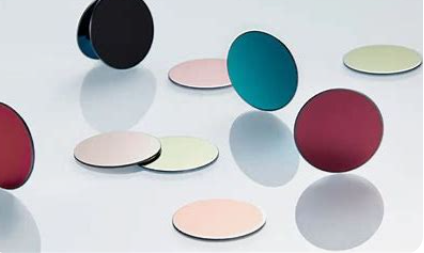
Optical manufacturing currently faces a massive inflection point. Modern devices demand increasingly complex 3D geometries. We see this acutely in AR/VR headsets, automotive LiDAR, and aerospace optics. Traditional deposition methods rapidly hit hard physical limits here. We can no longer rely solely on legacy line-of-sight techniques. They fail to coat highly curved lenses or deep-trench gratings evenly.
Enter Atomic Layer Deposition (ALD). The industry once viewed it purely as a niche R&D tool. Now, it stands as a robust, production-ready solution. It delivers high-precision optical coatings flawlessly. It offers unparalleled uniformity across intricate surface topographies.
This article serves as an evaluation guide. We wrote it for optical engineers and facility managers. We will weigh the clear performance gains of ald for optical coatings against historical throughput concerns. You will learn exactly how modern spatial systems and plasma assistance solve old bottlenecks. This knowledge ensures scalable, flawless optical integration.
Key Takeaways
Performance Superiority: ALD delivers pinhole-free, conformal optical coatings on complex 3D topographies (e.g., gratings, plano-convex lenses) where PVD and PECVD suffer from poor step coverage.
Advanced Optical Tuning: Techniques like nano-laminating and nanoporous deposition enable extreme refractive index engineering (down to 1.15) and precise mechanical stress control.
Production Scalability: Innovations in Plasma-Enhanced Spatial ALD (PE-sALD) and large-batch processing have effectively bridged the throughput gap, reaching deposition rates comparable to PVD.
Evaluation Criteria: Vendor selection should prioritize substrate thermal limits, required aspect ratios, and Total Cost of Ownership (TCO) mitigations like precursor recycling.
The Business Case: Why Traditional Deposition Fails on Complex 3D Optics
Legacy systems struggle to meet next-generation optical demands. We observe this failure clearly when coating advanced lenses. Physical Vapor Deposition (PVD) utilizes physical sputtering or evaporation. It excels primarily at flat substrates. It provides extremely high deposition rates. However, PVD relies entirely on line-of-sight physics. It fails fundamentally at high-aspect-ratio coating. It cannot ensure conformal coverage on highly curved surfaces. You often see shadowing effects on deep trenches. The material simply cannot reach the bottom corners effectively.
Plasma-Enhanced CVD (PECVD) offers great speed. The plasma drives fast chemical reactions across the substrate. Yet, it lacks atomic-level thickness control. This shortfall causes severe uniformity issues on complex geometries. Molecules clump unevenly around tight corners. You lose the exact optical tolerances required for modern photonics.
ALD brings a distinct, fundamental advantage. It uses self-limiting, chemisorption-based reaction cycles. You introduce a precursor gas into the chamber. It reacts only with the available surface sites. The reaction stops automatically once the surface saturates entirely. You then purge the chamber with inert gas. Next, you introduce the second reactant. It reacts with the first layer smoothly. You purge the chamber again.
Each precise cycle typically deposits exactly 1 Å of material. This reliable mechanism guarantees 100 percent conformal coverage. It eliminates microscopic pinholes completely. You get perfectly uniform film thickness across the most intricate optical components.
Best Practices: Always map the aspect ratios of your substrate before selecting a deposition method. Accurate mapping prevents downstream defects.
Common Mistakes: Relying on PVD for deep-trench gratings often results in severe edge-effects and massive yield losses.
Optical Deposition Methods Comparison Chart
Deposition Method
Step Coverage
Thickness Control
Typical Application
Complex 3D Suitability
PVD (Sputtering)
Poor (Line-of-sight)
Moderate
Flat mirrors, simple lenses
Low
PECVD
Moderate
Moderate
Fast barrier films
Low to Medium
Thermal ALD
Excellent
Atomic-level (Sub-nm)
Extreme aspect ratios
High
PE-sALD
Excellent
Atomic-level (Sub-nm)
High-volume mass production
High
High-Value Applications of ALD in Optical Coatings
Next-generation hardware requires specialized layer deposition. Engineers apply these precise methods across several demanding sectors. Antireflective coatings (ARC) are crucial for AR/VR headsets. They also drive advanced automotive LiDAR systems. You must alternate layers of high and low refractive index materials carefully. These layers conform seamlessly to micro-structures. They coat complex nanostructured elements evenly. This precise layering effectively neutralizes interface reflections via destructive interference. It maximizes light transmission directly to the user.
Space telescopes and deep-UV applications demand even stricter standards. They require ultra-pure, defect-free optical coatings. These pure films prevent disruptive light scattering in sensitive instruments. They also withstand extreme environmental conditions found in orbit. Drastic temperature fluctuations in space destroy weaker films quickly. The atomic bonds formed during chemisorption survive these brutal shifts effortlessly.
High-efficiency spectrometer gratings show remarkable performance gains. Industry benchmarks reveal excellent results using specific nanomaterials. We observe these improvements frequently in modern photonics labs.
Engineers apply TiO2 and Al2O3 nano-laminates directly to deep-trench transmission gratings.
This precise material combination achieves greater than 90 percent diffraction efficiency reliably.
The conformal layer maintains excellent structural stability under varying optical loads.
Laser optics also benefit immensely from this technology. Manufacturers use precision HfO2 and SiO2 layers here. These specific oxide stacks achieve extremely high laser damage thresholds (LIDT). High LIDT is absolutely critical for industrial cutting tools. Medical laser reliability also depends directly on these robust, pinhole-free films.
Advanced Engineering: Refractive Index Tuning and Stress Management
Modern ALD unlocks powerful optical tuning capabilities. You can engineer nanoporous films to achieve ultra-low refractive indices. First, you deposit hybrid layers like SiO2 and Al2O3. You build these up cycle by cycle. Next, you apply highly selective wet etching. This chemical process removes specific aluminum oxide materials strategically. It leaves behind microscopic nanoporous structures within the silicon dioxide matrix.
This brilliant technique unlocks highly tunable porosity. It pushes the refractive index down incredibly low. You can reach an index of 1.15. Standard physical coating methods practically never attain this metric. They usually hit a hard limit around 1.38. This massive improvement helps engineers design perfect broadband anti-reflective stacks.
Mechanical stress control presents another massive engineering challenge. Implementing thick optical films risks structural failure. You often see cracking or delamination on sensitive optical substrates. Tension builds up naturally during extended film growth. We solve this pressing issue using Plasma-Assisted ALD (PEALD).
Applying a targeted bias voltage during PEALD actively modulates film stress. The plasma ions bombard the growing surface gently. This ion bombardment compacts the atomic layers. It successfully converts problematic tensile stress into highly stable compressive stress. Compressive stress pushes the film tightly against the substrate. It prevents microscopic cracks from expanding under thermal cycling.
Best Practices: Use careful wet etching calibration to control exact porosity levels accurately.
Common Mistakes: Ignoring residual film stress often leads to spontaneous delamination over time, destroying expensive lenses.
Overcoming the Throughput Bottleneck: Spatial and Large-Batch ALD
Historically, manufacturers voiced serious skepticism regarding the technology. The underlying chemistry relies on time-intensive growth rates. A traditional machine processes one cycle sequentially. This cycle-by-cycle approach is undeniably slow. Modern equipment innovations directly address this critical throughput bottleneck.
Solution 1: Plasma-Enhanced Spatial ALD (PE-sALD). This revolutionary method shifts the core paradigm completely. It moves away from time-separated precursor pulses. Instead, it uses spatially separated chemical zones. The substrate moves rapidly between these continuous gas zones. Inert gas curtains separate the reactive chemicals securely. Modern sALD systems achieve continuous, high-speed throughput. They rival traditional PVD rates easily. You gain massive speed without sacrificing any atomic-level precision.
Solution 2: High-Capacity Batch Processing. You can load thousands of optical components simultaneously. Modern large vacuum chambers handle massive batches highly efficiently. This bulk approach balances the slower individual cycle time. It delivers excellent per-part output metrics. It suits small, high-volume lens production perfectly.
Solution 3: Low-Temperature Capabilities. Standard thermal processing requires high heat to drive chemical reactions. Plasma assistance changes this dynamic entirely. The plasma breaks down precursor molecules highly efficiently. It provides the necessary activation energy. This enables rapid deposition on temperature-sensitive polymer optics. You achieve high-quality films without exceeding strict thermal budgets. Polymer lenses remain completely safe from melting or warping.
Evaluating ALD Equipment: Scalability, Integration, and Precursor Management
Facility managers must evaluate equipment scalability very carefully. You face critical integration realities when upgrading active production lines. You must decide the best physical layout for your factory. Some facilities procure standalone large-batch chambers. These units work best for dedicated high-volume, single-product runs. Alternatively, you can integrate small modules into existing cluster systems. Modern equipment easily accommodates 100mm to 300mm wafer platforms. This modularity ensures smooth workflow integration.
Scaling up introduces specific operational efficiency risks. Larger vacuum chambers often lead to substantial precursor waste. Gas molecules bounce around empty space uselessly. You must evaluate equipment vendors based on their precursor management solutions. Seek out intelligent closed-loop recycling systems. These systems capture unused chemicals aggressively. They purify them and feed them back into the reaction cycle. Automated handling systems also mitigate chemical waste. They move substrates swiftly and improve overall factory safety.
We highly recommend following a strict shortlisting logic. Ask decision-makers to request sample coatings first. Do not rely solely on flat-wafer spec sheets. Test these samples on your specific complex geometries. Provide vendors with highly curved lenses. Send them your high-aspect-ratio gratings. You must rigorously verify step coverage and uniformity firsthand. Microscopic cross-section analysis will reveal the true coating quality.
Conclusion
The rapid evolution of spatial and plasma-enhanced ALD changes the optical industry permanently. It has transformed completely over the last decade. It moved from a slow R&D luxury into a high-volume manufacturing necessity. Modern production demands this precise level of control and scalability. Traditional methods simply cannot keep pace with complex 3D requirements.
Consider these highly actionable next steps for your facility:
Audit your current production yield losses tied to PVD edge-effects.
Identify specific step-coverage failures in your existing coating processes.
Engage specialized equipment vendors for a targeted proof-of-concept run.
Validate your precise thermal and throughput constraints using sample 3D geometries.
Taking these deliberate steps ensures you deploy the most effective deposition strategy possible.
FAQ
Q: How does the deposition rate of ALD compare to PVD for optical coatings?
A: Traditional thermal ALD is significantly slower, depositing roughly 0.1 nm per cycle. However, modern spatial ALD (sALD) and large-batch processing have effectively closed this throughput gap. These rapid innovations make the process highly commercially viable for mass production, rivaling PVD speeds.
Q: Can ALD be used on temperature-sensitive optical polymers?
A: Yes. Plasma-assisted ALD (PEALD) allows for high-quality film deposition at dramatically lower temperatures. It breaks down precursors efficiently without requiring high ambient heat. This advanced method preserves fragile polymer integrity while entirely matching the coating quality of traditional thermal processes.
Q: What is the maximum aspect ratio ALD can successfully coat?
A: The process easily achieves highly uniform coating across extreme topographies. It reliably covers aspect ratios of 30:1 or greater. This unique conformal capability makes it the ideal choice for coating deep-trench optical gratings, porous materials, and highly curved miniature lenses.
 English
 العربية
 Français
 Русский
 Español
 Português
 Deutsch
 italiano
 日本語
日本語 한국어
한국어 Nederlands
 Tiếng Việt
 ไทย
ไทย Polski
 Türkçe
 አማርኛ
አማርኛ ພາສາລາວ
 ភាសាខ្មែរ
 Bahasa Melayu
 ဗမာစာ
ဗမာစာ தமிழ்
தமிழ் Filipino
 Bahasa Indonesia
 magyar
 Română
 Čeština
 Монгол
 қазақ
қазақ Српски
 हिन्दी
 فارسی
فارسی Kiswahili
 Slovenčina
 Slovenščina
 Norsk
Norsk Svenska
 українська
 Ελληνικά
 Suomi
Suomi Հայերեն
 עברית
עברית Latine
 Dansk
Dansk اردو
اردو Shqip
Shqip বাংলা
বাংলা Hrvatski
 Afrikaans
 Gaeilge
 Eesti keel
 Māori
Māori