Optical coatings are the unseen heroes that define the performance of modern optical systems. Applied to lenses, prisms, and mirrors, these thin-film layers determine how light behaves — whether it’s transmitted, reflected, or absorbed. For buyers seeking precision, clarity, and control over stray light, optical coatings make the difference between ordinary glass and high-performance optics. At Haian Taiyu Optical Glass Co., Ltd., each coating is developed to enhance transmission, reduce unwanted reflection, and extend the life of optical components across a range of demanding environments.
What Are Optical Coatings?
Definition and Basic Physics
An optical coating is a thin, carefully engineered layer of material deposited on an optical surface to manipulate the way light interacts with it. These layers—typically a few nanometers to several micrometers thick—use the principles of thin-film interference and refractive index contrast to achieve desired optical effects. When light encounters these layers, part of it is reflected while part is transmitted; the thickness and refractive index of each layer determine the final optical behavior. By stacking multiple layers with different refractive indices, engineers can design coatings that maximize or minimize specific wavelengths of light, depending on the application.
Common Types of Optical Coatings
Optical coatings can serve many functions, but they generally fall into several well-defined categories.
Anti-reflection (AR) coatings are designed to minimize reflection and maximize transmission through optical surfaces. They are widely used on lenses in cameras, microscopes, and glasses to improve image brightness and contrast.
High-reflection (HR) coatings, often called mirror coatings, maximize reflection for laser mirrors, telescopes, and beam-steering optics.
Beam-splitter coatings divide a light beam into two or more paths for imaging, measurement, or sensing systems.
Bandpass and edge filters allow specific wavelength ranges to pass while blocking others—essential for spectroscopy and fluorescence microscopy.
Absorptive coatings, made with materials that absorb unwanted light or heat, help manage high-power laser environments.
Each type of coating must be engineered for a specific wavelength range, substrate, and operating condition. The expertise lies not just in material selection, but in the precise control of layer thickness and uniformity.
Key Specifications Buyers Look For
When customers evaluate optical coatings, they often focus on several key specifications that determine quality and performance.
Transmissivity defines how efficiently light passes through the coated surface. Reflectivity specifies the proportion of light reflected, essential for mirror coatings. Spectral range determines the wavelengths over which the coating performs optimally, while laser damage threshold measures resistance to high-intensity beams. Finally, durability—including adhesion, abrasion resistance, and humidity stability—ensures the coating performs consistently in real-world environments.
At Haian Taiyu Optical Glass Co., Ltd., coatings are manufactured with advanced polishing and thin grinding techniques, achieving excellent adhesion, uniformity, and spectral accuracy across large production runs.
How Optical Coatings Improve Real Products
Consumer Optics: Enhancing Everyday Visual Clarity
From smartphone cameras to prescription lenses, optical coatings influence how users see the world. In camera lenses, AR coatings reduce unwanted glare and internal reflections, producing sharper images with higher color fidelity. For eyewear, they minimize surface reflections that can obscure vision or cause eye strain under bright lighting. With the rise of AR and VR headsets, high-efficiency coatings now play a key role in enhancing immersion—reducing reflection losses, improving brightness, and enabling natural color balance in compact display systems. These consumer applications highlight the direct link between coating performance and user experience.
Industrial and Scientific Applications
In high-power laser systems, optical coatings are designed for extreme durability and precision. HR coatings ensure maximum reflection efficiency without distortion, while laser-grade AR coatings must withstand intense energy densities. In spectroscopy, bandpass filters isolate narrow spectral regions, allowing scientists to analyze the composition of materials or gases with remarkable precision. Imaging systems used in industrial inspection or medical diagnostics rely on coated optics to enhance contrast, suppress stray light, and maintain consistent calibration over time.
For these applications, the coating’s optical density, damage threshold, and temperature stability are critical. Each layer must be deposited under strict vacuum conditions to achieve consistent optical response and long-term reliability.
Glass Processing and Material Integration
Optical coatings also interact closely with the base glass materials used. Coated glass types such as heat-resistant glass, bandpass filter glass, or UV-transparent glass often receive multiple-layer coatings to match their optical and thermal properties. For example, heat-resistant glass substrates used in laser or industrial optics require coatings that can endure both optical and mechanical stress. Similarly, UV and IR-transparent glasses are coated to improve spectral selectivity, ensuring optimal performance in specialized optical systems. Haian Taiyu Optical Glass Co., Ltd. leverages years of expertise in precision glass manufacturing—combining thin grinding, high flatness polishing, and advanced coating technology—to create integrated optical components ready for industrial or research applications.
Manufacturing and Quality Control: From Thin Grinding to High Flatness
Steps in the Process
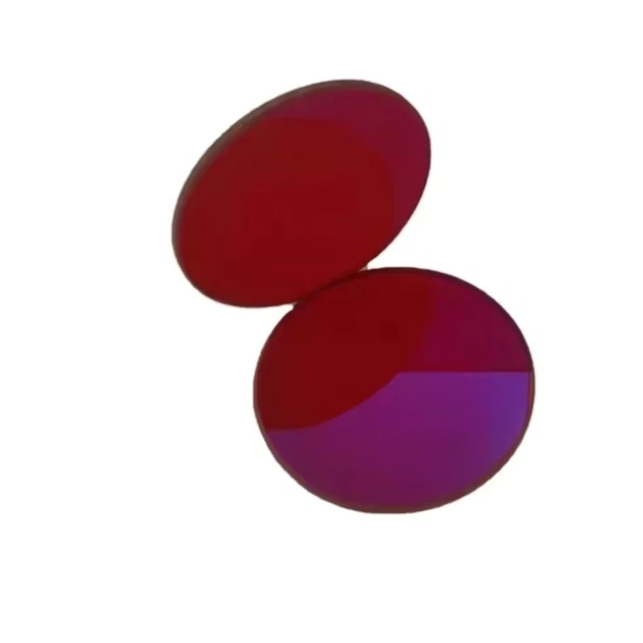
Producing a premium optical coating begins with surface preparation. Each optical substrate undergoes thin grinding to remove surface imperfections and achieve the required flatness. Precision polishing follows, ensuring a surface smoothness at the nanometer level—critical for coating adhesion and performance.
Once prepared, coatings are applied using vacuum deposition techniques, such as Physical Vapor Deposition (PVD), Ion-Assisted Deposition (IAD), or Magnetron Sputtering. These processes allow for nanometer-level control of film thickness and composition. During deposition, parameters like temperature, pressure, and deposition rate are closely monitored to ensure layer consistency and repeatability. The result is a multilayer stack that delivers predictable optical properties across the visible, infrared, or ultraviolet spectrum.
The Role of Surface Flatness and Finish
A coating is only as good as the surface beneath it. High surface flatness and a flawless finish minimize scattering and guarantee a uniform spectral response. When surfaces are highly polished and defect-free, coatings adhere better and maintain their designed optical characteristics under mechanical or thermal stress. For precision instruments—such as interferometers or telescopes—this level of surface quality translates directly into system accuracy. Haian Taiyu Optical Glass Co., Ltd. invests in advanced metrology and polishing equipment to ensure each optical surface meets international standards for flatness and roughness before coating.
Inspection and Testing Standards
Quality control is integral to optical coating production. Spectrophotometers measure transmission and reflection curves across the required wavelength range, verifying that performance matches the design model. Adhesion and abrasion tests confirm durability, while environmental tests—such as humidity or temperature cycling—ensure long-term reliability. For laser optics, laser damage testing establishes safe power limits.
Each optical component from Haian Taiyu Optical Glass Co., Ltd. undergoes these rigorous inspections, guaranteeing stable optical performance for both standard and custom coating projects. Clients receive detailed spectral data and technical documentation to confirm product compliance.
Innovations Shaping the Market
Nanostructured and Gradient-Index Coatings
As optical performance demands grow, coating technology evolves. Nanostructured coatings use subwavelength surface patterns to achieve extremely low reflectivity over wide spectral ranges. Unlike traditional multilayers, they can suppress reflection without interference effects, providing broadband performance for cameras, sensors, and solar optics. Gradient-index coatings, on the other hand, smoothly vary the refractive index through the coating thickness, reducing Fresnel reflections across multiple wavelengths and angles. These designs are pushing the limits of optical engineering toward higher efficiency and lower loss.
AI-Assisted Design and Simulation
Artificial intelligence is transforming how multilayer coatings are designed. By simulating countless layer combinations and optimizing refractive index profiles, AI-based software can rapidly identify the most effective designs for specific spectral requirements. This shortens development time and improves consistency. At Haian Taiyu Optical Glass Co., Ltd., AI-assisted modeling tools complement expert engineering, resulting in coatings that deliver exceptional spectral precision and durability while maintaining competitive lead times.
Sustainability and Durable Coating Trends
The demand for sustainable production methods is reshaping the optical coatings industry. Eco-friendly deposition processes minimize waste and reduce the use of toxic materials. At the same time, surface-functional coatings—such as anti-smudge, anti-fingerprint, and self-cleaning films—add long-term value by reducing maintenance and extending product lifespan. These innovations align with the global move toward greener manufacturing and more resilient optical components.
Selecting the Right Optical Coating: A Buyer Checklist
Match Coating Type to Application
Selecting an optical coating begins with understanding the operating wavelength, angle of incidence, and environmental conditions. For example, AR coatings for visible light differ from those used in infrared or ultraviolet ranges. Coatings designed for outdoor environments must resist moisture, temperature swings, and UV exposure. Laser systems, meanwhile, require coatings with high damage thresholds and low absorption. Discussing these factors with a trusted manufacturer ensures that each coating performs optimally under real-world conditions.
Spec Sheet Items to Request
To make informed decisions, buyers should always request a detailed specification sheet from their supplier. Essential data include transmission percentage (T%), reflectance (R%), spectral curves showing wavelength performance, laser damage threshold, coating structure description, and warranty terms. Haian Taiyu Optical Glass Co., Ltd. provides comprehensive documentation for each batch, ensuring transparency and traceability throughout the procurement process.
Cost, Performance, and Lead Time
Balancing cost with performance is an ongoing consideration in optical coating procurement. High-performance coatings often require more complex deposition processes and tighter tolerances, but they deliver superior results and longevity. Lead time may vary depending on substrate type, coating design, and testing requirements. Partnering with a manufacturer that integrates coating, polishing, and substrate fabrication—as Haian Taiyu Optical Glass Co., Ltd. does—helps reduce turnaround and maintain consistent quality across all production stages.
Conclusion
Optical coatings define how light interacts with glass, influencing every aspect of transmission, reflection, and image quality. At Haian Taiyu Optical Glass Co., Ltd., decades of expertise in thin grinding, precision polishing, and multilayer film design ensure coatings that enhance clarity and minimize stray light. From anti-reflective layers to high-durability mirror coatings, our optical coating solutions help customers achieve reliable optical performance across industries. For detailed specifications or customized designs, contact us today to request a quote or sample—our engineering team is ready to support your optical innovation needs.
 English
 العربية
 Français
 Русский
 Español
 Português
 Deutsch
 italiano
 日本語
日本語 한국어
한국어 Nederlands
 Tiếng Việt
 ไทย
ไทย Polski
 Türkçe
 አማርኛ
አማርኛ ພາສາລາວ
 ភាសាខ្មែរ
 Bahasa Melayu
 ဗမာစာ
ဗမာစာ தமிழ்
தமிழ் Filipino
 Bahasa Indonesia
 magyar
 Română
 Čeština
 Монгол
 қазақ
қазақ Српски
 हिन्दी
 فارسی
فارسی Kiswahili
 Slovenčina
 Slovenščina
 Norsk
Norsk Svenska
 українська
 Ελληνικά
 Suomi
Suomi Հայերեն
 עברית
עברית Latine
 Dansk
Dansk اردو
اردو Shqip
Shqip বাংলা
বাংলা Hrvatski
 Afrikaans
 Gaeilge
 Eesti keel
 Māori
Māori


