In high-end optical systems, even the smallest deviation in coating thickness or uniformity can compromise the entire performance of an optical component. When lasers lose efficiency, or imaging systems show spectral drift, it often traces back to coating imperfections. That’s where optical coatings designed with extreme precision come in. At Haian Taiyu Optical Glass Co., Ltd., we specialize in manufacturing advanced coating solutions that meet the tightest tolerances for demanding optical and photonic applications—ensuring performance stability, reliability, and exceptional clarity in every product.
What “Precision” Means for Optical Coatings
Precision in optical coatings goes far beyond simple reflectivity or color control. It defines how accurately the coating structure meets its designed optical, mechanical, and environmental requirements. A precision optical coating is engineered layer by layer, where every nanometer of thickness, every degree of flatness, and every thermal property is monitored to ensure the coated optic performs exactly as specified—no more, no less.
Our coatings are not just applied to a surface; they become an integral part of an optical system’s behavior. In fields like high-power lasers, metrology, or semiconductor inspection, “good enough” coatings simply aren’t enough. Precision means achieving performance consistency across production runs, over time, and under harsh operating conditions.
Tolerance Metrics: The Real Definition of Precision
To define what makes precision optical coatings truly “precise,” we look at measurable tolerance metrics that directly influence function and longevity.
Layer thickness uniformity is among the most critical. A deviation of just a few nanometers can shift the coating’s spectral center wavelength, altering reflectance or transmission behavior. At Haian Taiyu, our deposition systems and monitoring controls maintain sub-nanometer thickness uniformity across large optical surfaces.
Spectral center wavelength accuracy ensures that the coating performs exactly within the designed wavelength band, especially important in laser mirrors and bandpass filters. Our optical monitoring systems continuously measure and adjust deposition in real time to maintain target wavelengths.
Surface flatness plays a vital role in preventing phase distortion and maintaining wavefront accuracy. Especially for mirrors used in interferometry or high-resolution imaging, a flatness error beyond λ/10 can degrade system precision.
Stress and durability are also key. Even a perfectly tuned coating can warp a substrate if internal stresses are uncontrolled. Our engineers balance coating materials and post-process annealing to achieve minimal stress and maximum adhesion strength.
How Tolerances Affect System Performance
Tight tolerances in coating properties directly translate to optical performance. In laser systems, small variations in coating thickness can affect beam quality and cause focal shifts. For interferometers, coating stress or surface curvature deviations introduce measurement errors that ripple through the entire system.
In imaging optics, even slight wavelength drift alters color accuracy or focus stability, especially under changing environmental conditions. That’s why precision optical coatings are not a luxury—they are a necessity for systems where optical behavior must remain predictable and repeatable across temperature fluctuations, time, and operational cycles.
Surface Preparation: Polishing, Grinding, and Flatness Before Coating
Achieving precision doesn’t start in the coating chamber—it starts with the substrate. The surface preparation phase determines whether a coating can perform to its design potential. Haian Taiyu Optical Glass Co., Ltd. invests heavily in high-accuracy polishing and grinding technologies to achieve substrate surfaces that meet the highest optical-grade standards.
Why Pre-Coating Polishing and Flatness Matter
Before coating, the substrate’s flatness and smoothness must be controlled at the sub-micron level. Any imperfection or unevenness on the surface will be magnified by the coating process, affecting both layer adhesion and uniformity. For high-end optics such as mirrors or lenses in aerospace or metrology, surface precision is not optional—it’s fundamental.
Polishing removes micro-roughness that can scatter light, while thin grinding ensures thickness consistency across the part. This pre-treatment allows coatings to adhere uniformly and perform optimally without introducing unwanted birefringence or surface stress.
Pre-Treatment Workflows and Measurement Methods
Our surface preparation process involves a combination of fine grinding, double-sided polishing, and meticulous cleaning. The surfaces are then measured using interferometry for flatness and profilometry for roughness evaluation. Only substrates that meet the required flatness and smoothness criteria proceed to the coating stage.
This workflow ensures that the coating layers are applied on an optically flawless surface, maintaining performance integrity throughout the component’s lifecycle.
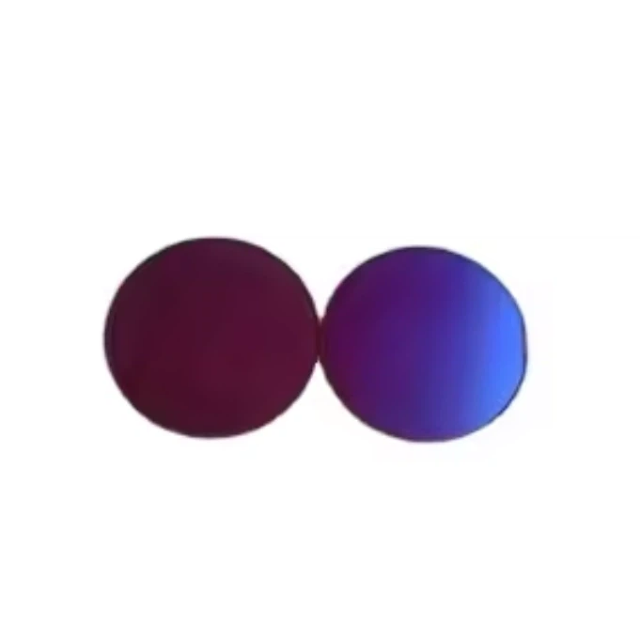
Coating Processes and Controls for Precision Results
Precision coatings are as much about the process as the design. Every layer is built through careful control of deposition methods, in-process monitoring, and post-treatment. At Haian Taiyu, we combine decades of expertise with advanced coating systems to achieve exact optical and physical characteristics.
Deposition Technologies: Choosing the Right Process
Different applications demand different coating techniques. For example, electron-beam (e-beam) evaporation provides excellent material control and is ideal for multilayer dielectric coatings. Ion-assisted deposition (IAD) adds energy to the process, enhancing film density, adhesion, and durability—essential for coatings that must withstand humidity or temperature cycling. Sputtering, especially magnetron sputtering, offers extremely uniform coatings with low absorption and high reproducibility.
Our production lines are equipped to choose and fine-tune the right process according to the optical design, ensuring the optimal combination of performance, cost, and lead time.
In-Process Monitoring for Thickness Precision
During deposition, thickness control is everything. We employ quartz crystal monitors and optical monitoring systems that provide real-time feedback on the growing layers. This ensures that each layer stops precisely at the desired thickness, minimizing spectral drift and ensuring wavelength accuracy.
Such monitoring allows us to maintain coating uniformity even across large-area optics, ensuring every batch meets exacting specifications for reflectivity, transmission, and spectral shape.
Post-Process Annealing and Environmental Sealing
After coating, components undergo annealing to relieve internal stress and improve structural stability. Proper thermal treatment prevents future warping or delamination, especially important for optics used in space or laser systems.
Finally, an environmental sealing layer is applied to protect against humidity, abrasion, and contamination. These steps complete the precision coating process, ensuring that each optic maintains its performance under real-world operating conditions.
Applications That Require the Tightest Tolerances
Not all optical systems demand ultra-precise coatings—but for industries where performance cannot fail, precision coatings are indispensable.
High-Power Lasers and Fusion Optics
In high-energy laser systems, coatings must endure extreme optical intensities without damage. The damage threshold of a mirror or lens coating determines the system’s overall reliability. Our precision optical coatings are engineered for maximum laser resistance, using dense, defect-free layers that minimize absorption and scatter. These coatings are trusted in industrial laser machining, medical systems, and scientific research applications where beam stability is critical.
Aerospace, Space Telescopes, and Metrology Optics
In aerospace and satellite optics, coatings must survive not only vacuum and radiation but also wide temperature variations. Our coatings are designed to maintain reflectance and spectral accuracy even after long-term thermal cycling. Similarly, in metrology and interferometry, coatings with minimal stress and perfect flatness ensure measurement repeatability and zero wavefront distortion.
Imaging Systems for Semiconductor Lithography
Semiconductor inspection and lithography systems require coatings with atomic-level precision. Any variation in layer thickness can lead to errors measured in nanometers—unacceptable for submicron imaging. Our coatings maintain tight spectral and angular tolerances, ensuring consistent performance for the most demanding optical instruments in the semiconductor industry.
How to Specify Precision Coatings: Practical Buyer Guidelines
To ensure that a coating meets your system’s needs, clear and detailed specifications are essential. Haian Taiyu Optical Glass Co., Ltd. works closely with customers to translate performance goals into measurable coating parameters.
Sample Specification Templates
A typical coating specification should include:
Spectral range (e.g., 400–700 nm or 1064 nm laser line)
Peak reflectance or transmittance tolerance (e.g., ±0.5% within band)
Surface flatness class (e.g., λ/10 at 632.8 nm)
Environmental durability (humidity, temperature, abrasion)
Adhesion and durability standards (MIL-C-675C or equivalent)
Providing these details helps ensure that the delivered coating matches its intended optical and environmental performance.
Lead Times, Production Runs, and Quality Assurance
Precision coatings require careful setup, but lead times remain competitive thanks to our efficient production workflows. Small-batch prototypes can typically be completed quickly, while full-scale production runs follow strict QA verification at each stage.
Every coating batch undergoes spectral testing, adhesion inspection, and environmental simulation to confirm that tolerances remain within the defined limits. Our QA documentation ensures full traceability and repeatability.
Key Questions to Ask Your Coating Vendor
To ensure coating reliability, buyers should confirm:
What calibration and monitoring methods are used?
How repeatable is the coating process between runs?
Can the supplier provide sample data of previous coatings with similar specs?
At Haian Taiyu Optical Glass Co., Ltd., we provide transparent data and certification for each project, ensuring customers have complete confidence in the performance of their coatings.
Conclusion
Precision and quality are the cornerstones of every product manufactured by Haian Taiyu Optical Glass Co., Ltd. Our precision optical coatings are engineered to meet the world’s most stringent optical, thermal, and environmental standards—ensuring that every mirror, lens, and optical window performs flawlessly in its application. Whether for laser systems, aerospace instrumentation, or advanced metrology, we provide the reliability and technical excellence that high-end optical systems demand. For technical specifications, drawings, or to request a sample coating run, please contact us today to discuss your project requirements.
 English
 العربية
 Français
 Русский
 Español
 Português
 Deutsch
 italiano
 日本語
日本語 한국어
한국어 Nederlands
 Tiếng Việt
 ไทย
ไทย Polski
 Türkçe
 አማርኛ
አማርኛ ພາສາລາວ
 ភាសាខ្មែរ
 Bahasa Melayu
 ဗမာစာ
ဗမာစာ தமிழ்
தமிழ் Filipino
 Bahasa Indonesia
 magyar
 Română
 Čeština
 Монгол
 қазақ
қазақ Српски
 हिन्दी
 فارسی
فارسی Kiswahili
 Slovenčina
 Slovenščina
 Norsk
Norsk Svenska
 українська
 Ελληνικά
 Suomi
Suomi Հայերեն
 עברית
עברית Latine
 Dansk
Dansk اردو
اردو Shqip
Shqip বাংলা
বাংলা Hrvatski
 Afrikaans
 Gaeilge
 Eesti keel
 Māori
Māori


