Every industrial application—from precision optical systems to heat-resistant lamps—depends on how glass is produced and refined. The right glass processing method affects not only clarity and strength, but also spectral stability, durability, and cost efficiency. Whether a project requires heat resistance, anti-fingerprint coatings, or highly flat optical panels, choosing the right processing route is essential. Haian Taiyu Optical Glass Co., Ltd. combines traditional craftsmanship with modern precision manufacturing to deliver glass products that perform reliably in demanding environments.
Overview: What Glass Processing Means for Buyers
In industrial and optical applications, glass processing refers to the physical and chemical operations that turn raw glass into components with specific optical, thermal, and mechanical properties. These operations may include cutting, shaping, bending, polishing, tempering, coating, and bonding. For buyers, this is not just a fabrication step. It is a key engineering decision that influences product quality, assembly efficiency, long-term durability, and overall cost.
Choosing the right process early in development can reduce rework, improve consistency, and help ensure the final product meets both functional and visual requirements.
Common Processed Glass Product Types
Different applications require different forms of processed glass. Industrial control panels often need flat, durable, scratch-resistant glass with high transparency. Bandpass filter glass is designed to control specific wavelengths in optical systems. Heat-resistant lamp glass must remain stable under high temperatures, while acid- and alkali-resistant glass is widely used in chemical, laboratory, and pharmaceutical settings. Reflective and protective glasses are also common in architecture and precision instruments where glare control and safety matter.
Each of these products depends on a different combination of glass processing methods to achieve the required balance of form, consistency, and performance.
Key Performance Parameters Customers Focus On
Most customers evaluate processed glass by a few critical parameters:
· Thermal resistance for lighting, furnaces, and other high-temperature applications
· Optical clarity and transmission for imaging, sensors, and laboratory equipment
· Surface hardness for wear resistance during use and assembly
· Spectral properties for stable UV, visible, or IR performance
At Haian Taiyu Optical Glass Co., Ltd., these requirements guide the full production process, from raw material selection to coating, finishing, and final inspection. Each stage is monitored to help ensure the delivered glass meets both technical specifications and appearance standards.
Traditional Glass Processing Methods
Before automation, glass production relied heavily on manual skill and experience. These traditional methods still have value today, especially in specialized or low-volume applications.
Blowing, Molding, Slump Bending, Annealing, and Manual Polishing
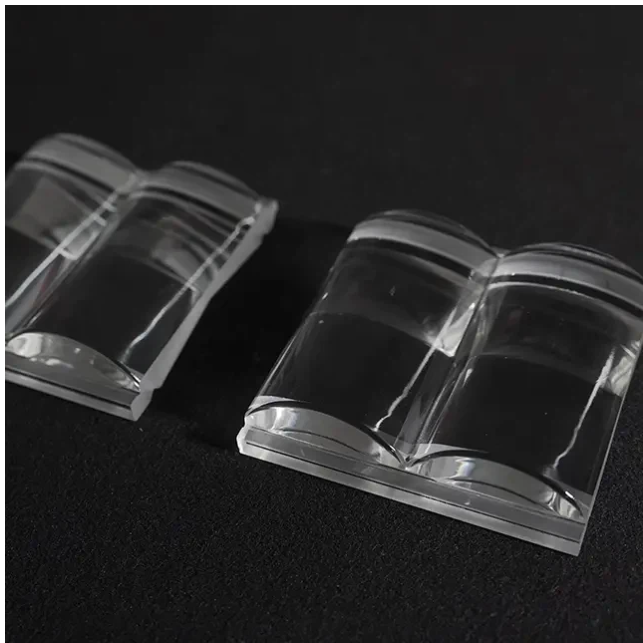
Traditional methods include glass blowing, mold shaping, slump bending, annealing, and hand polishing. Blowing is suitable for hollow or custom-shaped glass parts, while molding helps create more uniform forms. Slump bending uses heat and gravity to create curved glass, often for lighting or decorative uses. Annealing reduces internal stress through controlled cooling, and manual polishing improves edge finish and surface appearance.
Typical Use Cases
These methods are often preferred for small production runs, special geometries, artistic products, and laboratory components with non-standard dimensions. They are also useful in restoration work or applications where the visual character of hand-formed glass is important.
Limitations of Traditional Techniques
Traditional processes can be flexible, but they are less consistent in speed, repeatability, and tolerance control. Manual polishing may create surface variation, and bending results can differ from piece to piece. For industries that require micron-level flatness, precise coating compatibility, or tight spectral accuracy, traditional methods are often not enough.
Modern Glass Processing Methods
Modern manufacturing has transformed glass processing by improving precision, repeatability, and scalability. These methods are now essential for optical, electronic, and high-performance industrial applications.
CNC Cutting, Tempering, Lamination, Ion-Assisted Polishing, and Automated Bending
CNC cutting improves accuracy in shape and edge finishing, especially for complex geometries. Automated tempering increases strength and safety through controlled heating and rapid cooling. Lamination combines multiple layers for better safety, insulation, or optical performance. Ion-assisted polishing creates smoother surfaces suitable for advanced coatings, while automated bending makes it easier to achieve consistent curvature across large production runs.
Together, these processes allow manufacturers to meet stricter standards in optical quality, thermal performance, and mass-production efficiency.
Advanced Functional Glass Production
Modern methods also support advanced functional glass products. Bandpass filter glass requires highly accurate control of spectral transmission. Anti-fingerprint coatings improve usability and maintenance in touch panels and control surfaces. Heat-resistant and reflective glasses combine material engineering with precision processing for stable performance in harsh conditions. UV- and IR-transmitting glasses are also essential in specialized optical systems.
Haian Taiyu Optical Glass Co., Ltd. integrates these techniques into a complete production flow, supporting coating, lamination, polishing, and inspection under controlled quality standards.
Quality Control and Automation
Automation helps improve yield, traceability, and consistency. Inline systems can verify thickness, flatness, and coating performance during production. Spectral instruments test transmission in real time, while robotic handling reduces contamination and breakage. These systems are especially valuable in industries such as aerospace, optoelectronics, and instrumentation, where even small deviations can affect product performance.
Choosing a Method: Decision Matrix for Product Teams
Choosing between traditional and modern processing depends on production scale, technical requirements, and budget priorities.
When to Prefer Traditional Methods
Traditional methods are useful when craftsmanship, low-volume flexibility, or custom geometry is the priority. They are often suitable for prototypes, artistic forms, or small laboratory components where fast adjustments and visual character matter more than large-scale consistency.
When to Prefer Modern Methods
Modern methods are the better choice when repeatability, optical precision, and production efficiency are critical. Products such as bandpass filters, optical windows, and sensor glass often require CNC finishing, controlled coating, and tight dimensional tolerances that manual methods cannot reliably provide.
Environmental and Cost Tradeoffs
Modern processes usually reduce waste through accurate cutting and better process control, although they require higher initial equipment investment. Traditional methods need less capital equipment but may involve more labor, slower throughput, and greater material variation. The right choice depends on whether the project values artisanal flexibility or scalable precision.
Feature / Factor | Traditional Methods | Modern Methods |
Precision | Moderate, operator dependent | High, machine controlled |
Reproducibility | Limited | Excellent |
Production Speed | Slower | Faster |
Setup Cost | Lower | Higher initial |
Suitable Volume | Small batches | Large-scale runs |
Optical Tolerance | ± several microns | ± sub-micron |
Energy Efficiency | Lower | Higher with optimized systems |
Ideal Applications | Artistic, customized glass | Industrial optics, sensors |
Case Studies and Product Relevance
Example A: Bandpass Filter Glass for Imaging Sensors
Bandpass filter glass must transmit selected wavelengths while blocking others, which requires strong control over coating uniformity and surface quality. By combining CNC cutting, ion-assisted polishing, and automated coating systems, Haian Taiyu Optical Glass Co., Ltd. can achieve stable spectral performance across large batches. This helps customers improve imaging accuracy and reduce downstream calibration work.
Example B: Heat-Resistant Lamp Glass
Industrial lamps and ovens require glass that can withstand repeated high-temperature exposure without losing clarity or structure. In this case, traditional heat-resistant material formulations can work effectively with modern tempering technology. This combination improves durability while preserving the strengths of both older and newer production methods.
Integrated Glass Processing and Coating Services
Haian Taiyu Optical Glass Co., Ltd. provides one-stop solutions that combine cutting, polishing, coating, and final spectral testing in one workflow. This reduces coordination issues between suppliers, improves efficiency, and shortens lead times. Whether the application involves optical lenses, sight glass, or high-temperature viewing windows, the company’s experience in both traditional and modern glass processing supports reliable performance and stable quality.
Conclusion
Understanding traditional and modern glass processing techniques helps product teams make better decisions about performance, scale, and cost. Traditional methods remain valuable for artistic, customized, or experimental work, while modern automated processes deliver the precision and repeatability required by high-tech industries. Haian Taiyu Optical Glass Co., Ltd. brings both approaches together to provide glass solutions tailored to specific application needs.
For tailored consultation, project evaluation, or to explore a full range of optical and special glass solutions, contact us today to discuss your next project and find the right processing method for your application.
FAQ
1. What is glass processing in industrial applications?
Glass processing refers to the methods used to cut, shape, bend, polish, temper, coat, or bond glass so it meets specific optical, thermal, or mechanical requirements in industrial use.
2. What is the difference between traditional and modern glass processing techniques?
Traditional methods rely more on manual skill and are suitable for custom or small-batch products, while modern methods use automated equipment to deliver higher precision, better repeatability, and greater production efficiency.
3. When should buyers choose modern glass processing methods?
Modern glass processing methods are the better choice when a project requires tight tolerances, stable optical performance, scalable production, or advanced functions such as coatings, lamination, and spectral control.
4. Which products benefit most from advanced glass processing?
Products such as bandpass filter glass, heat-resistant lamp glass, optical windows, control panel glass, and UV or IR transmitting glass benefit greatly from advanced glass processing because they demand reliable performance and consistent quality.
 English
 العربية
 Français
 Русский
 Español
 Português
 Deutsch
 italiano
 日本語
日本語 한국어
한국어 Nederlands
 Tiếng Việt
 ไทย
ไทย Polski
 Türkçe
 አማርኛ
አማርኛ ພາສາລາວ
 ភាសាខ្មែរ
 Bahasa Melayu
 ဗမာစာ
ဗမာစာ தமிழ்
தமிழ் Filipino
 Bahasa Indonesia
 magyar
 Română
 Čeština
 Монгол
 қазақ
қазақ Српски
 हिन्दी
 فارسی
فارسی Kiswahili
 Slovenčina
 Slovenščina
 Norsk
Norsk Svenska
 українська
 Ελληνικά
 Suomi
Suomi Հայերեն
 עברית
עברית Latine
 Dansk
Dansk اردو
اردو Shqip
Shqip বাংলা
বাংলা Hrvatski
 Afrikaans
 Gaeilge
 Eesti keel
 Māori
Māori


