Unplanned downtime in chemical processing often traces back to unseen material degradation. Standard glass appears chemically stable due to its oxidized silica (SiO₂) structure. However, extreme industrial environments demand much more resilient solutions. Modern chemical plants push production materials to their absolute limits every day.
Hot, strong alkalis exceeding pH 12 easily attack standard borosilicate equipment. Specific corrosive agents dissolve these standard barriers over time. This structural failure leads to catastrophic leaks. It causes severe product cross-contamination and immense safety hazards. You cannot rely on basic material labels to prevent these costly facility disasters.
Evaluating true acid and alkali resistant glass requires deep technical diligence. Whether specifying structural fiber reinforcement or zero-porosity equipment linings, engineers must look closer. We must examine specific zirconia content. We need to verify thermal fusion limits. In this article, you will learn how to navigate ISO testing standards to ensure lasting plant safety.
Key Takeaways
- Standard glass loses up to 80% of its tensile strength within years in high-alkali (pH 12.5–13.5) environments; doping with 14–16% Zirconia (ZrO₂) enables 90%+ strength retention over decades.
- "Alkali proof" is a relative engineering term; prolonged exposure to extreme alkalis will eventually penetrate substrates, requiring precise structural margins based on the Arrhenius equation.
- Procurement of industrial chemical glass must mandate strict QA protocols, including 0.1 µm material loss thresholds (ISO 8424/10629) and spark testing for lined reactors.
- No glass formulation withstands Hydrofluoric acid (HF); alternative materials like PTFE or Sapphire glass must be specified for fluorine-heavy processes.
The Core Mechanisms of Acid and Alkali Resistant Glass
Understanding material vulnerability helps us engineer better process solutions. We must first examine how standard silica behaves under chemical stress. Glass naturally resists most common acids and strong oxidizing agents. Its internal silicon-oxygen network rests in a highly oxidized, stable state. However, alkaline environments introduce a completely different threat profile.
The Vulnerability of Standard Silica
Strong bases flood the environment with aggressive hydroxide ions. These ions attack the polarized silicon-oxygen bonds directly. They cleave the underlying structural lattice without warning. The once-stable glass network rapidly dissolves into the surrounding solution. You witness this exact degradation when boiling standard test tubes in hot sodium hydroxide. The surface becomes cloudy, brittle, and structurally compromised.
The Zirconia (ZrO₂) Shield
Material scientists solve this vulnerability through precise chemical doping. They add 14% to 16% Zirconia (ZrO₂) into the raw melt. This single addition transforms standard formulations into highly robust variants. A distinct hydration reaction occurs upon initial exposure to alkalis. It forms a dense, zirconium-rich protective coating along the boundary layer. This specialized barrier effectively blocks further ion leaching. It protects the deeper silicon network from structural collapse.
Form Factors in Chemical Plants
Engineers deploy these specialized materials across two primary operational categories.
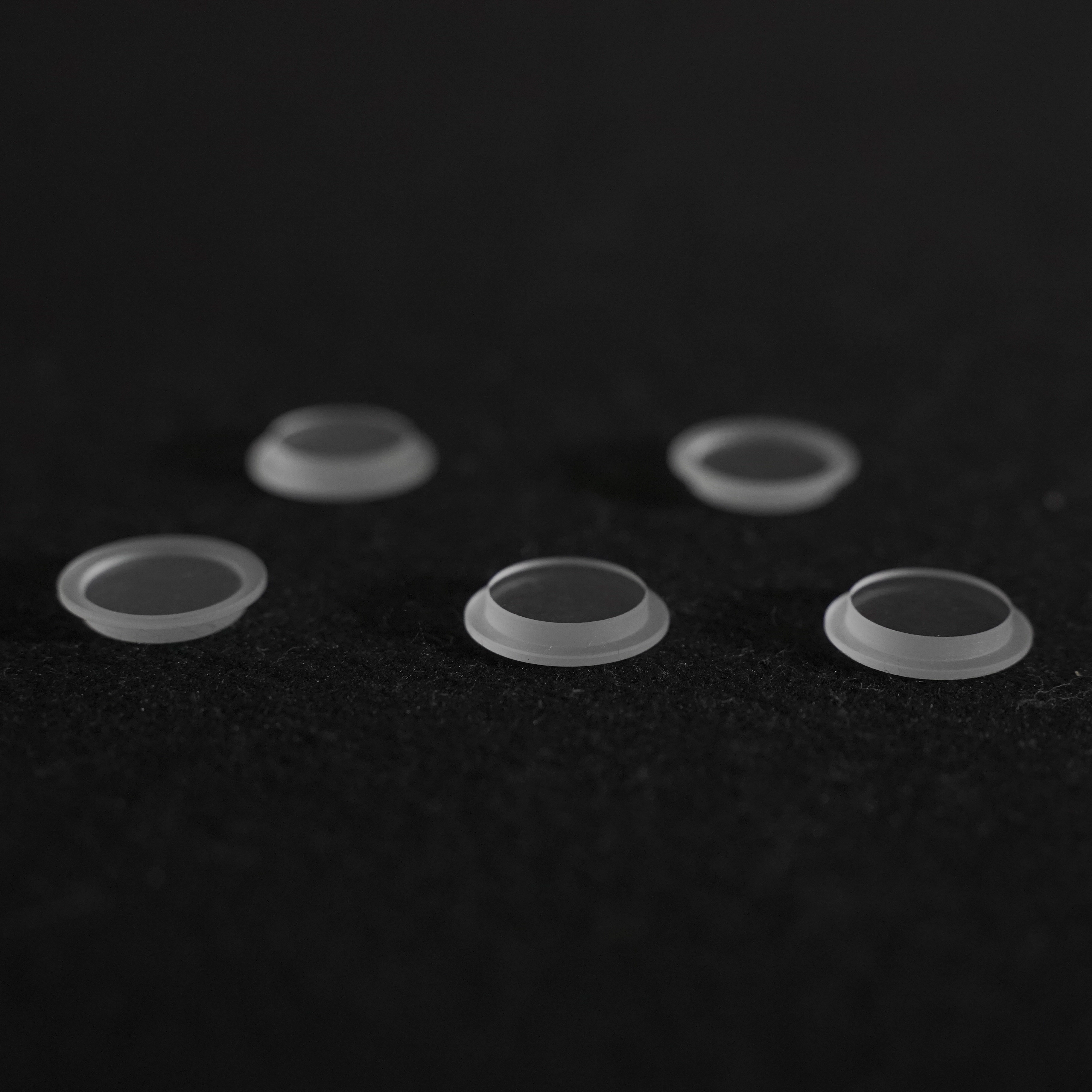
- Glass-Lined Equipment (PPGL): Manufacturers thermally fuse high-purity glass to steel or co-polymer substrates. This technique creates absolute zero porosity. It delivers immense mechanical bond strength. Facilities rely on this chemical resistant glass for massive reaction vessels and bulk storage tanks.
- AR Glass Fibers: Technicians mix these chopped fibers into structural composites. They reinforce concrete matrices or Fiberglass Reinforced Plastic (FRP). These elements easily survive highly corrosive ambient fumes inside modern processing plants.
Establishing Baselines: Key Evaluation Criteria for Procurement
Plant managers must ignore generic marketing claims during procurement. Engineers require hard, verifiable data to build safe facilities. We must measure exact material loss rates under controlled stress. This specific metric separates true industrial chemical glass from cheap, temporary commercial substitutes.
Quantifying Chemical Resistance
True evaluation moves far beyond simple pass-or-fail marketing labels. The industry relies on standardized corrosion thresholds. Laboratories measure the exact time required to lose 0.1 µm of surface thickness. We classify materials based on this strict temporal metric. Faster surface loss indicates poor atomic cross-linking. Slower loss proves a robust zirconium shield exists.
ISO Standard Compliance
Always force your vendors to supply mapped laboratory testing data. You must evaluate against two specific global benchmarks:
- ISO 8424: This standard verifies resistance to severe acidic attacks. Technicians submerge samples in a 0.5 mol/L nitric acid solution. They record the degradation curve meticulously.
- ISO 10629: This protocol tests resistance to powerful alkaline attacks. Labs utilize a 50°C, pH 12 NaOH solution. They track the timeframe until the 0.1 µm surface loss occurs.
Physical & Thermal Specifications
Chemical defense forms only one part of the engineering equation. Mechanical and thermal realities dictate daily operational survival.
Operations often involve sudden, violent temperature swings during batch mixing. Composite glass-lined systems typically possess maximum operating thresholds around 200°C. You must specify materials featuring low thermal expansion coefficients. This singular property prevents catastrophic shattering during rapid cooling phases.
Furthermore, agitated chemical slurries cause intense internal abrasive wear. The constant friction degrades weak linings quickly. Expect a hardness rating of approximately 7 Mohs. This ensures the internal vessel walls resist physical scouring while blocking chemical penetration.
Core Evaluation Metrics Summary Chart
| Performance Property | Standard / Metric | Expected Baseline Value |
| Acidic Resistance | ISO 8424 (0.5 mol/L Nitric Acid) | Time to 0.1 µm surface loss certified |
| Alkaline Resistance | ISO 10629 (pH 12 NaOH @ 50°C) | Time to 0.1 µm surface loss certified |
| Thermal Shock Tolerance | Maximum Operating Threshold | Up to 200°C (system dependent) |
| Mechanical Durability | Mohs Hardness Scale | Approximately 7 Mohs |
Engineering Realities: The Limits of "Acid Proof" Claims
Nothing in industrial chemistry remains perfectly immune forever. Marketers love absolute terms, but engineers deal in practical timelines. We must understand the exact failure modes of our specified materials. This ensures we implement the right preventative maintenance schedules.
The Hydrofluoric Acid (HF) Exception
Hydrofluoric acid represents a unique, devastating exception. It destroys the silicon-oxygen framework entirely. All standard and fortified variants fail rapidly here. No true acid proof glass exists for high-concentration HF processing. Fluoride ions possess extreme electronegativity. They aggressively rip the silica lattice apart upon contact.
Facilities handling HF must specify complete material substitutions. You should implement specialized plastics like PTFE or Teflon. Polypropylene (PP) handles lower temperature applications well. Monocrystalline aluminum oxide, known as Sapphire glass, provides excellent transparent viewing ports for these specific use cases.
Degradation Timelines & Structural Margins
Adopt a skeptical, evidence-based approach to long-term immunity claims. We must utilize established predictive models. Fick’s law of diffusion explains how liquids travel through solid composites. The Arrhenius equation calculates how temperature accelerates this chemical attack. Together, they reveal a harsh industrial truth.
Extreme alkaline environments around pH 13.7 will eventually compromise specialized linings. The degradation just takes decades instead of days. Chemicals will eventually diffuse through outer matrix resins. They will inevitably reach the internal reinforcement network.
Therefore, mandate generous structural design margins. Calculate the eventual chemical diffusion depth accurately. You must over-engineer the initial thickness to account for this predictable, slow-motion decay.
Quality Assurance & Implementation Checklists
Designing a resilient system represents only the first phase. Execution ultimately dictates success or failure. Specialized materials require flawless processing routines. We must monitor fabrication just as closely as we monitor operations.
Manufacturing Imperatives
Improper handling destroys the inherent chemical resistance quickly. Overmixing structural AR fibers creates a major problem during FRP fabrication. Excessive shear forces fracture the delicate glass strands. This ruins their optimal aspect ratio. The resulting composite becomes brittle and weak.
Furthermore, improper curing leaves fatal vulnerabilities in composite linings. If resins do not cross-link fully, chemicals penetrate the matrix rapidly. We must control ambient humidity and curing temperatures rigidly. These manufacturing variables dictate the ultimate lifespan of your installation.
Mandatory Testing Protocols
Do not trust visual inspections or generic vendor guarantees alone. You need precise, repeatable QA methods. This ensures an absolute alkali proof barrier exists before operations begin.
- Spark Testing: Technicians sweep a high-voltage probe across the entire glass-lined reactor wall. The electrical arc jumps only where microscopic pinholes exist. This verifies a totally continuous, zero-defect barrier.
- Porosity & Thickness Audits: Validate coating thickness relentlessly. Use calibrated magnetic or ultrasonic gauges. Linings must meet the precise 1.5 mm to 3.5 mm industrial standards everywhere. Thin spots guarantee rapid substrate corrosion.
- Cure Verification: Perform localized solvent rub tests on composite matrix elements. This ensures the structural resins fully polymerized around the embedded fibers.
Conclusion
Acid and alkali resistant formulations bridge a critical engineering gap. They combine the inherent stability of pure silica with targeted structural reinforcements. This effectively shields vital plant equipment from violent, industrial-scale corrosive processing.
Do not rely on generic data sheets claiming chemical stability. You must specify exact ZrO₂ percentages for all composite reinforcements. Demand comprehensive ISO 8424 and 10629 compliance data from every supplier. Always calculate lifecycle degradation using established thermodynamic models rather than hoping for indefinite survival.
Take action immediately to protect your facility. Audit your current reactor vessel linings alongside a qualified engineering consultant. Inspect aging structural FRP elements for signs of subsurface fiber degradation. Finally, request updated technical data sheets from your manufacturers matching the strict testing parameters outlined above.
FAQ
Q: What is the difference between borosilicate glass and alkali-resistant glass?
A: Borosilicate offers a low coefficient of thermal expansion and general acid resistance. However, hot strong bases dissolve it easily. Alkali-resistant variants incorporate heavy doses of Zirconia (ZrO₂). This addition directly blocks hydroxide ion attacks, ensuring long-term structural survival in extreme high-pH industrial environments.
Q: Is there any type of industrial chemical glass that resists Hydrofluoric acid (HF)?
A: No standard silica-based formulation resists HF. Fluoride ions aggressively destroy silicon bonds upon contact. Facilities handling HF must substitute standard viewports and linings completely. Specialized plastics like PTFE, Teflon, or monocrystalline Sapphire glass serve as the required safe alternatives.
Q: How do you test the integrity of glass-lined chemical equipment?
A: Industry-standard QA relies on high-voltage Spark Testing. This process detects microscopic, invisible pinholes. Technicians combine this with strict porosity and ultrasonic thickness measurements. Validating a continuous 1.5–3.5 mm physical barrier ensures full compliance with critical DIN and ASTM safety standards.
Q: Does alkali proof glass degrade over time?
A: Yes. The term "proof" is merely industry shorthand for highly resistant. Under continuous extreme alkaline exposure (pH 13+), AR variants experience gradual strength reduction. Proper chemical plant engineering always accounts for this. Teams use long-term thermodynamic degradation models to dictate safe replacement schedules.
 English
 العربية
 Français
 Русский
 Español
 Português
 Deutsch
 italiano
 日本語
日本語 한국어
한국어 Nederlands
 Tiếng Việt
 ไทย
ไทย Polski
 Türkçe
 አማርኛ
አማርኛ ພາສາລາວ
 ភាសាខ្មែរ
 Bahasa Melayu
 ဗမာစာ
ဗမာစာ தமிழ்
தமிழ் Filipino
 Bahasa Indonesia
 magyar
 Română
 Čeština
 Монгол
 қазақ
қазақ Српски
 हिन्दी
 فارسی
فارسی Kiswahili
 Slovenčina
 Slovenščina
 Norsk
Norsk Svenska
 українська
 Ελληνικά
 Suomi
Suomi Հայերեն
 עברית
עברית Latine
 Dansk
Dansk اردو
اردو Shqip
Shqip বাংলা
বাংলা Hrvatski
 Afrikaans
 Gaeilge
 Eesti keel
 Māori
Māori


