Standard silicate glass absorbs infrared radiation, rendering it completely opaque to thermal sensors. This physical limitation forces engineers to specify specialized Infrared Glass and crystalline substrates to capture heat signatures accurately. The stakes for optical specification are high. Selecting the wrong substrate leads to severe signal attenuation, thermal defocusing, environmental degradation, and unsustainable unit costs at scale. Evaluating materials based on transmission bands, mechanical durability, and manufacturing scalability is necessary. Engineers must navigate the complexities of Short-Wave Infrared (SWIR), Mid-Wave Infrared (MWIR), and Long-Wave Infrared (LWIR) spectrums. Matching the exact transmission curve of the glass to the detector ensures optimal system performance and maximizes return on investment. You must understand the specific atmospheric windows and sensor requirements to design a functional optical assembly that survives field conditions.
- Material-to-Band Matching is Non-Negotiable: System efficacy relies on pairing the detector's spectral range (e.g., MWIR vs. LWIR) with the precise transmission curve of the selected infrared glass.
- Detector Type Influences Optical Design: Cooled photon detectors and uncooled thermal detectors (microbolometers) impose distinct transmission, emission, and numerical aperture requirements on IR optics.
- Athermalization is a Primary Design Constraint: High-performance IR optics must account for the high thermo-optic coefficients of materials like Germanium to prevent thermal runaway and focus degradation in fluctuating environments.
- Scalability Dictates Material Choice: While crystalline materials offer peak performance for low-volume or military applications, moldable chalcogenide glasses are increasingly required for scaling commercial thermal imaging systems.
The Role of Infrared Glass in Thermal Imaging and Laser Systems
Overcoming the Limitations of Standard Optics
Borosilicate and crown glasses block wavelengths beyond 2.5µm. The molecular bonds in these standard materials absorb thermal energy, converting it into heat rather than transmitting it to a sensor. Specialized IR optics are necessary to transmit wavelengths from 1µm to 14µm without scattering the signal. Atmospheric transmission windows dictate design parameters heavily. Water vapor and CO2 absorption bands restrict wavelength selection, forcing designers to target specific atmospheric windows where thermal energy passes freely. Engineers must design around the 3-5µm (MWIR) and 8-12µm (LWIR) atmospheric windows. Outside these bands, atmospheric absorption severely degrades signal integrity. Selecting materials that offer peak transmission precisely within these windows is non-negotiable for long-range detection and accurate temperature measurement. When you design an optical payload for a drone or a ground vehicle, you must account for the specific humidity and atmospheric conditions of the deployment environment.
To further understand the limitations, consider the molecular structure of standard glass. The silicon-oxygen bonds vibrate at frequencies that match the incoming infrared photons. This resonance causes the glass to absorb the energy. In contrast, materials used for infrared transmission have heavier atoms and weaker bonds, which shift their absorption bands further into the far-infrared, leaving the MWIR and LWIR windows clear. This fundamental difference in material science dictates every decision in optical engineering for thermal systems.
Core Applications Across Industries
Industrial thermography relies heavily on process monitoring and non-destructive testing. High-temperature monitoring of glass production lines requires narrow-band filtering through specialized infrared glass to isolate specific thermal signatures. Medical diagnostics utilize quantitative thermography for physiological mapping and contact-free core temperature monitoring, demanding exceptional optical stability. Defense and aerospace sectors deploy these materials for target acquisition, night vision, and harsh-environment surveillance. A high-power laser system requires robust beam delivery, focusing lenses, and protective windows capable of withstanding intense energy without suffering catastrophic thermal failure.
In the field of predictive maintenance, technicians use thermal cameras to inspect electrical substations. A failing transformer will show a distinct heat signature long before it fails mechanically. The optics in these cameras must transmit the exact wavelengths emitted by the overheating components. Similarly, in gas leak detection, specific narrow-band filters are applied to the lenses to visualize fugitive emissions of methane or sulfur hexafluoride. These applications demand precise control over the optical transmission curve.
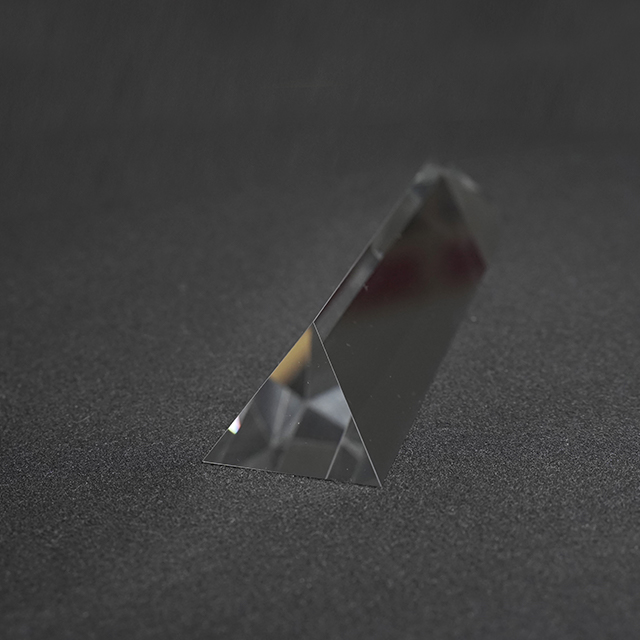
Primary Infrared Glass and IR Optics Materials
Chalcogenide Glass
Chalcogenide glass consists of amorphous alloys containing sulfur, selenium, or tellurium. Its primary advantage is the ability to undergo precision glass molding (PGM). This drastically reduces high-volume production costs compared to diamond-turned crystals. The material offers excellent transmission capabilities for both MWIR and LWIR bands. It also exhibits lower thermal dependence than traditional crystalline materials. This lower thermo-optic coefficient simplifies athermalization efforts, allowing engineers to design lighter, more stable lens assemblies for fluctuating temperature environments.
When manufacturing chalcogenide lenses, the molding process requires precise temperature control. The glass preform is heated just above its glass transition temperature and pressed between highly polished tungsten carbide molds. This process allows for the creation of complex aspheric and diffractive surfaces in a single step, eliminating the need for secondary polishing. This capability is what makes chalcogenide the preferred material for automotive night vision systems and commercial security cameras.
Germanium (Ge)
Germanium remains the traditional industry standard for LWIR thermal imaging. Its exceptionally high refractive index allows for highly efficient, low-curvature lens designs. This significantly reduces spherical aberration and enables compact optical systems. The critical limitation of Germanium is thermal runaway. The material becomes opaque at temperatures above 100°C, rendering it completely unsuitable for extreme heat environments or uncooled high-temperature industrial monitoring.
Despite its thermal limitations, Germanium is unmatched in its optical performance at room temperature. The high index of refraction (approximately 4.0) means that a single Germanium lens can often do the work of two or three lenses made from lower-index materials. This reduces the overall weight and complexity of the optical assembly. However, this high index also means that uncoated Germanium reflects over 50% of incoming light, making high-efficiency anti-reflective coatings an absolute requirement.
Zinc Selenide (ZnSe) and Zinc Sulfide (ZnS)
Zinc Selenide is the premier choice for CO2 laser system optics. It features exceptionally low absorption at 10.6µm and a broad transmission range from the visible spectrum through the LWIR band. This makes it ideal for high-power beam delivery components. Multispectral Zinc Sulfide, often referred to as Cleartran, serves applications requiring both visible and infrared transmission. This dual-band capability makes it ideal for multi-sensor targeting payloads and complex aerospace windows.
Working with ZnSe requires strict safety protocols. The material is relatively soft and easily scratched, meaning technicians must handle it with extreme care during assembly and cleaning. Furthermore, if a ZnSe lens fails catastrophically under high laser power, it can release toxic fumes. Proper exhaust and containment systems are mandatory in industrial laser cutting environments that utilize ZnSe optics.
Sapphire and Fluorides (Calcium/Barium Fluoride)
Sapphire provides extreme durability, high pressure resistance, and scratch resistance in SWIR and MWIR applications. It is frequently deployed in harsh environments where mechanical integrity is just as critical as optical transmission. Fluorides like Calcium Fluoride and Barium Fluoride offer broad transmission from the ultraviolet spectrum through the MWIR band. However, they present significant mechanical fragility and high susceptibility to thermal shock, requiring careful mounting and environmental protection.
| Material | Primary Transmission Band | Refractive Index (approx) | Key Advantage | Primary Limitation |
| Chalcogenide Glass | MWIR, LWIR | 2.4 - 2.8 | Precision Glass Molding (PGM) capable | Lower transmission efficiency than Ge |
| Germanium (Ge) | LWIR | 4.0 | High refractive index, low aberration | Thermal runaway above 100°C |
| Zinc Selenide (ZnSe) | Broadband (Vis to LWIR) | 2.4 | Low absorption at 10.6µm | Soft material, easily scratched |
| Sapphire | SWIR, MWIR | 1.7 | Extreme mechanical durability | Limited transmission beyond 5µm |
| Calcium Fluoride | UV to MWIR | 1.4 | Broadband transmission | High susceptibility to thermal shock |
Evaluating Infrared Glass for Your System: Key Decision Criteria
Detector Architecture Alignment: Cooled Photon Detectors vs. Uncooled Thermal Detectors
Cooled photon detectors deliver high-speed, high-sensitivity performance. They require high-purity IR optics with minimal self-emission to avoid saturating the sensor with parasitic thermal radiation. The optical materials must maintain exceptional clarity and uniformity. Uncooled thermal detectors, such as microbolometers, offer cost-effective, slower response systems. They demand highly transmissive, high-numerical-aperture infrared glass to maximize photon collection efficiency. The lens design must gather as much thermal energy as possible to compensate for the lower sensitivity of the uncooled sensor.
When integrating a cooled detector, the optical assembly often includes a cold shield. The optics must be designed so that the detector only "sees" the scene through the lenses, and not the warm internal housing of the camera. This requires precise control over the exit pupil of the lens system. For uncooled systems, the focus is entirely on maximizing the f-number. An f/1.0 lens will collect significantly more light than an f/1.4 lens, directly improving the noise equivalent temperature difference (NETD) of the microbolometer.
Qualitative vs. Quantitative Thermography Requirements
Qualitative thermography prioritizes high contrast for applications like search and rescue or basic surveillance. Cost-effective, moldable chalcogenide optics perform exceptionally well in these scenarios where absolute temperature measurement is secondary to image clarity. Quantitative thermography demands highly stable IR glass with minimal temperature-dependent transmission drift. A low thermo-optic coefficient (dn/dT) ensures repeatable, absolute temperature measurements required for medical clinical diagnostics and precise industrial calibration.
If you are designing a system for fever screening, the absolute accuracy of the measurement is paramount. The optical system must be calibrated against a known blackbody source, and the transmission of the lenses must remain constant regardless of the ambient temperature in the room. This often requires active temperature stabilization of the lens assembly or complex software compensation algorithms based on real-time temperature readings of the optical housing.
Wavelength Transmission and Refractive Index
Mapping the sensor type to the material's transmission curve is critical for system success. Any mismatch results in severe signal attenuation. The refractive index directly impacts lens thickness, overall system weight, and the necessity for complex multi-lens assemblies. High-index materials allow for thinner lenses with less curvature. However, these materials also suffer from high surface reflection, making rigorous anti-reflective coatings absolutely mandatory to achieve acceptable transmission rates.
- Determine the exact spectral response of the chosen detector.
- Overlay the transmission curves of potential optical materials.
- Calculate the required lens thickness based on the refractive index and desired focal length.
- Assess the impact of surface reflections and specify appropriate AR coatings.
- Evaluate the total system weight and adjust material choices if necessary.
Thermal and Mechanical Operating Environments
The thermo-optic coefficient (dn/dT) directly impacts focal shift. High dn/dT materials lose focus rapidly as ambient temperatures change, requiring complex compensation mechanisms. Engineers must calculate the expected temperature range and select materials accordingly. Success criteria for environmental survivability include resistance to humidity, salt fog, abrasion, and extreme temperature fluctuations. Materials deployed in marine or aerospace environments require strict MIL-SPEC testing to ensure long-term reliability.
Consider a thermal weapon sight deployed in a desert environment. The temperature can swing from freezing at night to over 50°C during the day. If the optics are made entirely of Germanium, the focal plane will shift drastically, rendering the sight useless without constant manual adjustment. By incorporating chalcogenide elements with a negative dn/dT, the optical designer can passively athermalize the system, ensuring it remains in focus across the entire temperature range.
Manufacturing and Scalability Constraints
Single Point Diamond Turning (SPDT) suits crystalline materials for low-volume production and rapid prototyping. It allows for complex aspheric profiles without expensive tooling. However, it scales poorly for mass production. Precision Glass Molding (PGM) for chalcogenide glass scales efficiently for high-volume demands. Production volume dictates the viability of specific infrared glass types. Investing in molding tools is only justifiable when production runs reach thousands of units.
The SPDT process uses a single-crystal diamond tool to physically cut the lens surface on an ultra-precision lathe. This process can achieve surface roughness in the nanometer range, which is critical for minimizing scatter in the LWIR band. However, cutting a single Germanium lens can take hours. In contrast, a PGM cycle for a chalcogenide lens might take only a few minutes, making it the only viable option for consumer-grade thermal cameras.
Trade-Offs in IR Optics Sourcing and Implementation
Cost vs. Performance Realities
Raw material price volatility severely impacts long-term production forecasting. Germanium prices fluctuate heavily based on supply constraints and geopolitical factors. Relying solely on Germanium introduces significant supply chain risk for high-volume manufacturers. Upfront tooling costs for chalcogenide molding are high, requiring significant initial capital. However, the long-term per-unit savings justify the investment for mass production. Engineers must balance the initial NRE (Non-Recurring Engineering) costs against the projected lifecycle volume.
When evaluating the bill of materials for a new thermal imaging product, the optics often represent the largest single cost driver. Procurement teams must work closely with engineering to determine if a slightly lower-performing, but significantly cheaper, chalcogenide lens can meet the system requirements. This trade-off analysis is a continuous process throughout the product development lifecycle.
The Critical Role of Anti-Reflective (AR) Coatings
High-index materials require AR coatings to prevent severe transmission loss. Uncoated Germanium reflects over 50% of incident light, rendering the raw lens nearly useless. Custom thin-film coatings are required to maximize throughput. Engineers must evaluate the trade-off between high-efficiency multi-layer coatings and environmental durability. Diamond-Like Carbon (DLC) coatings provide robust protection for harsh environments but may slightly reduce peak transmission compared to highly optimized, fragile multi-layer stacks.
The coating process involves placing the finished lenses in a vacuum chamber and using electron beam evaporation or ion-assisted deposition to apply microscopic layers of dielectric materials. The exact thickness and composition of these layers are calculated to create destructive interference for reflected light and constructive interference for transmitted light. A poorly executed coating run can ruin a batch of expensive lenses, making quality control at this stage absolutely critical.
Common Implementation Risks and Mitigation Strategies
Thermal Defocusing
Systems lose focus as ambient temperature changes due to the material's refractive index shifting. This thermal defocusing degrades image quality and measurement accuracy in field conditions. Implement optical athermalization by combining materials with opposite thermal coefficients within the lens assembly. Alternatively, utilize mechanical athermalization through motorized focus adjustments linked to internal temperature sensors.
Mechanical athermalization requires precise calibration. The system must map the exact position of the focus motor to the current temperature reading. This adds complexity to the software and introduces moving parts that can fail in high-vibration environments. Optical athermalization is generally preferred for ruggedized systems, as it relies entirely on the passive properties of the glass.
Supply Chain Volatility
Over-reliance on single-source raw materials creates dangerous production bottlenecks. Geopolitical export controls frequently disrupt Germanium availability, stalling manufacturing lines. Design systems with chalcogenide glass alternatives whenever possible. Qualify multiple material suppliers and alternative optical designs during the R&D phase to ensure continuous production regardless of market fluctuations.
Smart engineering teams maintain two separate optical designs for their flagship products: one optimized for Germanium and one optimized for Chalcogenide. If the supply of one material dries up, they can switch production to the alternative design with minimal downtime. This requires upfront investment in engineering but pays off massively during supply chain crises.
Coating Degradation & Environmental Blockers
AR coatings face delamination or scratching in field conditions. Moisture condensation completely blocks infrared transmission, blinding the thermal sensor. Specify MIL-SPEC environmental testing for all coatings to ensure field durability. Use hydrophobic coatings to repel water and utilize protective germanium or sapphire windows to shield sensitive internal optics from direct environmental exposure.
- Perform severe abrasion testing using the eraser test specified in MIL-C-675C.
- Subject the coated lenses to 24-hour humidity cycling to check for delamination.
- Test for salt fog resistance if the system will be deployed in maritime environments.
- Verify the adhesion of the coating using the standard tape pull test.
Conclusion
There is no universal best infrared glass. Selection requires calculating detector type, quantitative accuracy needs, operating environment, and production volume. Recommend Germanium for low-volume, high-performance LWIR. Choose Chalcogenide for high-volume commercial thermal imaging. Specify ZnSe for high-power laser systems.
- Request detailed transmission curves and dn/dT specifications from optical suppliers before finalizing designs.
- Consult with optical coating specialists early in the design phase to define environmental durability requirements and coating limitations.
- Prototype with diamond-turned chalcogenide to verify optical performance before investing in expensive precision glass molding tools.
- Establish a multi-source supply chain for critical raw materials to mitigate geopolitical and market volatility risks.
FAQ
Q: Why can't thermal cameras see through standard glass or water?
A: Standard silicate glass and liquid water strongly absorb mid-wave and long-wave infrared radiation. They act as an opaque barrier to thermal energy. This physical limitation necessitates specialized IR optics designed specifically to transmit these longer wavelengths without absorption.
Q: What is the difference between photon detectors and thermal detectors regarding optical glass choice?
A: Photon detectors require optics with extremely low self-emission and tight tolerances to prevent background noise from saturating the sensor. Thermal detectors, like microbolometers, focus on high transmission and wide aperture angles to gather maximum thermal energy.
Q: What is the best infrared glass for LWIR thermal imaging?
A: Germanium offers peak optical performance at room temperature due to its high refractive index and low dispersion. Chalcogenide glass provides a high-volume, cost-effective alternative that supports athermalized designs and easier manufacturing at scale.
Q: How does chalcogenide glass compare to germanium?
A: Chalcogenide can be precision molded, significantly reducing high-volume production costs. It is less susceptible to thermal defocusing and avoids the extreme raw material price volatility of germanium. However, it may have slightly lower peak transmission efficiency.
Q: What role does infrared glass play in a laser system?
A: It functions as focusing lenses, beam splitters, and protective windows. Low-absorption materials like ZnSe are absolutely critical to prevent thermal lensing and catastrophic material failure under continuous high power loads.
Q: How do anti-reflective coatings impact IR optics performance?
A: AR coatings are mandatory for high-index IR materials to reduce severe surface reflections. They increase total system transmission from roughly 50% to over 95%, ensuring maximum thermal signal reaches the detector.
Q: What is optical athermalization in thermal imaging?
A: It is the process of pairing different infrared glass materials with offsetting thermal properties. This ensures the lens assembly maintains sharp focus across a wide range of operating temperatures without requiring active mechanical adjustments.
 English
 العربية
 Français
 Русский
 Español
 Português
 Deutsch
 italiano
 日本語
日本語 한국어
한국어 Nederlands
 Tiếng Việt
 ไทย
ไทย Polski
 Türkçe
 አማርኛ
አማርኛ ພາສາລາວ
 ភាសាខ្មែរ
 Bahasa Melayu
 ဗမာစာ
ဗမာစာ தமிழ்
தமிழ் Filipino
 Bahasa Indonesia
 magyar
 Română
 Čeština
 Монгол
 қазақ
қазақ Српски
 हिन्दी
 فارسی
فارسی Kiswahili
 Slovenčina
 Slovenščina
 Norsk
Norsk Svenska
 українська
 Ελληνικά
 Suomi
Suomi Հայերեն
 עברית
עברית Latine
 Dansk
Dansk اردو
اردو Shqip
Shqip বাংলা
বাংলা Hrvatski
 Afrikaans
 Gaeilge
 Eesti keel
 Māori
Māori


