Optical filters are essential components in many scientific, industrial, and consumer applications. They control the transmission and reflection of light, allowing specific wavelengths to pass while blocking or reflecting others. From photography and astronomy to laser systems and optical instruments, optical filters play a critical role in shaping the behavior of light.
In this article, we explore the different types of optical filters—absorptive, dichroic, and interference filters—their working principles, applications, and how to select the right filter for specific needs.
1. What Are Optical Filters?
Optical filters are devices designed to selectively transmit or block certain wavelengths of light. They can be made of glass, plastic, or thin-film coatings and are used to modify the spectral content of light in various optical systems. Key purposes include:
Wavelength selection: Allowing only desired wavelengths to pass while blocking others.
Intensity control: Reducing the intensity of light without affecting its spectral properties.
Color correction: Adjusting the color balance in photography or imaging systems.
Protection: Shielding sensitive detectors or eyes from harmful wavelengths.
Optical filters are broadly categorized into absorptive filters, dichroic (or reflective) filters, and interference filters, each with unique mechanisms and applications.
2. Absorptive Optical Filters
a How They Work
Absorptive filters are made of colored glass or plastic that contains specific dyes. These dyes absorb unwanted wavelengths while allowing the desired wavelengths to pass through. The transmission spectrum is determined by the chemical composition of the filter material.
b Advantages
Simplicity: Easy to manufacture and handle.
Durability: Resistant to mechanical damage and environmental factors.
Cost-effective: Often more affordable than complex coatings.
c Limitations
d Applications
Photography filters for color correction.
Basic laboratory filters for educational or demonstration purposes.
Lighting filters in stage and architectural applications.
3. Dichroic Optical Filters
a How They Work
Dichroic filters, also known as thin-film or reflective filters, work by selectively reflecting unwanted wavelengths while transmitting desired wavelengths. They are made by depositing multiple thin layers of dielectric materials onto a glass substrate.
b Advantages
High efficiency: Minimal absorption, allowing most desired light to pass.
Narrower spectral selection: Can target specific wavelengths more precisely.
Durability: Resistant to fading because the mechanism relies on reflection, not absorption.
c Limitations
d Applications
Fluorescence microscopy, where specific excitation and emission wavelengths are required.
Beam-splitting in optical instruments.
Stage lighting and projection systems for precise color control.
4. Interference Optical Filters
a How They Work
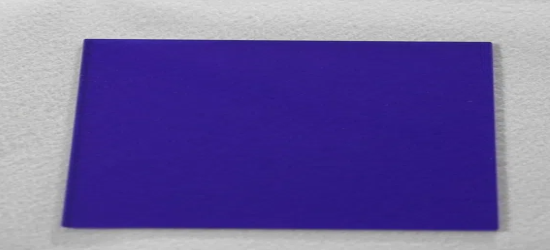
Interference filters operate based on the principles of constructive and destructive interference. They consist of multiple thin layers of dielectric materials with alternating high and low refractive indices deposited on a glass substrate. When light strikes the filter, certain wavelengths are reinforced (constructive interference) while others are canceled out (destructive interference). By precisely controlling the thickness and refractive index of each layer, manufacturers can engineer filters to transmit or reflect very specific wavelengths with high accuracy. This makes interference filters highly versatile for applications that demand exact spectral control.
b Advantages
High precision: Interference filters can isolate extremely narrow spectral bands, providing sharp cutoffs and excellent wavelength selectivity.
Customizable: Layer designs can be tailored to almost any wavelength range, enabling specialized applications across science, industry, and medical fields.
Low absorption: Unlike absorptive filters, interference filters transmit most of the desired light while minimizing energy loss, improving overall system efficiency.
Durability: Coated layers are resistant to fading or chemical degradation, ensuring long-lasting performance.
c Limitations
Angle sensitivity: The performance of interference filters can shift if the light strikes at an angle other than perpendicular, requiring careful alignment in optical systems.
Complex manufacturing: Producing these filters requires advanced thin-film deposition techniques and stringent quality control, making them more expensive than simpler absorptive filters.
d Applications
Scientific instruments: Spectrometers, photometers, and other analytical devices rely on interference filters for precise wavelength separation.
Laser systems: Select specific wavelengths for medical, industrial, or research lasers.
Astronomy: Capture detailed images of celestial phenomena by isolating narrow spectral lines, such as hydrogen-alpha emissions in nebulae.
Imaging and photography: Enhance color accuracy and contrast in specialized cameras or optical sensors.
Interference optical filters are thus indispensable in situations requiring accuracy, stability, and minimal light loss, making them a cornerstone of modern optical technology.
5. Choosing the Right Optical Filter
Selecting the appropriate optical filter depends on the intended application, desired wavelength range, and performance requirements. Consider the following factors:
Wavelength precision: Interference filters are ideal for applications requiring narrow spectral bands.
Light intensity: Dichroic filters preserve more light compared to absorptive filters.
Durability: Dichroic and interference filters generally last longer than absorptive filters.
Cost: Absorptive filters are more economical for low-precision applications.
Angular sensitivity: For systems where the angle of incidence varies, absorptive filters may provide more consistent results.
6. Practical Applications Across Industries
a Photography and Imaging
Optical filters enhance color balance, reduce glare, and allow for creative effects. Absorptive filters are common in photography, while dichroic and interference filters are used in advanced imaging systems.
b Scientific Research
In laboratories, filters are critical for separating wavelengths in spectroscopy, microscopy, and laser experiments. Interference and dichroic filters provide precise control over light selection.
c Medical Devices
Fluorescence imaging, endoscopy, and other diagnostic tools rely on filters to isolate specific wavelengths for accurate results.
d Industrial and Consumer Electronics
Projectors, LED lighting, cameras, and optical sensors use filters for color correction, wavelength selection, and protection against unwanted light.
7. Maintaining and Handling Optical Filters
Proper care ensures longevity and consistent performance:
Cleaning: Use lens tissue or microfiber cloth with mild solvents. Avoid abrasive materials that can scratch coatings.
Storage: Keep filters in protective cases or sleeves to prevent dust accumulation.
Handling: Minimize direct contact with the coated surfaces to avoid fingerprints or damage.
Inspection: Periodically check for scratches, delamination, or coating degradation.
8. Advancements in Optical Filter Technology
Modern optical filters continue to evolve with technological innovations:
Multi-band filters: Capable of passing or blocking multiple wavelength ranges simultaneously.
Anti-reflective coatings: Reduce unwanted reflections and enhance transmission efficiency.
Temperature-stable designs: Maintain performance under varying environmental conditions.
Miniaturized filters: For compact devices such as smartphones, cameras, and portable medical instruments.
These advancements enable more precise, durable, and efficient optical systems for a wide range of applications.
9. Conclusion
Optical filters are indispensable tools in controlling light for scientific, industrial, and consumer applications. Absorptive filters offer simplicity and cost-effectiveness, dichroic filters provide efficiency and durability, and interference filters deliver high precision and narrow spectral control.
Choosing the right filter depends on your specific needs, including wavelength selection, intensity, durability, and cost. With proper selection, handling, and maintenance, optical filters can significantly enhance the performance of imaging systems, scientific instruments, medical devices, and consumer electronics.
For those seeking high-quality optical filters, Haian Taiyu Optical Glass Co., Ltd. offers a wide range of absorptive, dichroic, and interference filters suitable for professional, industrial, and scientific applications. Their products combine precision, durability, and reliability, making them an ideal partner for advanced optical solutions.
 English
 العربية
 Français
 Русский
 Español
 Português
 Deutsch
 italiano
 日本語
日本語 한국어
한국어 Nederlands
 Tiếng Việt
 ไทย
ไทย Polski
 Türkçe
 አማርኛ
አማርኛ ພາສາລາວ
 ភាសាខ្មែរ
 Bahasa Melayu
 ဗမာစာ
ဗမာစာ தமிழ்
தமிழ் Filipino
 Bahasa Indonesia
 magyar
 Română
 Čeština
 Монгол
 қазақ
қазақ Српски
 हिन्दी
 فارسی
فارسی Kiswahili
 Slovenčina
 Slovenščina
 Norsk
Norsk Svenska
 українська
 Ελληνικά
 Suomi
Suomi Հայերեն
 עברית
עברית Latine
 Dansk
Dansk اردو
اردو Shqip
Shqip বাংলা
বাংলা Hrvatski
 Afrikaans
 Gaeilge
 Eesti keel
 Māori
Māori


