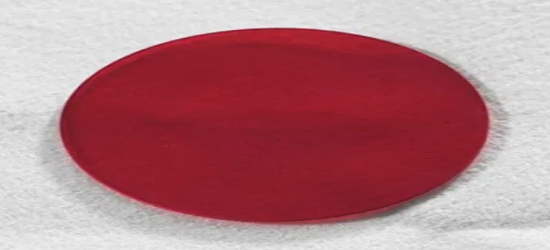
from medical applications and scientific research to manufacturing and telecommunications. While lasers themselves are powerful tools, achieving precision and maintaining safety requires the integration of additional components. Among the most critical of these are optical filters. These devices regulate the properties of light passing through laser systems, ensuring both operational accuracy and the protection of users and equipment.
1. Understanding Optical Filters
Optical filters are devices designed to selectively transmit or block specific wavelengths of light. Depending on their function, filters can manipulate light by absorbing, reflecting, or transmitting certain spectral bands. In laser systems, optical filters serve multiple purposes, including intensity control, wavelength selection, and safety enhancement.
Types of optical filters commonly used in laser systems include:
Absorptive Filters: These filters absorb unwanted wavelengths, allowing only the desired light to pass through. They are often made from colored glass or polymer materials.
Interference Filters: Utilizing thin-film coatings, interference filters selectively reflect or transmit specific wavelengths based on constructive and destructive interference principles. They are highly precise and widely used in scientific and medical lasers.
Neutral Density (ND) Filters: These filters reduce the overall intensity of laser light without altering its spectral characteristics, providing control over exposure levels.
Bandpass Filters: These transmit only a narrow range of wavelengths, ideal for applications requiring high spectral selectivity, such as fluorescence imaging or laser spectroscopy.
Polarizing Filters: These filters manage the polarization state of laser light, improving contrast and controlling reflections in imaging or measurement systems.
By integrating the appropriate optical filter, laser systems can achieve greater accuracy, stability, and efficiency.
2. Enhancing Precision in Laser Applications
Precision is fundamental to the effectiveness of laser systems. Whether cutting metal sheets in industrial applications, performing delicate surgical procedures, or measuring minute distances in scientific experiments, even minor deviations in wavelength, intensity, or polarization can significantly impact results. Optical filters play a vital role in maintaining this precision, ensuring that laser systems operate exactly as intended while minimizing errors and inefficiencies.
Wavelength Selection: Many laser systems are designed to operate at specific wavelengths for optimal performance. For example, medical lasers often target precise tissue types, while industrial lasers may be tuned to specific metals or coatings. Bandpass and interference filters ensure that only the target wavelength passes through, eliminating interference from ambient light, other laser sources, or stray reflections within the system. This targeted approach improves the accuracy of cutting, engraving, or imaging applications and prevents unintended exposure or damage.
Intensity Regulation: Consistent laser intensity is critical in many applications. Overpowered beams can damage sensitive materials, while underpowered beams may fail to achieve the desired effect. Neutral density (ND) filters allow precise control of laser power by attenuating excess energy without altering the wavelength. In optical sensing or laser engraving, this prevents material burn, ensures uniform processing, and maintains measurement accuracy, which is particularly important for high-precision manufacturing or laboratory experiments.
Noise Reduction: Stray light and scattered photons can introduce noise in imaging, spectroscopy, and other optical measurements, reducing the signal-to-noise ratio and compromising data reliability. Optical filters block unwanted wavelengths, allowing only the desired light to reach detectors, cameras, or sensors. This produces cleaner signals, sharper imaging, and more consistent measurement results, which are essential for applications such as fluorescence microscopy, semiconductor inspection, and scientific research.
Polarization Control: Some filters also manage the polarization state of laser light, which can affect contrast, reflection, and diffraction in optical systems. By maintaining a consistent polarization, filters improve system stability and reproducibility, which is crucial in high-precision scientific instruments and advanced manufacturing setups.
For instance, in medical laser procedures, optical filters ensure that therapeutic or diagnostic lasers target only the intended tissue, reducing the risk of collateral damage and enhancing patient safety. Similarly, in industrial laser cutting, filters guarantee that only the specific laser wavelength interacts with the material, producing clean, precise cuts and minimizing waste.
3. Safety Considerations
Laser systems can pose significant safety risks due to high-intensity light capable of causing eye injury, burns, or equipment damage. Optical filters play a key role in mitigating these risks:
Eye Protection: Certain optical filters are designed to absorb or reflect harmful laser wavelengths, protecting operators from accidental exposure. Laser safety goggles often incorporate specialized filters tuned to the specific wavelength of the laser in use.
Equipment Protection: Excessive or stray laser light can damage sensitive detectors, sensors, or optical components. Filters help maintain safe intensity levels, prolonging equipment life and maintaining consistent performance.
Regulatory Compliance: Many industries have strict standards for laser safety. Integrating the correct optical filters ensures that systems comply with these regulations, reducing liability and maintaining workplace safety.
By providing controlled transmission and blocking dangerous wavelengths, optical filters ensure that laser systems are both effective and safe for operators.
4. Application-Specific Advantages
Optical filters are tailored for different laser applications, enhancing system performance across industries:
Medical and Healthcare: Filters in surgical and diagnostic lasers enable precise tissue targeting and enhance imaging contrast, improving patient outcomes.
Industrial Manufacturing: In laser cutting, welding, and engraving, filters regulate intensity and wavelength to maintain material integrity and cut accuracy.
Scientific Research: Filters are essential for spectroscopy, microscopy, and optical sensing, ensuring accurate data collection and minimal interference.
Telecommunications: Laser systems in fiber-optic networks rely on filters to manage wavelengths, preventing cross-talk and signal degradation.
Each application benefits from the proper selection and integration of filters, highlighting their versatility and critical role in modern laser systems.
5. Choosing the Right Optical Filter
Selecting the appropriate optical filter involves considering several factors:
Wavelength Requirements: Identify the specific laser wavelength and any ambient light that needs to be blocked.
Transmission and Absorption: Ensure the filter provides adequate transmission for the desired wavelength while effectively blocking others.
Durability and Material: Filters should withstand high laser intensities and environmental conditions without degrading. Glass, fused silica, and coated polymers are common materials.
Angle of Incidence: Some filters are sensitive to the angle at which light strikes them, affecting performance in complex optical setups.
Partnering with experienced manufacturers and suppliers ensures filters are precisely engineered for the intended laser application, maximizing both safety and performance.
6. Future Trends in Optical Filtering for Laser Systems
As laser technology evolves, optical filters are becoming more sophisticated:
Adaptive Filters: These can dynamically adjust transmission characteristics based on real-time system feedback, improving efficiency and precision.
Nanostructured Coatings: Advanced coatings at the nanoscale provide superior wavelength selectivity, thermal stability, and resistance to damage.
Integration with Smart Systems: IoT-enabled laser systems can monitor filter performance, alerting operators to degradation or misalignment, enabling predictive maintenance and reducing downtime.
The ongoing development of optical filters ensures that laser systems remain at the forefront of precision, safety, and efficiency.
Conclusion
Optical filters are indispensable components in laser systems, enabling precise wavelength selection, intensity control, and enhanced safety. Their integration ensures accurate results across applications ranging from medical procedures and industrial manufacturing to scientific research and telecommunications. As lasers continue to advance, the role of high-quality optical filters becomes increasingly important in maintaining system performance, protecting users, and meeting regulatory standards.
For companies and professionals seeking reliable, high-performance optical filters for laser systems, Haian Taiyu Optical Glass Co., Ltd. offers expert solutions and advanced products tailored to diverse industrial and scientific needs. Visit their website to learn more about their offerings and explore how their optical filters can enhance precision and safety in your laser applications.
 English
 العربية
 Français
 Русский
 Español
 Português
 Deutsch
 italiano
 日本語
日本語 한국어
한국어 Nederlands
 Tiếng Việt
 ไทย
ไทย Polski
 Türkçe
 አማርኛ
አማርኛ ພາສາລາວ
 ភាសាខ្មែរ
 Bahasa Melayu
 ဗမာစာ
ဗမာစာ தமிழ்
தமிழ் Filipino
 Bahasa Indonesia
 magyar
 Română
 Čeština
 Монгол
 қазақ
қазақ Српски
 हिन्दी
 فارسی
فارسی Kiswahili
 Slovenčina
 Slovenščina
 Norsk
Norsk Svenska
 українська
 Ελληνικά
 Suomi
Suomi Հայերեն
 עברית
עברית Latine
 Dansk
Dansk اردو
اردو Shqip
Shqip বাংলা
বাংলা Hrvatski
 Afrikaans
 Gaeilge
 Eesti keel
 Māori
Māori