In high-stakes manufacturing, aerospace, and medical technologies, selecting the right optical or structural component is critical. Component failure leads directly to system downtime, severe optical distortion, or hazardous contamination. Engineers and buyers frequently use the term "quartz glass" loosely. This vague terminology creates dangerous confusion between natural fused quartz and synthetic fused silica. Choosing the wrong material variant routinely ruins project timelines and inflates budgets.
We aim to provide engineering and procurement teams with an evidence-based framework. You will learn to evaluate material properties accurately. You will also interpret industrial grades correctly for your specific environment. Finally, we guide you to source reliable components. Following this framework helps you balance strict performance requirements with realistic project budgets seamlessly.
Key Takeaways
- Material Distinction: Sourcing requires differentiating between natural fused quartz (high strength, cost-effective) and synthetic fused silica (ultra-high purity, deep UV transmission).
- Optical vs. Structural: Base your selection on the primary stressor—whether it's extreme thermal shock (up to 1100°C continuous), harsh chemical environments, or the need for high transparency in specific wavelengths.
- Grade Specifications: Matching application needs to standardized grades (e.g., JGS1, JGS2, JGS3) prevents costly over-specification.
- Fabrication Realities: Precision optics and complex geometries demand specialized processing (e.g., flame or plasma fusion) to prevent micro-fractures and maintain material integrity.
1. Defining the Baseline: Natural Fused Quartz vs. Synthetic Fused Silica
We must first define the fundamental source materials clearly. Natural fused quartz begins as high-purity natural quartz crystals. Manufacturers melt these extracted crystals in specialized furnaces. This melting process forms the final solid structure. Synthetic fused silica takes a completely different path. It relies on the flame hydrolysis of silicon chemicals. This advanced chemical deposition process yields a fundamentally different micro-structure.
Purity heavily separates these two materials. Natural quartz retains minute trace impurities. These trace elements actually improve overall mechanical strength. They also keep bulk production costs significantly lower. Synthetic silica offers extreme chemical purity. You absolutely need this extreme purity to reduce deep-UV fluorescence. Trace metals in natural variants block deep-UV light entirely.
Buyers face a strict cost-to-performance trade-off. We strongly advise against automatically defaulting to synthetic silica. Do not overpay if your project lacks strict UV transmission requirements. Many high-temperature applications work perfectly using natural alternatives. Natural quartz glass often provides the optimal balance of performance and budget. Industrial users save thousands by selecting natural variants for thermal shielding.
| Feature | Natural Fused Quartz | Synthetic Fused Silica |
| Source Material | Natural quartz crystals | Silicon chemical precursors |
| Manufacturing | Electric or flame melting | Flame hydrolysis |
| Purity Level | High (contains trace metals) | Ultra-high (minimal trace metals) |
| Primary Strength | Mechanical strength, lower cost | Deep-UV transmission, no fluorescence |
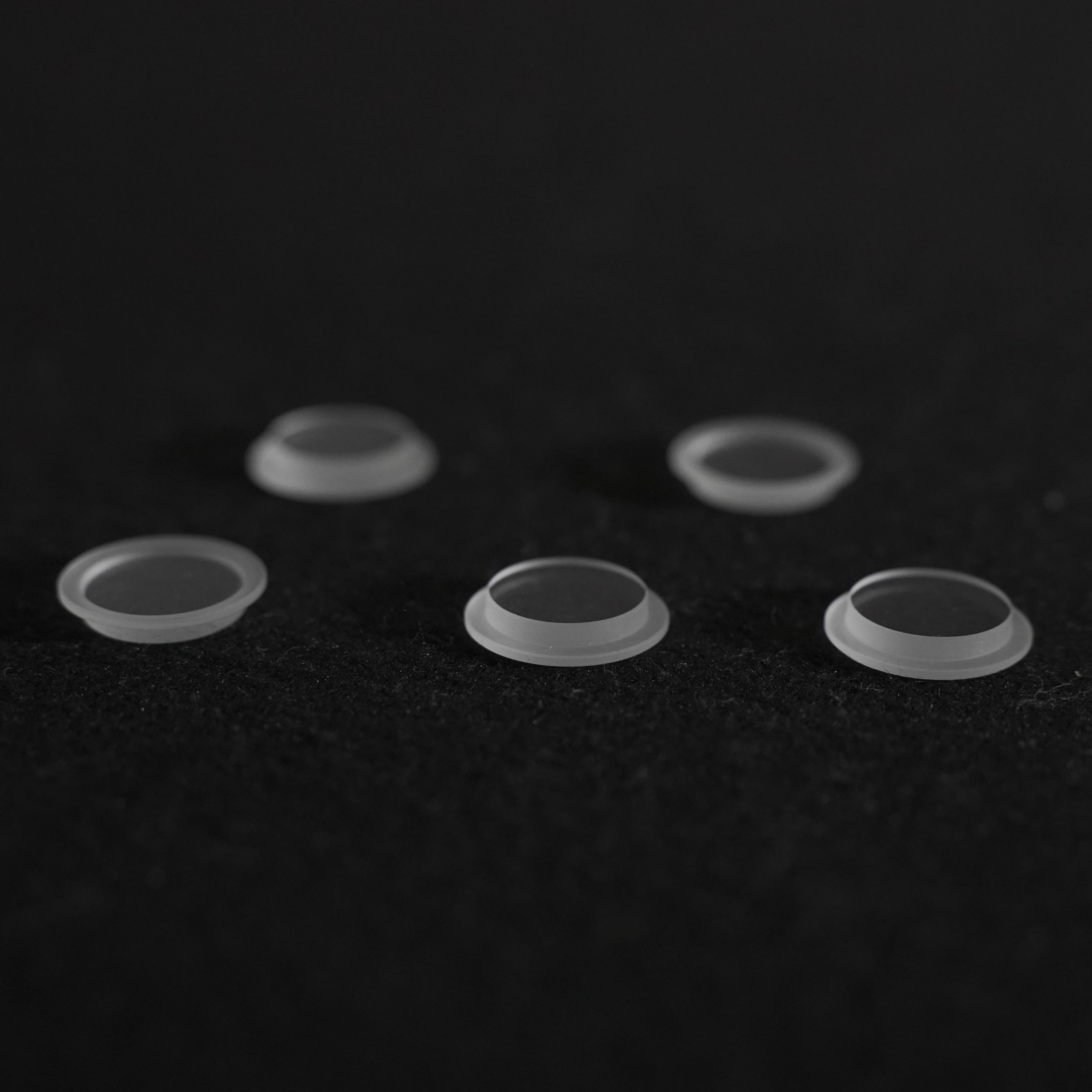
2. Core Evaluation Criteria for Precision Optics and Extreme Environments
Engineers must map the transmission spectrum for every new application. The material supports wide-band transmission incredibly well. This range spans from deep UV (~200nm) all the way to near-infrared (~3μm). Such broad transmission proves essential for high-energy laser windows. You also need guaranteed high transparency for advanced diagnostic lenses. Wavelength mapping dictates your exact material choice.
Thermal stability sets this material apart from standard borosilicate glass. The amorphous internal structure lacks a strict melting point. It transitions slowly instead of turning liquid instantly. The material withstands continuous operation at 1100°C easily. It even survives short thermal bursts up to 1300°C safely. An extremely low coefficient of thermal expansion prevents sudden thermal shock. You can drop a heated component into cold water without shattering it.
Chemical and vacuum performance remain outstanding across industrial sectors. Highly stable Si-O covalent bonds resist harsh chemical etching. Hydrofluoric acid (HF) is the only notable chemical exception. Vacuum systems benefit heavily from its "low outgassing" properties. Semiconductor vacuum chambers rely completely on this atomic cleanliness. Trapped gases do not escape and ruin sensitive wafer coatings.
Mechanical integrity poses distinct risks in multi-material assemblies. You must evaluate refractive index stability carefully during design. Mounting components under high pressure demands precise structural engineering. You must match thermal expansion rates flawlessly. Failing to align expansion rates between metal housings and optics causes catastrophic fractures. Engineers often utilize specialized O-rings to absorb slight expansion differences.
3. Decoding Quartz Glass Grades: JGS1, JGS2, and JGS3
Understanding optical grades prevents costly over-specification. We classify industrial materials into three main standardized tiers. Familiarizing yourself with these grades accelerates procurement.
JGS1 represents the highest optical grade available. Manufacturers use synthetic methods to produce this premium material. It transmits deep ultraviolet light (<200nm) flawlessly without absorbing energy. We recommend JGS1 strictly for UV lasers and high-end spectroscopy. It carries the highest material cost in the market. Specifying it for non-UV applications wastes project funding.
JGS2 serves as the standard commercial grade worldwide. Factories make it from highly refined natural quartz. It offers good UV and excellent visible light transmission. We consider JGS2 the standard industrial workhorse. You see it routinely in general laboratory equipment. It works perfectly for semiconductor diffusion tubes and protective sight windows.
JGS3 excels specifically in the infrared spectrum. It remains entirely opaque to deep UV light. However, it stays highly transparent to broad infrared radiation. Aerospace IR domes rely heavily on JGS3. High-temperature IR heating applications also use it extensively. It handles intense heat while passing infrared energy efficiently.
| Grade | Type | Transmission Range | Ideal Applications |
| JGS1 | Synthetic Fused Silica | Deep UV to Visible | UV Lasers, Spectroscopy, Deep-UV Optics |
| JGS2 | Natural Fused Quartz | Standard UV to Visible | Lab Equipment, Diffusion Tubes, Protective Windows |
| JGS3 | Infrared Quartz | Infrared Spectrum | Aerospace Domes, IR Heating Lamps, Microwave Windows |
4. Selecting Form Factors: From Optical Tubes to Custom CNC Geometries
Industrial applications dictate highly specific form factors. Each distinct shape requires different manufacturing tolerances. Cylindrical components serve critical functions across many high-tech sectors. Engineers frequently specify optical tubes for semiconductor wafer carriers. Heavy-duty chemical reactor vessels also utilize these robust cylinders. You must closely monitor strict wall thickness tolerances. Concentricity determines the final structural integrity under immense pressure.
Flat components face completely different mechanical and optical demands. Deep-sea optical windows endure immense hydrostatic pressure daily. Laser prisms require perfect surface flatness to prevent beam distortion. You must specify strict scratch-dig requirements during procurement. Always verify anti-reflective (AR) coating compatibility when ordering precision optics. Poor coating adhesion ruins expensive optical assemblies immediately.
Precision fabrication limits test every design engineer eventually. Machining a notoriously brittle material demands extreme caution. The high inherent hardness complicates standard CNC processes heavily. You must find fabricators possessing specialized diamond-tooled CNC equipment. They must excel at advanced finishing techniques. Proper mechanical polishing and lapping avoid dangerous micro-defects. Unpolished micro-cracks propagate quickly and shatter entire components under stress.
5. Procurement Checklist: Mitigating Sourcing and Implementation Risks
We built a straightforward checklist to minimize structural and financial risks. Purchasing teams must verify the operating environment strictly before ordering. Missing a single environmental variable compromises the final product.
- Verify peak and continuous temperatures: Confirm that the system never exceeds 1100°C continuously.
- Determine the target wavelength band: Decide if you need deep-UV (JGS1), visible (JGS2), or infrared (JGS3).
- Assess chemical exposure: Ensure the environment lacks hydrofluoric acid, which dissolves silicon-oxygen bonds.
- Calculate structural pressure: Determine the PSI load the component will bear within metal or ceramic housings.
Prototyping introduces distinct financial and timeline challenges. Complex geometries require expensive custom graphite tooling. Prototyping custom molds delays projects by several months easily. We highly recommend starting your R&D phase simply. Use standard stock dimensions initially during early testing. Relying on stock tubes or flat windows controls long lead times effectively.
Evaluating fabricator expertise guarantees long-term project success. You must vet potential vendors comprehensively. Transparency builds necessary long-term manufacturing trust.
- Look for vendors who explain their fusion processes clearly.
- Determine if they utilize traditional flame or advanced plasma fusion.
- Request documented material certifications upfront before signing contracts.
- Demand comprehensive batch-level quality control testing records.
- Verify their in-house metrology and surface inspection capabilities.
Conclusion
Successful deployment relies purely on precise material matching. You must align the exact material grade and manufacturing method correctly. Always map these specific choices to the actual environmental stressors present. Overlooking simple thermal limits or optical transmission boundaries guarantees component failure.
Engineering teams should take immediate action to secure their supply chain. Consult specialized glass fabricators early in your preliminary design phase. Review all CNC, lapping, and polishing tolerances collaboratively. Finalize your JGS grade selection before locking mechanical designs. Always request a physical material sample for initial bench testing. Finally, secure a detailed custom quote to align your project budget confidently.
FAQ
Q: Why is quartz glass preferred over borosilicate glass in semiconductor manufacturing?
A: It offers a significantly higher thermal threshold. It withstands continuous temperatures up to 1100°C, whereas borosilicate softens around 500°C. It also provides vastly superior chemical purity. Furthermore, it demonstrates much lower outgassing in vacuum environments, preventing critical wafer contamination during complex lithography processes.
Q: Does natural quartz glass degrade under intense UV exposure?
A: Yes, natural quartz (JGS2) can experience "solarization" under intense deep-UV radiation. This causes gradual darkening or browning over time, reducing optical transmission. Synthetic fused silica (JGS1) lacks the trace metallic impurities that cause solarization. You must specify synthetic grades to prevent this degradation entirely.
Q: What makes precision fabrication of quartz components so expensive?
A: The material's extreme hardness and high softening point complicate manufacturing. Standard tools cannot cut it. Fabricators require specialized diamond-tooled CNC machining. They also rely on complex plasma or flame fusion techniques. Extensive mechanical and chemical polishing is mandatory to achieve precise optical tolerances without inducing hidden stress fractures.
 English
 العربية
 Français
 Русский
 Español
 Português
 Deutsch
 italiano
 日本語
日本語 한국어
한국어 Nederlands
 Tiếng Việt
 ไทย
ไทย Polski
 Türkçe
 አማርኛ
አማርኛ ພາສາລາວ
 ភាសាខ្មែរ
 Bahasa Melayu
 ဗမာစာ
ဗမာစာ தமிழ்
தமிழ் Filipino
 Bahasa Indonesia
 magyar
 Română
 Čeština
 Монгол
 қазақ
қазақ Српски
 हिन्दी
 فارسی
فارسی Kiswahili
 Slovenčina
 Slovenščina
 Norsk
Norsk Svenska
 українська
 Ελληνικά
 Suomi
Suomi Հայերեն
 עברית
עברית Latine
 Dansk
Dansk اردو
اردو Shqip
Shqip বাংলা
বাংলা Hrvatski
 Afrikaans
 Gaeilge
 Eesti keel
 Māori
Māori


