Shooters face a persistent conflict every time they hit the range. You must protect your eyes, but you also demand a perfect sight picture. Standard eyewear frequently disrupts this delicate balance. They introduce chromatic aberration. They alter eye relief. They even create parallax shifts when you pair them behind high-magnification scopes. The Ii-6 system solves this operational dilemma. It serves as a purpose-built solution. It bridges the gap between rigorous ballistic safety and uncompromised sight performance. This guide delivers a transparent, criteria-driven framework. We will help tactical operators and precision shooters decide carefully. You can determine if upgrading to Ii-6 lenses justifies the investment based on your specific rifle platforms. We will cover engineering, evaluation dimensions, and practical implementation steps.
Key Takeaways
- Optic Synergy: Ii-6 lenses are engineered to align their optical center seamlessly with standard rifle optics, minimizing reticle distortion.
- Uncompromised Safety: Serves as compliant eye protection glass without the light-transmission penalty typical of standard polycarbonate safety lenses.
- Performance Metrics: The true value of Ii-6 lies in its precision lenses, which maintain high optical clarity and reduce eye fatigue during extended observation.
- Implementation Reality: Adoption requires verifying compatibility with your existing scope's eye box and diopter settings to prevent focal plane clashes.
The Performance Gap: Why Standard Eyewear Fails Behind Rifle Optics
Layering non-precision curved lenses behind a rifle scope exacerbates light scattering. The refraction problem degrades edge-to-edge clarity immediately. When light passes through inferior safety plastics, the rays bend unevenly. You lose critical detail at long distances. Shooters often mistake this optical degradation for a poor scope. In reality, the safety lenses cause the breakdown.
Thick frames and incorrect base curves also create immense eye box interference. A proper cheek weld requires a specific physical connection to the rifle stock. Bulky frames push your head away. They force you out of the optic's optimal eye box. This poor alignment induces scope shadow. You lose precious seconds trying to center the reticle.
Standard safety glasses utilize cheap injection-molded plastics. These materials inherently induce micro-distortions across the lens surface. These tiny warps create a dangerous operational risk. You experience delayed target acquisition. A delayed shot during a tactical deployment or a timed competition stage causes failure. Balancing safety against clear vision requires specialized gear, not generic protective equipment.
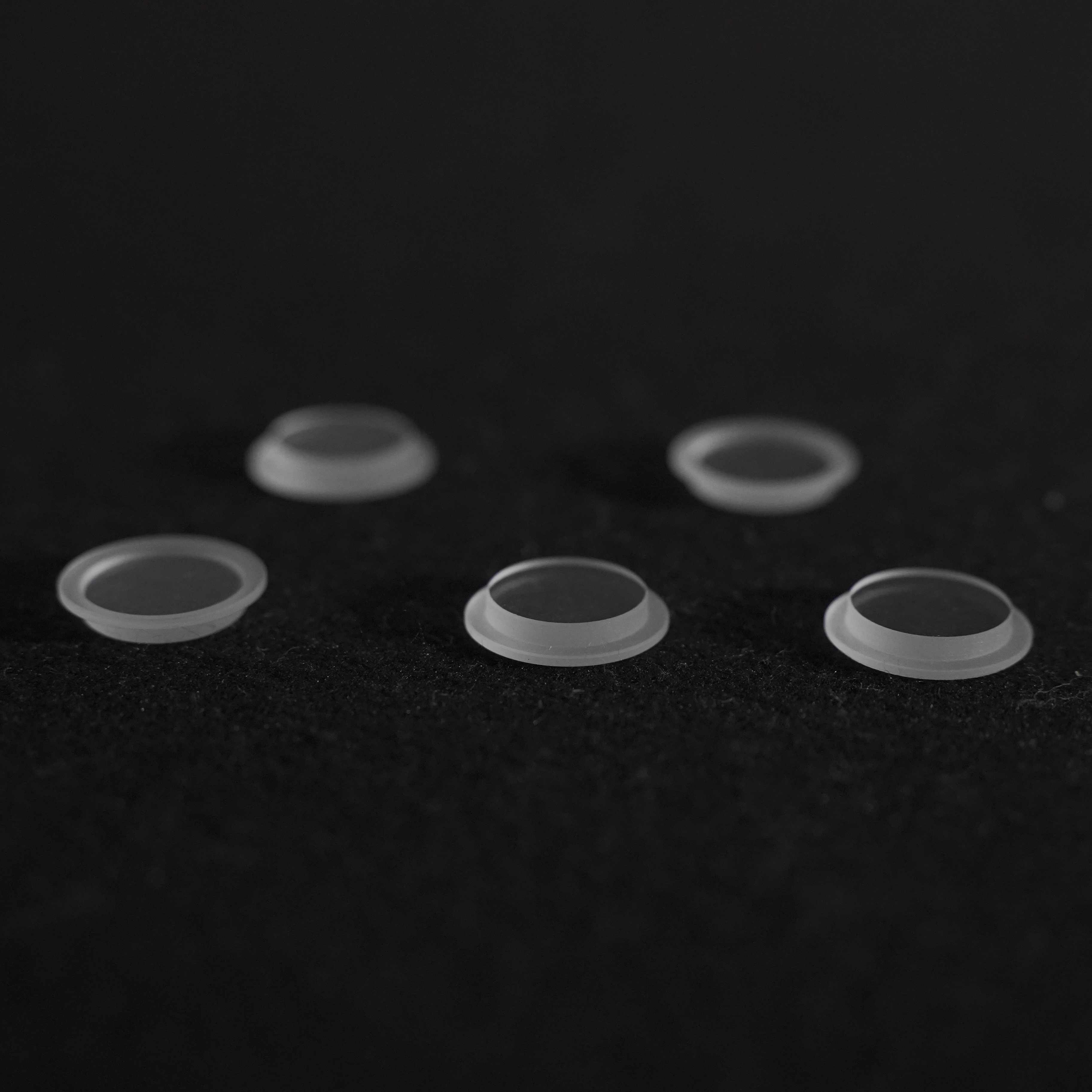
Core Engineering: How Ii-6 Precision Lenses Differ
The manufacturing process of Ii-6 precision lenses relies on advanced material science. We must examine the Abbe value to understand this advantage. The Abbe value measures light dispersion. High numbers indicate less chromatic aberration or color fringing. Ii-6 materials score significantly higher than standard optical glass or basic polycarbonate. This translates to crisp target edges.
Objective data regarding light throughput highlights another massive advantage. Ii-6 features multi-layer anti-reflective coatings. These coatings prevent back-glare from blinding the shooter. Light often bounces off the ocular lens of the scope back into the shooter's eye. Ii-6 coatings kill this reflection. They funnel maximum light to the pupil.
The system serves as verifiable eye protection glass without shifting the optical center. Authentic safety ratings matter. The Ii-6 meets stringent ANSI Z87.1+ and MIL-PRF standards. It stops high-velocity impacts effectively. It achieves this ballistic integrity while mimicking the visual purity of prescription eyewear.
Optical Material Performance Comparison Chart | Material Type | Abbe Value (Clarity) | Light Transmission | Ballistic Rating |
| Standard Polycarbonate | ~30 (High Dispersion) | 88% | ANSI Z87.1+ |
| Basic Optical Glass | ~59 (Low Dispersion) | 92% | None (Shatter Risk) |
| Ii-6 Precision System | ~45 (Balanced) | 96%+ (Coated) | MIL-PRF / ANSI Z87.1+ |
Key Evaluation Dimensions for Ii-6 Rifle Eye Glass
Focal plane compatibility dictates how your eyes process the reticle. A First Focal Plane (FFP) reticle shrinks at low magnifications. You need flawless vision to read the subtensions. Upgrading to a dedicated rifle eye glass ensures these fine lines remain sharp. Second Focal Plane (SFP) optics also benefit. The crosshairs stay crisp regardless of ambient lighting.
Many shooters deploy holographic or red dot sights alongside magnified setups. Astigmatism mitigation becomes crucial here. Standard lenses often turn red dots into messy starbursts. Ii-6 lenses control this bloom effect. They filter the specific wavelengths emitted by diodes. This keeps the dot perfectly round.
Variable light conditions require scalable solutions. You cannot rely on a single tint for every environment.
- Clear lenses: Essential for low-light tactical entries or indoor ranges.
- High-contrast amber: Ideal for flat, overcast days. They make steel targets pop against dirt berms.
- Polarized dark lenses: Built for bright, high-glare environments like desert shooting or snow-covered landscapes.
Durability dictates long-term performance in the field. Assess the scratch-resistance coatings. High-exertion scenarios expose eyewear to sand, brass, and rough handling. Evaluate the anti-fog performance in high-humidity. A fogged lens renders a rifle useless. Ii-6 tackles these environmental stressors aggressively.
Implementation Considerations and Deployment Risks
You must recalibrate your optic’s fast-focus diopter after introducing Ii-6 lenses. Skipping this step guarantees severe eye strain. Follow these simple recalibration steps:
- Mount the unloaded rifle securely on a steady benchrest.
- Point the scope at a blank sky or a plain white wall.
- Put on your Ii-6 eyewear.
- Look through the scope and immediately adjust the diopter dial.
- Stop adjusting when the reticle appears razor-sharp within two seconds of opening your eye.
A transparent look at fogging mechanics reveals the limits of basic coatings. Anti-fog treatments only go so far. Extreme cold-to-hot transitions will overwhelm them. You must combine the eyewear with proper ventilation. Do not push the frames tight against your eyebrows. Use supplemental anti-fog compounds if you operate in jungle or winter environments. Maintaining a clear view through rifle optics requires proactive management.
Integration with hearing protection often ruins range sessions. Evaluate the physical frame profile carefully. You need thin temple arms. Thick plastic arms break the acoustic seal of over-ear electronic hearing protection. This exposes you to hearing damage. It also causes physical pain against the temples. Ii-6 utilizes low-profile arms specifically to preserve this critical seal.
Shortlisting Logic: Is Ii-6 Right for Your Setup?
Define your success criteria before purchasing. Precision long-range shooters benefit immensely from this system. Competitive PRS shooters shave seconds off stage times because they acquire targets faster. Tactical professionals rely on the superior optical clarity to positively identify threats. If your application demands absolute precision, the upgrade makes sense.
Acknowledge scenarios where Ii-6 might be over-engineered. Casual plinking at 25 yards does not require military-grade optical perfection. Standard safety glasses easily suffice for casual weekend range trips with a rimfire rifle. Do not overspend if your shooting discipline lacks rigorous demands.
We recommend conducting a pilot test if you decide to proceed. Pair the Ii-6 with your primary rifle optic on a static benchrest. Objectively measure your group sizes. Track your eye fatigue over a two-hour shooting session. Compare these metrics against your old safety glasses. The data will validate the investment immediately.
Conclusion
Choosing a dedicated eyewear system is about removing unpredictable variables from the shooting equation. The Ii-6 system eliminates optical distortion. It preserves vital light transmission and maintains geometric fidelity across your entire field of view.
However, simply buying the system is not enough. You must integrate it properly. Follow these essential next steps to maximize performance:
- Recalibrate your scope's diopter immediately before your next live-fire session.
- Select interchangeable lens colors specifically suited to your geographic environment.
- Verify the temple arm fitment alongside your primary over-ear hearing protection.
- Maintain the anti-fog and anti-reflective coatings using approved microfiber cleaning protocols.
FAQ
Q: Does wearing Ii-6 eye glass require me to change my scope's eye relief?
A: Minor adjustments may be needed. It depends entirely on the frame's standoff distance from your face. However, the sheer clarity of the lenses prevents the need for major stock or mount overhauls. You will typically maintain your standard cheek weld without moving the scope rings.
Q: Can I get Ii-6 lenses in my exact optical prescription?
A: Yes. Manufacturers address this through RX-inserts or direct-prescription manufacturing tailored for the Ii-6 standard. It is critical to calculate the base curve accurately during ordering. Proper calculation prevents peripheral distortion when you scan quickly between multiple targets.
Q: How does Ii-6 eye protection glass perform with illuminated reticles?
A: Specific anti-reflective coatings manage internal reflections effectively. They ensure the bright illuminated reticle does not wash out the target picture in low light. You avoid annoying ghost images bouncing off the back of the lens into your pupil.
Q: Is it normal to experience a "fish-bowl" effect when first wearing them?
A: Adaptation periods are highly common for high-wrap lenses. Slight peripheral adjustments occur because the brain adapts to the new protective base curve. Do not worry. The optical center remains perfectly true for precise aiming through your scope.
 English
 العربية
 Français
 Русский
 Español
 Português
 Deutsch
 italiano
 日本語
日本語 한국어
한국어 Nederlands
 Tiếng Việt
 ไทย
ไทย Polski
 Türkçe
 አማርኛ
አማርኛ ພາສາລາວ
 ភាសាខ្មែរ
 Bahasa Melayu
 ဗမာစာ
ဗမာစာ தமிழ்
தமிழ் Filipino
 Bahasa Indonesia
 magyar
 Română
 Čeština
 Монгол
 қазақ
қазақ Српски
 हिन्दी
 فارسی
فارسی Kiswahili
 Slovenčina
 Slovenščina
 Norsk
Norsk Svenska
 українська
 Ελληνικά
 Suomi
Suomi Հայերեն
 עברית
עברית Latine
 Dansk
Dansk اردو
اردو Shqip
Shqip বাংলা
বাংলা Hrvatski
 Afrikaans
 Gaeilge
 Eesti keel
 Māori
Māori


