Material failures in industrial processing halt production lines instantly. They drain facility maintenance budgets rapidly. Thermal shock shattering and chemical degradation pose persistent, dangerous threats in harsh manufacturing environments. Opaque visual constraints further complicate real-time fluid monitoring. You need reliable, transparent materials to prevent these catastrophic systemic failures.
Engineers traditionally view glass strictly as a fragile laboratory staple. They often overlook its potential for heavy-duty manufacturing. However, modern chemical formulations transform it into a critical, highly scalable material. It now serves demanding OEM (Original Equipment Manufacturer) and MRO (Maintenance, Repair, and Operations) applications across diverse global sectors.
This detailed guide provides engineers, facility managers, and procurement teams with an evidence-based framework. We will explore exactly when and how to specify these components for your industrial machinery. You will learn about key thermal properties, chemical resistance metrics, and practical system integration limits.
Key Takeaways
- Borosilicate glass relies on an 81% silica and 13% boron trioxide composition to deliver extreme thermal shock resistance and a remarkably low thermal expansion coefficient (3.3 x 10⁻⁶/°C).
- It acts as a superior, cost-effective alternative to metals in highly corrosive environments, remaining inert to most acids and halogens.
- The material’s **high clarity** is essential for sight glasses and sensors, enabling real-time visual inspection without system downtime.
- System operating limits are often dictated not by the glass itself (which softens at 525°C), but by surrounding components like PTFE gaskets (typically capping at 200°C).
The Engineering Case for Borosilicate Industrial Glass
Boron trioxide fundamentally alters the foundational glass network structure. It acts as a powerful network former during the high-temperature melting phase. It replaces standard alkali fluxes heavily used in everyday commercial glass manufacturing. This deliberate chemical shift actively prevents the rapid expansion and contraction native to standard soda-lime glass. The molecular bonds become significantly stronger and much more rigid under thermal stress.
This incredibly low coefficient of thermal expansion delivers massive structural advantages. Long industrial piping systems experience extreme temperature fluctuations daily. They often require costly, complex thermal compensation joints to prevent buckling. You can successfully eliminate these mechanical joints by utilizing low-expansion glass materials. They maintain their strict structural integrity during the most aggressive temperature swings.
We must also benchmark this glass against standard industrial metals in highly caustic environments. It proves exceptionally chemical resistant across a broad pH spectrum. Metals often pit, corrode, or degrade rapidly when exposed to harsh industrial acids. This specialized glass remains completely chemically inert. It will not catalyze unwanted secondary reactions. It never leaches metallic ions into highly sensitive fluid processes. This absolute chemical purity makes it a strict, non-negotiable requirement for GMP compliance in modern pharmaceutical processing facilities.
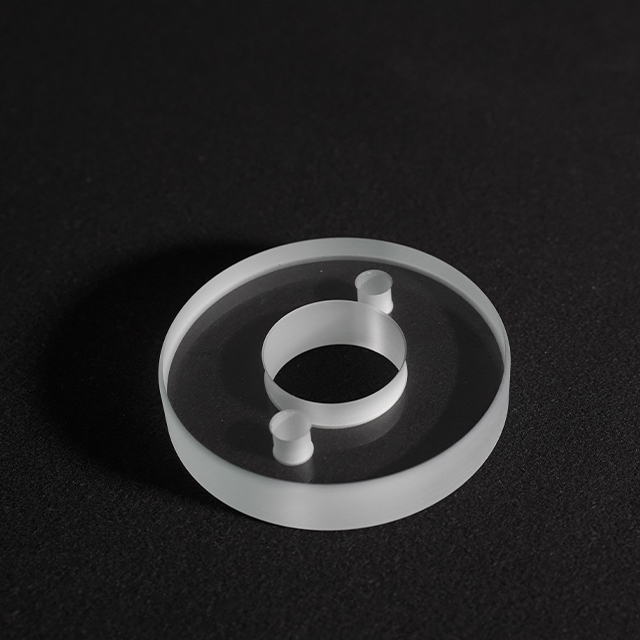
Core Applications in Process and Manufacturing Equipment
Fluid processing facilities rely heavily on durable industrial sight glasses. They also utilize tubular level gauges and inline flow indicators extensively. System operators need constant, uninterrupted visual feedback to maintain safety. Its high clarity ensures perfect, distortion-free visibility into flowing process mediums. The exceptionally smooth, non-porous surface actively prevents sticky material adhesion. This anti-fouling characteristic simplifies mandatory clean-in-place (CIP) protocols significantly. Engineers can sanitize the system perfectly without dismantling heavy piping networks.
Chemical and pharmaceutical reactors utilize it extensively for heavy-duty reactor linings. You will also find it inside complex distillation columns. Heat exchangers benefit tremendously from these dual thermal and chemical properties. Visual monitoring must safely combine with harsh acidic resistance in these critical reactor zones. Plant managers can visually inspect internal volatile reactions without stopping the ongoing process.
High-intensity lighting and specialized optics present another core industrial use case. Industrial gas burners and aerospace exterior lighting generate extreme, localized heat. Protective optical lenses face prolonged, direct exposure to these intense temperatures. Traditional glass lenses would shatter instantly under such extreme thermal stress. Borosilicate lenses survive these punishing optical applications seamlessly. They transmit light perfectly while blocking dangerous heat buildup effectively.
Advanced High-Tech & Niche Industrial Applications
Semiconductor and electronics manufacturing demands absolute, uncompromising material purity. Standard glass mixtures contain highly mobile alkali elements like sodium and potassium. These alkalis leak out over time under constant electrical stress. They cause severe electrical interference and ruin delicate microchips. Engineers deliberately specify non-alkali variants for advanced wafer bonding processes. They also use them to protect highly sensitive optical sensors. They ensure stable digital signal transmission and prevent microscopic electrical shorts.
Additive manufacturing frequently utilizes this unique material for heated print beds. Industrial 3D printing, specifically fused deposition modeling (FDM), requires strict dimensional stability. The printer bed undergoes thousands of rapid, repeated heating and cooling cycles. The glass maintains a perfectly flat, level surface without warping or bowing. Plastic parts adhere strongly when hot and release effortlessly when the bed cools down.
Extreme environment storage showcases its proven multi-generational durability. Nuclear facilities currently use it to encapsulate high-level radioactive waste safely. The complex vitrification process locks dangerous radioactive isotopes deep inside the solid glass matrix. The material proves its incredible resilience under highly aggressive, long-term radiation conditions. It safely isolates hazardous materials from the natural environment for millennia.
Material Evaluation: Borosilicate Glass vs. Alternatives
Let us evaluate how it mechanically compares to standard industrial alternatives. We must analyze silica content, operational limits, and raw material costs.
Comparing it directly to soda-lime glass reveals stark structural differences. Borosilicate glass contains roughly 80% to 81% pure silica. Soda-lime glass contains only about 69% silica. Soda-lime becomes a severe engineering liability for industrial equipment involving rapid temperature fluctuations. It fractures and shatters predictably during sudden thermal shifts.
Quartz glass offers even higher temperature thresholds and excellent deep-UV transmission. However, pure quartz poses significant high-temperature manufacturing challenges. Borosilicate acts as a highly adaptable industrial glass. It is significantly more affordable for large-scale operations. Technicians can easily cut, temper, and machine it into complex custom geometries. This versatility makes it the practical choice for most scalable OEM equipment.
Steel and specialty metal alloys offer massive tensile and impact strength. They easily withstand severe physical impacts and high-pressure blowouts. Glass, however, allows continuous internal process visibility. It also resists highly acidic corrosion far better than standard stainless steel variants. Engineers must carefully balance internal transparency needs against external impact resistance requirements.
Material Performance Chart
| Material Type | Thermal Shock Resistance | Chemical Resistance | Primary Industrial Use |
| Borosilicate Glass | Excellent (up to 165°C differential) | Very High (inert to most acids) | Process sight glasses, chemical reactors |
| Soda-Lime Glass | Poor (shatters easily under stress) | Moderate | Standard windows, basic packaging |
| Quartz Glass | Superior (handles extreme heat) | Very High | High-temperature UV optics, semiconductors |
| Stainless Steel (316L) | N/A (conducts heat rapidly) | High (vulnerable to specific acids) | High-pressure reactor bodies, structural frames |
Implementation Realities and Operating Risks
We must maintain objective engineering trustworthiness by listing exact chemical limitations. The material is highly durable, but certainly not indestructible. It will degrade and dissolve rapidly when exposed to hydrofluoric acid (HF). Hot concentrated phosphoric acid also eats away the smooth glass surface quickly. High-temperature strong alkalis will progressively dissolve the underlying glass network over time. You must verify chemical compatibility before final installation.
Mechanical fragility remains a highly valid system integration concern. Glass components simply cannot absorb heavy, blunt mechanical impacts. Plant engineers must implement strict physical mitigation strategies immediately. They typically install rugged armored housings around vulnerable sight glasses. These thick metal shields absorb accidental tool drops and severe operational collisions. They protect the fragile glass core from catastrophic external shocks.
The gasket bottleneck represents a frustrating, common engineering oversight. The bare glass easily withstands internal temperatures exceeding 500°C. However, practical industrial fluid systems rarely reach these theoretical limits safely. The accompanying PTFE gaskets and elastomer seals dictate the true maximum system threshold. These flexible polymer seals typically harden and fail around 200°C. You must carefully evaluate the entire structural assembly, not just the isolated glass component.
Sourcing and Specification Criteria for OEMs
Procurement teams must evaluate potential fabrication partners very carefully. You need a trusted supplier capable of achieving tight dimensional tolerances consistently. Advanced CNC machining capabilities are absolutely mandatory for complex MRO retrofits. Custom thermal tempering processes further enhance the overall structural resilience. Always specify certified, high-grade borosilicate glass for critical, high-pressure processing applications.
Evaluating optical distortion levels is equally critical during the procurement phase. A poorly machined sight glass distorts the operator's view, leading to incorrect fluid level readings. We recommend specifying ground and polished surfaces for maximum accuracy. Additionally, verify if the supplier provides proper edge chamfering. Sharp, unfinished glass edges concentrate mechanical stress and often initiate microscopic cracks during final bolt tightening.
Compliance lenses strictly guide the global specification process. Process plant glass must meet rigid, documented industry standards. Look for official testing certifications matching ISO, GMP, or DIN 7080 standards. These established engineering frameworks guarantee baseline material consistency. They ensure operational safety across diverse, high-risk manufacturing environments.
Supply chain sustainability matters more than ever to modern corporate stakeholders. Modern raw material manufacturers are actively shifting their traditional melting techniques. They increasingly utilize eco-friendly anhydrous borates directly inside their massive furnaces. This specific chemical switch significantly lowers overall melting energy requirements. It ultimately reduces the glass factory's total carbon footprint. This modern production shift helps proactive companies track and reduce their Scope 3 emissions effectively.
Conclusion
Specifying this engineered glass requires a highly calculated structural balance. You must carefully weigh maximum thermal stability against absolute chemical inertness and uncompromised visual clarity. We recommend taking proactive steps to upgrade your facility infrastructure.
- Identify specific facility process zones suffering from frequent chemical corrosion.
- Replace opaque metal inspection covers to enable real-time, safe visual inspection.
- Upgrade standard brittle glass components to prevent dangerous thermal shock incidents.
- Always factor in the maximum temperature limits of surrounding sealing gaskets during system design.
Audit your current high-failure equipment components thoroughly today. Look closely for degraded metal sight glasses or warped soda-lime covers. Consult directly with an experienced engineering specialist for a custom retrofit or a new OEM prototype.
FAQ
Q: What is the maximum operating temperature for borosilicate glass in industrial machinery?
A: The material itself softens at approximately 525°C. However, practical operating limits are typically much lower. Surrounding components usually dictate the maximum system temperature. Standard PTFE sealing gaskets typically fail around 200°C. You must design around the weakest thermal link in the assembly.
Q: Why is non-alkali borosilicate required for electronic and sensor applications?
A: Standard glass formulations contain alkali metals like sodium. These ions can migrate out of the glass structure over time. This migration causes ion exchange and electrical signal disruption. Non-alkali variants prevent this leakage, ensuring stable performance for delicate semiconductors and high-frequency optical sensors.
Q: How does borosilicate glass improve maintenance efficiency (MRO)?
A: Its smooth, non-porous surface actively prevents fluid adhesion. This enables highly efficient clean-in-place (CIP) operations. The extreme chemical resistance eliminates recurring corrosion repairs. Furthermore, its perfect transparency allows technicians to visually inspect internal processes. This immediate visibility eliminates the need for physical equipment teardowns.
 English
 العربية
 Français
 Русский
 Español
 Português
 Deutsch
 italiano
 日本語
日本語 한국어
한국어 Nederlands
 Tiếng Việt
 ไทย
ไทย Polski
 Türkçe
 አማርኛ
አማርኛ ພາສາລາວ
 ភាសាខ្មែរ
 Bahasa Melayu
 ဗမာစာ
ဗမာစာ தமிழ்
தமிழ் Filipino
 Bahasa Indonesia
 magyar
 Română
 Čeština
 Монгол
 қазақ
қазақ Српски
 हिन्दी
 فارسی
فارسی Kiswahili
 Slovenčina
 Slovenščina
 Norsk
Norsk Svenska
 українська
 Ελληνικά
 Suomi
Suomi Հայերեն
 עברית
עברית Latine
 Dansk
Dansk اردو
اردو Shqip
Shqip বাংলা
বাংলা Hrvatski
 Afrikaans
 Gaeilge
 Eesti keel
 Māori
Māori


