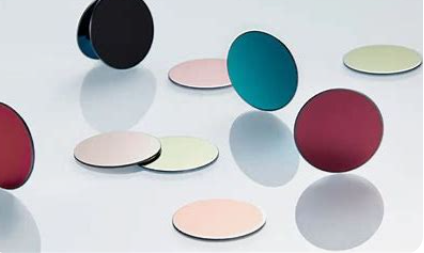
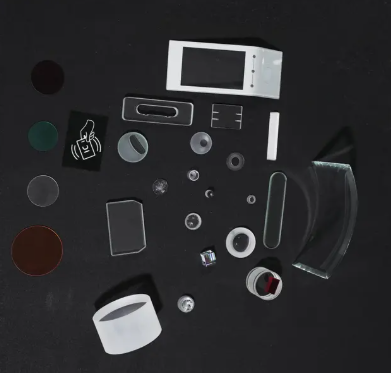
Optical filters play a crucial role in controlling light, enhancing images, and improving optical performance. Have you ever wondered how precise imaging in medical devices or telescopes is achieved? The answer lies in optical filters.
In this post, we’ll explain what optical filters are, their functions, and why they matter. You’ll also learn about their wide applications in industries like microscopy, spectroscopy, and telecommunications.
Types of Optical Filters
Optical filters are essential components in many scientific, industrial, and consumer applications, designed to manipulate light by either transmitting or blocking specific wavelengths. They are widely used in systems ranging from simple cameras to sophisticated medical imaging devices. Understanding the different types of optical filters and their applications can help you choose the right one for your specific needs. In this section, we will explore the main types of optical filters, including their functions, common uses, and where they are most effectively applied.
Optical filters come in various types, each with a distinct function. Whether you're working with lasers, microscopes, or cameras, different filters offer specialized benefits. Below is an overview of the key types of optical filters, along with their functions and practical applications:
Bandpass Filters
Definition and Function: Bandpass filters are designed to transmit light within a specific wavelength range while blocking light outside that range. They are highly effective in applications that require precise wavelength isolation. The filter allows a narrow band of wavelengths to pass through, while wavelengths outside this range (both longer and shorter) are blocked.
Common Uses: Bandpass filters are widely used in various scientific and industrial fields. They are commonly employed in:
Laser Systems: To ensure only the desired wavelength reaches the detector.
Chemical Detection: Bandpass filters allow for selective detection of specific chemical signals in spectroscopy.
Environmental Monitoring: Used in devices measuring specific wavelengths in air or water quality analysis.
Examples: In Raman spectroscopy, bandpass filters are used to isolate the Raman scattering signal from other sources of light, ensuring accurate readings.
Longpass Filters
Definition and Function: Longpass filters allow wavelengths longer than a specified cutoff to pass through, while blocking shorter wavelengths. These filters are often used when you want to retain the longer wavelengths and eliminate the shorter ones, which may interfere with the desired signal.
Common Applications:
Imaging Systems: In microscopy, longpass filters help enhance image quality by eliminating shorter, less useful wavelengths.
Spectroscopy: Longpass filters are used to select particular wavelengths for analysis while filtering out unwanted light.
Fluorescence Microscopy: In this application, longpass filters can block excitation light, allowing only the fluorescence emission to pass through for detection.
Example: A typical use of longpass filters is in fluorescence microscopy, where they block the excitation light and allow only the emitted fluorescent light to reach the detector.
Shortpass Filters
Definition and Function: In contrast to longpass filters, shortpass filters transmit shorter wavelengths while blocking longer wavelengths. These filters are essential for isolating light in the ultraviolet (UV) or visible spectrum, while rejecting longer wavelengths that could overwhelm the signal.
Applications:
Thermal Imaging: Used in thermal sensors to isolate specific wavelengths emitted by hot objects.
Optical Sensors: Shortpass filters are commonly used in sensors designed to detect specific light signals within a particular wavelength range.
Example: Shortpass filters are used in optical sensors to measure UV light or specific ranges of visible light in environmental or industrial applications.
Notch Filters
Definition and Function: Notch filters are designed to block a very narrow band of wavelengths while allowing the surrounding wavelengths to pass through. They are particularly useful in applications where you need to remove a specific wavelength or a narrow band of light.
Purpose: Notch filters are often used to eliminate unwanted interference from a known source, such as a specific laser wavelength in a spectroscopic system.
Applications:
Raman Spectroscopy: Used to reject the Rayleigh scattering from the excitation source while allowing the Raman scattered light to pass through.
Precision Imaging Systems: In high-precision optical systems, notch filters are used to block specific interference wavelengths, ensuring that only relevant light is detected.
Example: In Raman spectroscopy, a notch filter is used to block the intense laser light while allowing the much weaker Raman signal to pass through to the detector.
Dichroic Filters
Definition and Function: Dichroic filters are a type of optical filter that reflects certain wavelengths of light while transmitting others. These filters are constructed using multiple layers of material with different refractive indices, which cause light of specific wavelengths to be either transmitted or reflected, depending on the angle of incidence.
What Makes Them Special?: Dichroic filters are unique because they offer selective reflection and transmission in a single filter, making them ideal for applications requiring wavelength separation.
Examples of Usage:
Optical Systems: In optical systems, dichroic filters are used to split light into different wavelength bands. For example, they can separate red, green, and blue components in optical systems.
Machine Vision: These filters are used in machine vision systems for separating light into different wavelength channels, improving image quality for tasks like color sorting or industrial inspection.
Example: In fluorescence microscopy, dichroic filters separate the fluorescence emission from the excitation light, allowing for high-contrast images of fluorescently labeled specimens.
Neutral Density (ND) Filters
Definition and Function: ND filters reduce the intensity of light across the entire spectrum without affecting the color balance. By uniformly blocking light, they allow for greater control over exposure in photographic and imaging systems.
Use Cases:
Photography: ND filters are widely used in cameras to reduce light intensity, enabling longer exposure times and creating effects like motion blur.
Scientific Instruments: In instruments requiring light attenuation, ND filters are used to prevent sensor overload.
Example: In photography, ND filters are used to capture images in bright sunlight without overexposing the photograph. They are also useful in scientific experiments where light levels need to be controlled.
Colored Glass and Absorptive Filters
Definition and Function: Colored glass and absorptive filters work by absorbing specific wavelengths of light. These filters are generally made from colored materials and are often used in basic filtering applications where high precision is not required.
Common Uses:
Illumination: Colored glass filters are used in lighting systems to create specific color effects.
Color Sorting: These filters are used in industrial applications, such as sorting materials based on color.
Example: In theatrical lighting, colored glass filters are used to create vibrant lighting effects by allowing only certain colors of light to pass through.
Why Optical Filters Matter
Optical filters are not just for scientific experiments; they are integral to a wide range of industries and technologies. They enhance the performance of imaging systems, increase the efficiency of light-based devices, and allow for precise control over the light spectrum. Whether you're working with microscopes, cameras, or lasers, optical filters provide the necessary tools to optimize performance and achieve desired outcomes.
Understanding the types of optical filters and their uses ensures that you can make informed decisions about which filter to choose for your specific application. The versatility and importance of optical filters continue to grow as technology advances and new applications emerge.
Conclusion
Optical filters play a crucial role in enhancing light control, improving imaging, and optimizing performance across industries. We've covered the main types, specifications, and applications of optical filters, from bandpass filters to dichroic filters.
These filters are essential for precise light manipulation in fields like microscopy, spectroscopy, and telecommunications. For further reading, explore more resources on specialized filters and their applications in advanced systems.
FAQ
Q: What are optical filters used for?
A: Optical filters are used to selectively transmit or block certain wavelengths of light. They are essential in enhancing image quality and light control in various industries, including microscopy, photography, and telecommunications.
Q: How do I choose the right optical filter?
A: When selecting an optical filter, consider the required wavelength range, transmission characteristics, and environmental factors. Each filter type serves a specific purpose, so choose based on your application.
Q: What is the difference between a bandpass filter and a longpass filter?
A bandpass filter transmits a narrow range of wavelengths and blocks others, while a longpass filter transmits wavelengths longer than a specific cutoff and blocks shorter wavelengths.
Q: Can optical filters be used in cameras?
A: Yes, optical filters, especially ND filters, are commonly used in cameras to reduce light intensity and improve exposure control.
Q: Where are dichroic filters most commonly used?
A: Dichroic filters are widely used in machine vision systems and optical systems for separating light into different wavelength bands.
 English
 العربية
 Français
 Русский
 Español
 Português
 Deutsch
 italiano
 日本語
日本語 한국어
한국어 Nederlands
 Tiếng Việt
 ไทย
ไทย Polski
 Türkçe
 አማርኛ
አማርኛ ພາສາລາວ
 ភាសាខ្មែរ
 Bahasa Melayu
 ဗမာစာ
ဗမာစာ தமிழ்
தமிழ் Filipino
 Bahasa Indonesia
 magyar
 Română
 Čeština
 Монгол
 қазақ
қазақ Српски
 हिन्दी
 فارسی
فارسی Kiswahili
 Slovenčina
 Slovenščina
 Norsk
Norsk Svenska
 українська
 Ελληνικά
 Suomi
Suomi Հայերեն
 עברית
עברית Latine
 Dansk
Dansk اردو
اردو Shqip
Shqip বাংলা
বাংলা Hrvatski
 Afrikaans
 Gaeilge
 Eesti keel
 Māori
Māori