Specifying glass for extreme thermal environments presents critical engineering and commercial stakes. Material failure quickly leads to dangerous equipment malfunctions, severe safety hazards, and costly compliance breaches. A common misconception persists across many industries today. Many professionals wrongly believe thicker glass automatically offers better heat resistance. This dangerous assumption ignores fundamental material science and absolute structural limits. Standard panels simply cannot survive extreme thermal stress regardless of their physical thickness. You need proper material evaluation to prevent catastrophic system failures. This guide provides a strictly objective, parameters-based comparison. We will contrast high temperature lamp glass against standard options. You will learn how to select the exact materials required for demanding commercial applications. We will break down failure mechanisms and explore material classifications. You will also discover a shortlisting framework to streamline your procurement process.
Key Takeaways
- Standard soda-lime glass fails primarily due to thermal shock and high coefficients of thermal expansion (CTE), not just raw melting points.
- Upgrading to high temperature lamp glass (such as borosilicate or quartz) reduces expansion rates by up to 70%, preventing catastrophic shattering.
- Material selection must balance continuous operating temperature, optical transmission requirements, and environmental variables (e.g., pressure, chemical exposure).
- Mis-specifying lamp glass introduces severe liability risks, including fire hazards and non-compliance with industrial safety standards.
The Science of Failure: Why Standard Glass Cannot Survive Thermal Stress
Standard soda-lime glass is highly inadequate for heat-generating applications. Relying on it often causes extensive downtime and frequent replacements. The primary culprit is the material’s thermal expansion coefficient (CTE). When heat applies unevenly across a standard glass surface, localized areas expand at different rates. This differential expansion creates immense internal tension. The heated side expands rapidly while the cooler side remains rigid. Eventually, the structural integrity gives way, resulting in thermal shock.
We see this frequently in poorly specified industrial equipment. Engineers sometimes attempt to save upfront expenses by choosing standard glass. They soon face repeating failure cycles. The glass shatters unexpectedly, shutting down entire production lines. You must understand how molecules behave under thermal load. Soda-lime glass lacks the flexible atomic bonds required to absorb rapid heat shifts.
Many engineers and consumers share a dangerous misconception. They assume standard glass can simply undergo tempering to handle high continuous heat. Tempering certainly increases mechanical strength. It also provides moderate resistance to sudden physical impacts. However, it does not elevate maximum operating temperatures significantly. A tempered piece will still fail if exposed to sustained, extreme heat. You must specify true heat-resistant materials to ensure reliable performance.
- Common Mistake: Specifying thicker standard glass to combat heat. Thicker standard glass actually increases the thermal gradient between the inner and outer surfaces. This dramatically worsens the risk of thermal shock.
Material Classifications for High Temperature Lamp Glass
We can break down heat-resistant alternatives into a clear hierarchy. Understanding these solution categories helps you make informed engineering choices. Each material possesses distinct chemical structures. These structures govern how they react to intense thermal energy.
Tempered Glass
Tempered glass works well for moderate thermal shock. Manufacturers create it by rapidly cooling standard glass. This process traps the inner core in tension and the outer surface in compression. It handles mechanical impacts far better than untreated panels. However, its thermal capabilities remain strictly limited in extreme environments.
- Capabilities: Excellent for physical impact resistance and basic safety glazing.
- Limitations: The maximum continuous operating temperature is relatively low. It typically peaks around 250°C. Exceeding this temperature causes the glass to lose its temper entirely.
Borosilicate Glass
Borosilicate serves as the reliable industry standard for most thermal applications. Manufacturers replace certain alkali components with boric oxide during production. This substitution creates a tightly bound molecular network. It boasts an exceptionally low CTE. This makes it highly resistant to intense thermal shock.
- Capabilities: It performs brilliantly in environments featuring rapid temperature fluctuations. It resists chemical corrosion effectively.
- Best for: You will often see heat resistant glass like this used in halogen lamps. It also dominates industrial lighting, chemical sight glasses, and laboratory equipment.
Quartz / Fused Silica Glass
Quartz offers extreme, unparalleled heat resistance. It consists almost entirely of pure silicon dioxide. This pure composition grants it a near-zero thermal expansion rate. It handles up to 1000°C of continuous exposure without warping or cracking. It also delivers superior optical clarity across UV and IR spectrums.
- Capabilities: Withstands extreme thermal shock. You can drop red-hot quartz into cold water without shattering.
- Best for: High-intensity discharge (HID) lamps heavily rely on it. Semiconductor manufacturing and specialty industrial glass applications demand its pure optical properties.
Material Capability Summary Table | Material Type | Max Continuous Temp | Thermal Shock Resistance (ΔT) | Primary Application Area |
| Standard Soda-Lime | ~150°C | Low (~50°C) | General windows, non-heated displays |
| Tempered Glass | ~250°C | Moderate (~150°C) | Oven doors, protective covers |
| Borosilicate | ~450°C - 500°C | High (~200°C) | Halogen lamps, stage lighting |
| Quartz / Fused Silica | ~1000°C | Extreme (>800°C) | HID lamps, UV curing, furnaces |
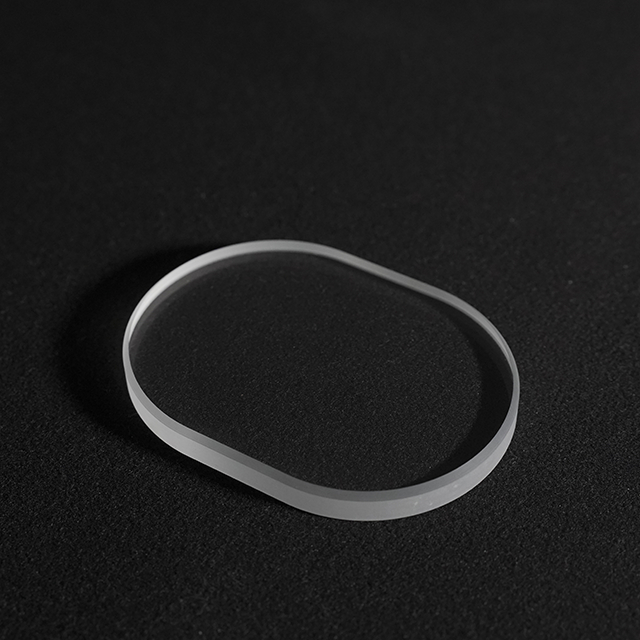
Critical Evaluation Dimensions for Heat Resistant Glass
Procurement and engineering teams need a solid evaluation framework. Assessing glass specifications requires looking far beyond just the melting point. You must analyze several intersecting performance metrics.
- Maximum Continuous Operating Temperature vs. Short-Term Excursions: You must clearly delineate between continuous thresholds and short-term spikes. Glass might survive a brief temperature spike during startup. However, prolonged exposure at that same elevated temperature will cause structural failure. Always verify what the material can handle indefinitely. Never specify a material based purely on its peak transient survival rate.
- Thermal Shock Resistance Limits: Thermal shock resistance dictates survival in volatile, unpredictable environments. This metric defines the exact temperature differential (ΔT) the material can withstand. Exceeding this ΔT leads to immediate, catastrophic fracturing. You must calculate the difference between the operating surface temperature and the cooling agent.
- Optical Clarity and Light Transmission: Optical clarity plays a surprisingly critical role in thermal efficiency. The glass enclosure directly impacts the specific wavelength output of the internal lamp. This is especially crucial for specialized IR heating systems. UV curing applications also demand precise transmission rates. The wrong material might absorb essential wavelengths. This absorption creates unwanted internal heat and reduces system efficiency.
- Thickness and Machinability: Finally, you must carefully assess thickness and machinability. The manufacturing process directly impacts how the glass integrates into existing housings. Complex machining shapes can complicate production. Thick glass requires longer annealing times. We recommend optimizing thickness to balance structural strength and thermal transfer.
Best Practice: Always consult the material’s spectral transmission curve before finalizing a specification for optical equipment.
Implementation Risks: Safety, Liability, and Compliance
Utilizing standard glass in high-heat scenarios carries severe real-world consequences. Comprehensive risk assessment should be your top priority during the initial design phase. Failing to respect thermal limits invites disaster.
Catastrophic shattering represents the most immediate physical danger to personnel. Imagine a hot lens suddenly exposed to a rapid cooling event. A simple water splash or burst of cold air causes standard glass to explode instantly. This explosive failure sends dangerous, sharp shards across the workspace. We have seen this cause serious injuries in industrial settings.
Fire hazards present another massive consumer and workplace safety issue. Agricultural heat lamps in poultry housing frequently experience catastrophic failures. Industrial curing ovens share similar risks. When shattered glass falls away, it exposes live heating elements. Combustible materials nearby can ignite within seconds. Using unreliable lamp glass drastically increases these exact risks.
Regulatory compliance strictly forbids ignoring these known dangers. Manufacturing or retrofitting lighting fixtures requires adhering to specific, stringent safety ratings. Organizations like UL (Underwriters Laboratories) and CE mandate proper material selection for thermal compliance. Non-compliance results in heavy fines. It also leads to recalled products and denied insurance claims following an incident. You cannot afford to bypass these essential certifications.
Shortlisting Framework for Industrial Procurement
Choosing the right material requires a structured, logical decision tree. Follow this step-by-step framework when evaluating high temperature glass options for your projects.
- Step 1: Define the Thermal Baseline. Calculate the absolute peak operating temperature of the internal lamp. You must also measure the ambient environment's highest potential temperature. Add a safety margin of at least 20% to your final calculations.
- Step 2: Assess Environmental Variables. Factor in potential rapid cooling events. Rain, unexpected splashes, or heavy wind create severe thermal differentials. You must also account for pressure variations if operating in sealed enclosures or high altitudes.
- Step 3: Determine Optical Requirements. Decide whether UV, visible, or IR transmission takes priority. Your specific application strictly dictates the necessary optical profile. Standard borosilicate blocks most UV light, whereas quartz transmits it freely.
- Step 4: Evaluate Long-Term Reliability. Weigh the initial investment of premium materials against frequent replacement cycles. Constant material breakdowns create unacceptable operational downtime. They also elevate safety and liability risks. Investing in superior glass early prevents endless maintenance cycles.
Decision Matrix for Heat Resistant Glass | Requirement Profile | Recommended Material | Why It Fits |
| Temp < 200°C, high impact risk | Tempered Glass | Provides safety from blunt force, handles mild heat. |
| Temp up to 450°C, splash risk | Borosilicate Glass | Low CTE prevents cracking during rapid cooling events. |
| Temp > 800°C, UV transmission | Quartz Glass | Near-zero CTE and flawless optical purity. |
We strongly advise your engineering and procurement teams to take a final preparatory action. Request material data sheets (MDS) and thermal expansion curves directly from manufacturers. Reviewing these precise technical documents prevents costly specification errors before you place bulk orders.
Conclusion
Standard glass remains an unacceptable liability for demanding thermal applications. Specific operational data must always drive your final material choice. You cannot rely on guesswork when facility safety is on the line. You must carefully choose between tempered, borosilicate, or quartz materials based on actual thermal loads and environmental stresses. Upgrading your materials prevents dangerous shattering and reduces overall downtime.
We encourage you to consult immediately with specialized glass engineers. They can expertly review your specific housing designs and thermal requirements. Always request physical samples for rigorous prototyping and stress testing in real-world conditions. Proper testing guarantees long-term reliability, optimal safety, and full regulatory compliance.
FAQ
Q: Why do incandescent light bulbs use thin glass if the filament reaches over 2000°C?
A: Incandescent bulbs operate in a vacuum or inert gas environment. The glass sits at a calculated distance from the filament. This setup provides rapid thermal dissipation into the surrounding air. The standard bulb glass never actually reaches the filament's extreme temperature. However, external lamp enclosures lack this controlled environment. They trap heat and therefore require true high temperature glass to survive.
Q: Is tempered glass the same as high temperature glass?
A: No. Tempered glass offers excellent mechanical strength and moderate heat resistance. However, it completely loses its temper at prolonged high temperatures. Once the continuous heat exceeds its threshold, it will shatter. True heat resistant glass, like borosilicate, features a chemically lower expansion rate. It handles sustained extreme temperatures safely.
Q: What is the maximum operating temperature for borosilicate lamp glass?
A: Borosilicate generally handles continuous operating temperatures around 450°C to 500°C safely. It can often survive short-term temperature spikes slightly higher than this. However, the specific maximum limits depend on the exact chemical composition. The thickness provided by the manufacturer also influences its thermal threshold. Always consult the specific material data sheet.
 English
 العربية
 Français
 Русский
 Español
 Português
 Deutsch
 italiano
 日本語
日本語 한국어
한국어 Nederlands
 Tiếng Việt
 ไทย
ไทย Polski
 Türkçe
 አማርኛ
አማርኛ ພາສາລາວ
 ភាសាខ្មែរ
 Bahasa Melayu
 ဗမာစာ
ဗမာစာ தமிழ்
தமிழ் Filipino
 Bahasa Indonesia
 magyar
 Română
 Čeština
 Монгол
 қазақ
қазақ Српски
 हिन्दी
 فارسی
فارسی Kiswahili
 Slovenčina
 Slovenščina
 Norsk
Norsk Svenska
 українська
 Ελληνικά
 Suomi
Suomi Հայերեն
 עברית
עברית Latine
 Dansk
Dansk اردو
اردو Shqip
Shqip বাংলা
বাংলা Hrvatski
 Afrikaans
 Gaeilge
 Eesti keel
 Māori
Māori


