Have you ever wondered how cameras capture the perfect image or how microscopes see details beyond the naked eye? The secret often lies in optical filters. These devices allow us to control light in powerful ways, from photography to medical imaging.
In this post, we’ll explore what optical filters are and how they work. You’ll learn about their various types and how they manipulate light for diverse applications.
Understanding the Basics of Optical Filters
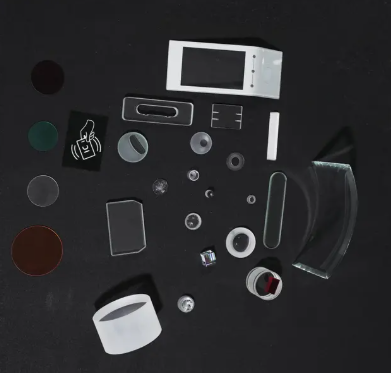
What is Light and How is It Manipulated?
Light is a form of electromagnetic radiation that travels in waves. These waves have different wavelengths, which correspond to various colors in the visible spectrum. In the world of optics, we manipulate light to achieve specific effects. The need to control light arises from the fact that certain wavelengths of light may not be suitable for particular tasks, such as photography, scientific research, or medical imaging.
For example, in photography, unwanted glare or light intensity can ruin an image. In these cases, we filter, reflect, or block certain wavelengths to improve the quality of light and achieve the desired result.
How Do Optical Filters Work?
Optical filters are devices that allow specific wavelengths of light to pass while blocking others. They achieve this through several principles: absorption, interference, and diffraction.
Absorption filters work by absorbing light at certain wavelengths and allowing the rest to pass through.
Interference filters use layers of thin films to selectively transmit certain wavelengths.
Diffraction filters manipulate light through patterns on their surface, selecting specific wavelengths by diffracting them.
Each filter type has its unique mechanism for light manipulation, making them ideal for different applications.
Types of Optical Filters
Absorption Filters
Absorption filters absorb light of specific wavelengths while allowing others to pass through. These filters are commonly used in photography for enhancing contrast and correcting color. In scientific research, they help control the light entering experimental setups, preventing interference from unwanted wavelengths.
Interference Filters
Interference filters work based on the principle of light interference. These filters are constructed with multiple thin layers, each designed to interact with light at specific wavelengths. This makes them highly efficient in applications like fluorescence microscopy, where precise wavelength control is crucial for accurate measurements.
Polarizing Filters
Polarizing filters control the polarization of light. They selectively transmit light waves that are aligned in a certain direction, blocking others. These filters are commonly used in photography to reduce glare from reflective surfaces, such as water or glass.
Bandpass Filters
Bandpass filters allow light within a specific wavelength range to pass through while blocking light outside that range. These filters are crucial in applications such as fluorescence microscopy, optical communications, and remote sensing, where isolating a specific spectral range is necessary for the analysis.
Neutral Density Filters
Neutral density (ND) filters reduce the intensity of light without affecting its color or polarization. These filters are widely used in landscape photography to allow for longer exposures in bright conditions or to control the amount of light entering a camera lens.
Color Filters
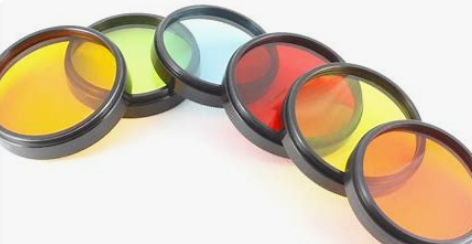
Color filters manipulate the color of light by transmitting only certain wavelengths and blocking others. These filters are frequently used in photography, stage lighting, and visual effects to enhance the visual appeal or create artistic effects.
Fluorescence Filters
Fluorescence filters are designed to work with fluorescence-based applications like microscopy and bioimaging. These filters isolate the light emitted by fluorescent substances, helping to enhance the clarity and contrast of images in fluorescence imaging systems.
Applications of Optical Filters
In Photography
Optical filters are invaluable tools in photography. They help control light intensity, reduce glare, and adjust color balance. For example:
Polarizing filters reduce glare from water, glass, and other reflective surfaces.
Neutral density filters allow photographers to use longer exposure times even in bright light, creating motion effects like soft waterfalls or blurred clouds.
In Scientific Research
In research, filters help isolate specific wavelengths of light for precise measurements. Filters are essential in techniques such as spectroscopy and microscopy, where controlling the wavelengths passing through is critical to obtaining accurate data. Researchers rely on optical filters to improve signal clarity and prevent interference.
In Medical Diagnosis
Optical filters play a crucial role in medical devices. They are used to separate specific wavelengths of light, enabling the accurate diagnosis of diseases or conditions. Ophthalmic surgeries often rely on filters to control the light during procedures, ensuring that only the necessary wavelengths reach the targeted areas.
In Industrial Testing and Fiber Optics
In industrial settings, filters help isolate specific light signals for testing and quality control. Optical filters are widely used in fiber optic communication systems, where they separate different wavelengths to ensure smooth transmission of data. Filters are also used in machine vision systems, where they help in the analysis of materials or the performance of automated processes.
The Science Behind Optical Filters: Absorption, Interference, and Diffraction
Absorption in Optical Filters
Absorption filters are made from materials that absorb light at certain wavelengths while allowing others to pass. Colored glass and dyes are commonly used to create these filters, which are often found in photography and scientific research applications. These filters are essential when it is necessary to block or reduce certain wavelengths of light without altering the overall color balance.
Interference Effects and Thin-Film Filters
Interference filters utilize multiple layers of thin films with varying refractive indices. Light waves reflecting off these layers interfere with one another, reinforcing some wavelengths and canceling out others. This effect allows for high precision in selecting specific wavelengths. These filters are widely used in applications like fluorescence microscopy, where accurate wavelength selection is crucial for clear imaging.
Diffraction and Light Manipulation
Diffraction filters manipulate light through patterns etched onto their surfaces. These filters cause light to diffract, or spread, which helps isolate specific wavelengths. High-resolution diffraction filters are especially useful in applications where precise control over light is needed, such as in spectroscopic measurements.
Conclusion
Optical filters play a vital role in controlling and manipulating light across a wide range of industries. By selectively transmitting or blocking specific wavelengths, they enable precise control over the light used in photography, scientific research, medical diagnostics, and industrial testing.
In photography, they help adjust light intensity and enhance image quality, while in scientific research, they enable accurate wavelength isolation for experiments. In medical diagnostics, they improve the clarity of imaging systems, and in industrial applications, they assist in quality control and optical communications.
Looking ahead, the future of optical filters is bright, with innovations in materials like nanotechnology, which promise to enhance filter precision, flexibility, and durability. These advancements will open doors for new applications in fields like quantum computing, photonics, and beyond, further cementing the importance of optical filters in modern technology.
FAQ
Q: What are the main types of optical filters?
A: Absorption, interference, polarizing, bandpass, neutral density, and color filters.
Q: How do interference filters work?
A: They use multi-layered thin films to selectively transmit light through constructive or destructive interference.
Q: What are optical filters used for in photography?
A: They enhance image quality by controlling glare, light intensity, and color balance.
Q: Can optical filters be customized for specific wavelengths?
A: Yes, filters can be tailored for specific wavelength ranges based on the application.
Q: How do optical filters help in fluorescence microscopy?
A: They isolate specific wavelengths of light to enhance fluorescent signal detection.
 English
 العربية
 Français
 Русский
 Español
 Português
 Deutsch
 italiano
 日本語
日本語 한국어
한국어 Nederlands
 Tiếng Việt
 ไทย
ไทย Polski
 Türkçe
 አማርኛ
አማርኛ ພາສາລາວ
 ភាសាខ្មែរ
 Bahasa Melayu
 ဗမာစာ
ဗမာစာ தமிழ்
தமிழ் Filipino
 Bahasa Indonesia
 magyar
 Română
 Čeština
 Монгол
 қазақ
қазақ Српски
 हिन्दी
 فارسی
فارسی Kiswahili
 Slovenčina
 Slovenščina
 Norsk
Norsk Svenska
 українська
 Ελληνικά
 Suomi
Suomi Հայերեն
 עברית
עברית Latine
 Dansk
Dansk اردو
اردو Shqip
Shqip বাংলা
বাংলা Hrvatski
 Afrikaans
 Gaeilge
 Eesti keel
 Māori
Māori


