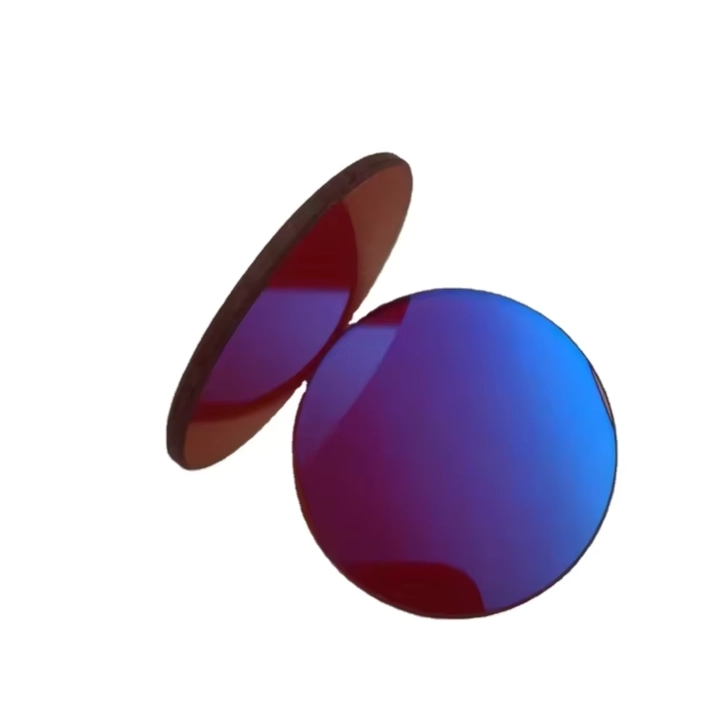
In high-energy physics, astronomy, and defense, optical failures lead to catastrophic system loss. Compromised data and hardware destruction stand as constant operational risks. You simply cannot afford physical vulnerabilities in these extreme mission-critical environments. Standard commercial off-the-shelf (COTS) thin films frequently fail under such intense pressure. They lack the capacity to meet the rigorous thermal, environmental, and threshold tolerances required by advanced modern systems. Relying on basic generic components invites unexpected degradation and massive project setbacks.
This comprehensive guide provides engineering and procurement teams a clear framework for evaluating specialized thin films for extreme-use cases. You will learn how precise layer engineering prevents failures in both deep space exploration and high-power directed energy applications. We will explore exactly how to specify your optical components. This ensures maximum durability, superior phase control, and ultimate system survivability.
Key Takeaways
Astronomy applications require custom optical coatings optimized for extreme broadbands, minimal scatter, and severe thermal cycling in space or high-altitude environments.
High-power laser systems demand coatings engineered strictly around Laser-Induced Damage Threshold (LIDT), phase control, and thermal management.
Vendor evaluation must center on in-house metrology capabilities, specific deposition technologies (e.g., IBS, IAD), and verifiable testing protocols to ensure theoretical designs match physical performance.
Engaging coating engineers during the substrate selection phase significantly reduces implementation risks, lead times, and yield issues.
Why Standard Optical Coatings Fall Short in Extreme Applications
Cost overruns and project delays frequently happen early in the development cycle. They often stem from under-specifying optical coatings during the initial design phase. Many engineering teams mistakenly treat thin films as an afterthought. They design the complex hardware first and assume standard solutions will suffice. This approach forces vendors to apply generic films onto highly specialized substrates. The resulting performance mismatches cause severe bottlenecks.
Commercial off-the-shelf (COTS) solutions have rigid performance ceilings. Standard anti-reflective (AR) and highly reflective (HR) films degrade rapidly under extreme environmental stress. They typically suffer from high absorption rates. When you expose them to intense energy or harsh climates, microscopic defects absorb heat. This absorption triggers physical deformation or complete delamination. Standard films also lack the density required to block moisture ingress effectively. Moisture shifts the spectral performance unpredictably.
You need custom engineering to bypass these severe limitations. Custom solutions allow precise control over layer thickness and material selection. Engineers tailor the deposition methods to meet your exact operational parameters. You avoid unnecessary compromises. A tailored design accounts for the specific wavelength, incidence angle, and thermal load of your system. It aligns the physical product perfectly with your theoretical models.
Common Mistake: Relying on catalog spectral curves. Catalog data represents ideal, day-one performance in a laboratory. It rarely reflects how the film behaves after six months in a high-humidity environment or a vacuum.
Evaluating Custom Optical Coatings for Astronomy and Space
Observatory and satellite optics require distinct success criteria. You must define acceptable limits for reflectance, transmittance, and longevity upfront. These components operate in hard-to-service environments. If a satellite lens degrades in orbit, you cannot simply replace it. Long-term survivability becomes the primary engineering metric.
Broadband Performance and Low-Scattering Requirements
Modern astronomy demands wide-spectrum transmission. Telescopes often capture data from the ultraviolet (UV) through the infrared (IR) spectrums simultaneously. Balancing this wide-spectrum transmission without sacrificing overall efficiency poses a major challenge. Standard materials absorb specific wavelengths, creating blind spots in your data.
You must also mitigate surface scatter. Faint-object detection relies on preserving delicate signal-to-noise ratios. Even microscopic surface roughness scatters incoming photons. This scatter introduces noise into the sensor array. To combat this, engineers utilize advanced polishing and dense film deposition techniques. These methods ensure the finished surface remains exceptionally smooth.
Environmental Durability and Thermal Cycling
Ground-based telescopes face entirely different threats compared to space-borne optics. Terrestrial observatories battle high humidity, rapid oxidation, and dust accumulation. Their coatings require robust physical durability for frequent cleaning protocols. They need exceptional resistance to moisture penetration.
Space-borne optics endure much harsher extremes. They face constant radiation exposure and bombardment by atomic oxygen. Low Earth Orbit (LEO) environments degrade standard polymers and porous films rapidly. Furthermore, satellites experience extreme temperature swings as they move in and out of orbital shadow. Thermal cycling causes standard films to crack due to expansion mismatches. You must specify custom optical coatings engineered with matched coefficients of thermal expansion. This specific pairing prevents stress-induced micro-fractures in the vacuum of space.
Scaling to Large-Format Optics
Applying thin films to large-format optics introduces severe manufacturing challenges. Primary mirrors and large-diameter lenses require massive vacuum chambers for deposition. Maintaining layer uniformity across a one-meter mirror is notoriously difficult. A thickness variation of just a few nanometers shifts the entire spectral response.
Vendors utilize planetary rotation systems and carefully tuned masking techniques to ensure uniformity. You must verify your chosen vendor actually possesses the tooling capacity to handle your specific substrate size. Scaling from a small prototype to a large primary optic rarely follows a linear path.
Engineering Coatings for High-Power Laser Systems
Directed energy and industrial lasers operate under punishing conditions. The success criteria here center entirely on system survivability, beam quality, and phase precision. A single localized failure can destroy the entire optical train.
Maximizing Laser-Induced Damage Threshold (LIDT)
LIDT dictates the maximum energy density a surface can handle before catastrophic failure. Several critical factors dictate these failure points:
Defect Density: Microscopic nodules in the film create structural weak points.
Material Absorption: Trace impurities absorb laser energy, converting it rapidly into destructive heat.
Electric Field Distribution: Poor layer design concentrates the electric field within the film layers rather than pushing it outward.
Continuous Wave (CW) and pulsed lasers have vastly different LIDT requirements. CW lasers typically cause thermal failures. The film absorbs heat over time until it melts or shatters. Pulsed lasers, particularly ultrafast femtosecond lasers, cause dielectric breakdown. The intense peak power rips electrons from their atomic orbits. Your design must specifically address your exact laser operational mode.
Managing Thermal Shift and Phase Control
Ultrafast lasers require intense phase management. When a short pulse travels through a medium, different wavelengths travel at slightly different speeds. This phenomenon spreads the pulse out in time. We call this Group Delay Dispersion (GDD). Engineers must design films that tightly control GDD. They apply specific layer structures to compress the pulse and maintain peak power.
Thermal lensing presents another major hurdle. Microscopic absorption in the coating layers heats the substrate locally. This localized heating changes the refractive index of the glass. It effectively turns a flat mirror into a weak lens. This thermal shift ruins beam quality and alignment. Utilizing extremely low-absorption materials mitigates this dangerous effect.
Narrowband Precision and Angle of Incidence (AOI)
Laser systems frequently use polarization splitters and steep-edge filters. These components demand extreme narrowband precision. Accommodating polarization splitting without performance degradation requires masterful layer design.
Furthermore, these designs are highly sensitive to the Angle of Incidence (AOI). If a beam hits a mirror at 46 degrees instead of the designed 45 degrees, the spectral performance shifts dramatically. Custom engineering accommodates your specific AOI tolerances. It widens the angular acceptance margin to simplify final system alignment.
Key Evaluation Dimensions for Custom Coating Vendors
You must align specific vendor features to your required outcomes. A brilliant theoretical design holds no value if the supplier cannot manufacture it. Auditing a supplier's capability requires looking past their marketing materials. You must evaluate how they translate a digital model into a compliant physical product.
Deposition Technology Matching
Different applications require entirely different deposition technologies. Evaluating vendor capabilities ensures you select the right tool for the job.
Deposition Technology
Key Characteristics
Best Application Match
Ion Beam Sputtering (IBS)
Highest density, lowest scatter, near-zero moisture shift. High cost.
High-power lasers (High LIDT), ultra-precise space optics.
Ion-Assisted Deposition (IAD)
Good density, moderate cost, durable against environmental shifts.
Military and defense optics, standard astronomy sensors.
Large-format telescopes in climate-controlled environments.
Metrology and Validation Capabilities
You cannot manage what you cannot measure. In-house metrology stands as a non-negotiable requirement. A vendor must possess advanced spectrophotometry to measure exact wavelength transmission. They need interferometry to map the surface figure and verify flatness after the physical deposition.
For high-performance mirrors, standard spectrophotometers fall short. They cannot accurately measure reflectances above 99.9%. In these cases, Cavity Ring-Down Spectroscopy (CRDS) becomes essential. CRDS measures parts-per-million losses. It ensures your ultra-high-reflectance designs actually perform as theorized.
Quality Assurance and Compliance
Always verify adherence to strict industry standards. ISO 9001 certification provides a baseline for consistent manufacturing processes. For defense and space applications, adherence to MIL-SPEC standards is critical. Specifications like MIL-C-48497A dictate rigorous physical testing protocols.
Vendors must provide documented environmental testing. This documentation proves the components survive severe abrasion, extreme humidity, and aggressive temperature cycling. Without this verifiable data, you operate entirely on blind trust.
Implementation Risks, Lead Times, and Scalability
Bringing advanced optical coatings from concept to mass production involves significant risk. You must actively manage the transition from digital design to physical deployment.
Substrate Compatibility Risks
The underlying substrate dictates much of the final success. The choice between glass, crystalline materials, or metal substrates impacts adhesion directly. Different materials have varying thermal expansion rates. Applying a high-stress film to a delicate crystal substrate often causes warping. This stress ruins the final surface figure.
You must ensure chemical compatibility. Certain materials react poorly to the intense heat and plasma generated during IBS deposition. Engaging engineers early prevents these critical mismatches.
Prototyping Yields vs. Production Runs
Never assume initial prototype yields will scale perfectly. Anticipating variations between initial test batches and scaled manufacturing saves immense frustration. A vendor might successfully produce five perfect lenses in a small chamber. Producing five hundred requires entirely different tooling and thermal management.
Variations in chamber geometry alter deposition angles. These small changes affect layer thickness at the edges of the production run. Always demand transparency regarding expected production yields before signing bulk orders.
Lead Time Mitigation
Supply chain delays frequently derail complex projects. Custom optical components require long lead times. Strategies for managing these delays are vital.
Order raw substrates long before finalizing the exact film layer design.
Identify specialized tooling requirements early. Custom masking fixtures often take weeks to machine.
Establish clear testing milestones to avoid rejecting an entire batch at the very end of the cycle.
Shortlisting Logic
Use strict logic when shortlisting potential vendors. Prioritize partners who offer transparent design reviews. They should willingly share their yield assumptions and potential failure points. Early-stage engineering consultation proves invaluable. Vendors who collaborate during the substrate selection phase dramatically reduce your implementation risks. They help you avoid designing unmanufacturable specifications.
Conclusion
Specifying extreme-environment optics is fundamentally an exercise in risk mitigation. Standard generic solutions invite failure when pushed beyond their modest limits. Custom engineering ensures your systems survive extreme thermal cycling, intense laser energy, and harsh vacuums. It represents a critical investment in long-term operational savings for complex projects.
Your next steps require active engagement. Initiate a technical dialogue with your shortlisted vendors immediately. Start by providing comprehensive substrate specifications and detailed operational environment data. Define your preliminary metrology requirements upfront. By addressing these variables early, you guarantee optical performance that meets the exact demands of your most critical missions.
FAQ
Q: How is LIDT tested and verified for custom optical coatings?
A: LIDT verification relies on standardized testing protocols like ISO 21254. Technicians subject the coated surface to controlled laser pulses, gradually increasing the energy density until microscopic damage occurs. It is crucial to perform these tests on identical witness substrates. Testing on a different glass type skews the thermal and electric field data, rendering the LIDT certification completely inaccurate.
Q: What is the typical lead time for a custom coating run?
A: Realistic timelines vary significantly based on complexity. Standard custom runs utilizing existing tooling often complete within four to six weeks. However, complex Ion Beam Sputtering (IBS) processes requiring bespoke masking fixtures and custom substrate fabrication frequently stretch lead times to several months. Always factor material procurement into your schedule.
Q: Can custom coatings correct surface figure errors on the substrate?
A: No. Thin films generally conform exactly to the underlying substrate geometry. They cannot fix poor underlying polish or existing surface aberrations. In fact, highly stressed films can actually worsen surface figure errors by introducing mechanical bowing. You must ensure the raw substrate meets all precision requirements before the deposition process begins.
Q: Why do coatings perform differently in space than in the laboratory?
A: Standard porous films absorb moisture from the ambient laboratory air. This moisture changes the refractive index of the layers. When deployed into a vacuum, the moisture rapidly outgasses. This outgassing shifts the spectral transmission curve unexpectedly. Custom designs utilize dense deposition methods or pre-compensate the design mathematically to account for this inevitable vacuum shift.
 English
 العربية
 Français
 Русский
 Español
 Português
 Deutsch
 italiano
 日本語
日本語 한국어
한국어 Nederlands
 Tiếng Việt
 ไทย
ไทย Polski
 Türkçe
 አማርኛ
አማርኛ ພາສາລາວ
 ភាសាខ្មែរ
 Bahasa Melayu
 ဗမာစာ
ဗမာစာ தமிழ்
தமிழ் Filipino
 Bahasa Indonesia
 magyar
 Română
 Čeština
 Монгол
 қазақ
қазақ Српски
 हिन्दी
 فارسی
فارسی Kiswahili
 Slovenčina
 Slovenščina
 Norsk
Norsk Svenska
 українська
 Ελληνικά
 Suomi
Suomi Հայերեն
 עברית
עברית Latine
 Dansk
Dansk اردو
اردو Shqip
Shqip বাংলা
বাংলা Hrvatski
 Afrikaans
 Gaeilge
 Eesti keel
 Māori
Māori