Traditional multi-layer dielectric coatings require exceptionally thick stacks to achieve high quality-factor (Q-factor) resonances. These bulky physical profiles create severe structural and thermal limitations for modern miniaturized photonic devices. As consumer electronics and aerospace instruments shrink, engineers desperately need thinner alternatives. Fano-resonant mechanisms provide a compelling solution. They enable asymmetric, highly sensitive spectral responses utilizing only a fraction of the traditional physical thickness. This transition moves exciting academic theory directly into commercial viability.
We designed this article to provide technical directors and optical engineers a clear, evidence-based framework. You will learn how to evaluate, specify, and confidently adopt Fano-resonant technologies over conventional optical coatings. We will cover the core theoretical foundations, experimental realization pathways, and critical scaling risks. By understanding these parameters, you can make informed design choices for next-generation optical systems.
Key Takeaways
Mechanism advantage: Fano resonances leverage interference between broad continuum and narrow discrete states, yielding sharper spectral profiles than traditional Fabry-Perot cavities.
Physical realization: Advancements in nanofabrication have moved fano-resonant ultrathin film optical coatings from simulated models to viable physical prototypes utilizing dielectric metasurfaces.
Evaluation criteria: Commercial viability depends on balancing high Q-factor demands with the stringent manufacturing tolerances required for scalable lithography and deposition.
Implementation reality: Adoption requires mitigating risks related to incident angle sensitivity and localized defect vulnerabilities during wafer-scale production.
Framing the Engineering Problem: Limitations of Conventional Optical Coatings
The Thickness-to-Performance Tradeoff
Engineers have long relied on Bragg reflectors and anti-reflective stacks for spectral control. These legacy solutions depend on quarter-wave thickness accumulations. To achieve a narrow reflection band, you must deposit dozens of alternating high and low refractive index layers. This creates a massive physical footprint. Such bulk restricts integration in micro-optics, augmented reality wearables, and compact biosensors. The physical volume directly limits how small you can design your final optical payload.
Thermal and Mechanical Stress
Thick multi-layer architectures introduce significant interfacial thermal stress. Different deposition materials possess unique coefficients of thermal expansion. When subjected to rapid temperature fluctuations, these layers expand and contract at different rates. Over time, this induces micro-fractures or total delamination. Durability becomes a severe issue in high-power laser environments or harsh aerospace applications. Reducing total layer count directly minimizes these mechanical failure points.
The Need for Asymmetric Line Shapes
Conventional thin-film interference generates symmetrical Lorentzian spectral profiles. A symmetrical line shape has a gradual slope. Gradual slopes fail to provide extreme sensitivity. Advanced refractive index sensing requires rapid transitions from transmission to reflection. Nonlinear optical switching demands sharp thresholds. Symmetrical profiles simply cannot support the ultra-sensitive trigger points necessary for these emerging photonic applications.
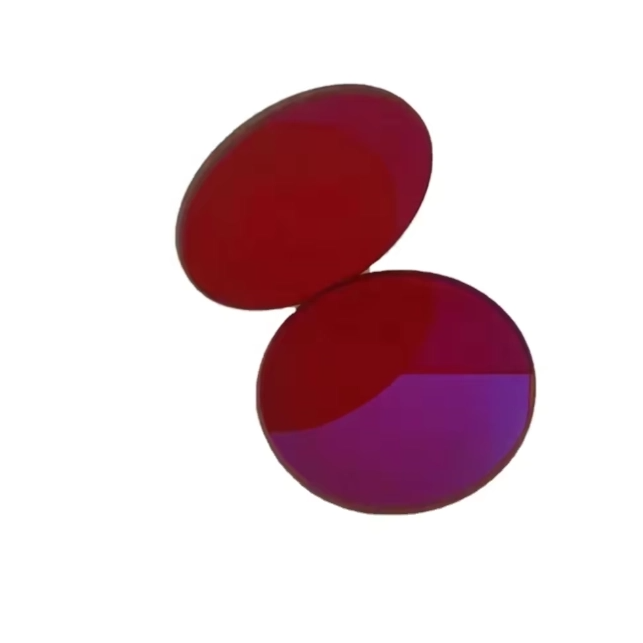
Theoretical Foundations: The Fano Resonance Model
Interference Mechanisms
Fano resonance relies on a unique quantum and electromagnetic interference phenomenon. It occurs when a discrete localized state (a dark mode) interferes destructively with a continuous background state (a bright mode). Unlike standard Fabry-Perot cavities, this interaction produces a steep, asymmetric spectral profile. The destructive interference cancels out the continuous wave at a specific frequency. This creates an incredibly sharp dip or peak in the transmission spectrum. We can harness this physics to engineer precise optical filters.
Predictive Modeling Parameters
Optical engineers utilize two primary parameters to shape these resonant profiles:
Asymmetry Parameter (q): The q parameter dictates the geometric shape of the transmission curve. Tuning q allows you to control the exact steepness of the reflection dip. When q approaches zero, the profile exhibits maximum asymmetry.
Coupling Strength: This defines the interaction intensity between the bright and dark modes. Near-field coupling strength directly determines the resonance bandwidth. Adjusting this variable sets the operational depth of the optical response.
Theoretical Ceilings vs. Practical Limits
Idealized electromagnetic simulations often project near-infinite Q-factors. Tools like Finite Difference Time Domain (FDTD) or Rigorous Coupled-Wave Analysis (RCWA) assume perfect materials. Real-world applications face immediate physical constraints. Material absorption causes ohmic losses. Surface roughness scatters light unexpectedly. We must acknowledge this gap when specifying theoretical designs. Below is a summary chart comparing idealized models against realistic fabrication outcomes.
Parameter | Idealized Simulation (FDTD) | Practical Realization |
Q-Factor | > 10,000 | 500 - 2,500 (Loss-limited) |
Absorption Loss | 0% (Assumed lossless) | Material dependent (often > 2%) |
Surface Roughness | Perfectly smooth boundaries | 1-3 nm RMS roughness scattering |
Experimental Realization of Fano-Resonant Ultrathin Film Optical Coatings
Material Selection Strategies
Choosing the correct foundational material dictates overall efficiency. Early prototypes utilized plasmonic metals like gold and silver. These metals support strong localized surface plasmons. However, they suffer from high ohmic losses in the visible spectrum. These losses broaden the resonance linewidth. Today, the industry heavily favors high-index all-dielectric materials. Silicon and Titanium Dioxide drastically minimize absorption. They enable sharper resonances in both visible and near-infrared spectra.
Material Class | Typical Materials | Primary Advantage | Primary Limitation |
Plasmonic Metals | Gold (Au), Silver (Ag) | Strong near-field enhancement | High ohmic losses dampen Q-factor |
All-Dielectric | Silicon (Si), Titanium Dioxide (TiO2) | Negligible absorption losses | Requires precise high-aspect-ratio etching |
Nanostructural Architectures
Realizing these resonances requires highly engineered surface topologies. We categorize these into two dominant architectural approaches.
Symmetry-Broken Metasurfaces: Perfect symmetry traps dark modes entirely. Introducing deliberate structural asymmetries excites these otherwise inaccessible modes. Engineers use split-ring resonators or asymmetric nanoholes. This intentional flaw couples free-space light into the trapped resonant state.
Guided-Mode Resonances (GMR): This approach utilizes subwavelength gratings coupled directly to a waveguide layer. Incident light diffracts into the waveguide. It propagates briefly before coupling back out into free space. This delayed interference creates a pronounced Fano line shape.
Fabrication Methodologies
Producing fano-resonant ultrathin film optical coatings requires nanometer precision. Academic labs rely on Electron Beam Lithography (EBL). EBL offers unmatched resolution for prototyping. Unfortunately, it processes far too slowly for commercial volume. Scalable enterprise approaches now utilize Nanoimprint Lithography (NIL) and CMOS-compatible deep-UV lithography. These methods stamp or project complex metasurfaces across 300mm wafers rapidly. They bridge the gap between boutique research and mass deployment.
Evaluation Framework: Specifying Fano-Resonant Coatings
Optical Performance Metrics
Proper evaluation requires shifting your metric focus. Do not look solely at absolute reflectivity. Instead, evaluate the Spectral Contrast Ratio. This measures the steepness between the transmission peak and the resonant dip. A higher contrast ratio yields better sensor resolution. Next, calculate the Q-Factor vs. Footprint. Evaluate the specific Q-factor achieved per nanometer of coating thickness. This specific metric proves the value of Fano-resonant structures against legacy optical filters.
Environmental & Operational Stability
Optical performance must endure operational realities. Assess performance drift under varying ambient conditions. Temperature fluctuations shift the refractive index of dielectric materials (thermo-optic effect). Humidity introduces water absorption in nanostructure crevices. Both variables can detune the delicate resonance frequency. Furthermore, continuous wave (CW) laser irradiation can cause localized heating. You must specify rigorous environmental stress testing before integrating these thin films into mission-critical hardware.
Implementation Risks and Scaling Considerations
Manufacturing Tolerances
Fano resonances are incredibly fragile phenomena. They exhibit a critical vulnerability to nanometer-scale structural deviations. Tight critical dimension (CD) control is strictly mandatory. If a nano-hole diameter varies by just three nanometers, the entire resonance wavelength shifts. Edge roughness broadens the spectral response. You must mandate high-fidelity scanning electron microscope (SEM) metrology during production. Acceptable tolerances often sit well below standard commercial optical limits.
Angular Sensitivity Limitations
Subwavelength structures present inherent angular challenges. The phase matching required for Fano resonance depends strictly on the incident light angle. If illumination deviates even a few degrees from the surface normal, the resonance splits or disappears. You must establish firm boundary conditions for acceptable numerical apertures (NA). These coatings perform exceptionally well in collimated laser setups. They struggle significantly in highly uncollimated, high-NA illumination systems.
Integration with Existing Optical Trains
Applying these coatings seamlessly into existing hardware requires careful substrate matching. Managing index contrasts between the metasurface and the carrier lens is critical. Index mismatching causes unwanted broad Fabry-Perot fringes. Additionally, applying precise symmetry-broken nanostructures to highly curved surfaces remains notoriously difficult. Current lithographic focal depths favor flat wafers. Integrating these nanostructures onto steep convex lenses or existing optical fiber facets requires specialized, non-planar fabrication techniques.
Conclusion and Next Steps
Fano-resonant nanostructures represent a mature, highly advantageous technology for specific high-value applications. They dominate in refractive index biosensing, ultra-compact optical modulators, and narrow-band filtering. However, they are not a universal replacement for all macroscopic optical coatings. Their angular sensitivity restricts broad consumer adoption in standard imaging optics.
We recommend a strict shortlisting logic. You should prioritize adoption if your system constraints dictate ultra-low physical thickness alongside high spectral sensitivity. If you require standard broad-band anti-reflection, stick to legacy multi-layer stacks.
Your next immediate action should be initiating a proof-of-concept (PoC) phase. Partner with a specialized nano-optics foundry. Utilize standard CMOS-compatible materials like Silicon Nitride or Titanium Dioxide. Validate the spectral performance and incident angle dependencies on a flat substrate before committing to full-scale custom fabrication.
Frequently Asked Questions (FAQ)
Q: How do Fano-resonant optical coatings compare to traditional Bragg mirrors in terms of thickness?
A: Fano structures typically utilize single-layer or bi-layer subwavelength architectures. Their total physical footprint usually remains under 500 nanometers. In stark contrast, traditional Bragg mirrors require dozens of alternating high and low index layers. Bragg stacks often measure several microns thick to achieve comparable reflection metrics.
Q: Can fano-resonant ultrathin film optical coatings be applied to curved optical surfaces?
A: Current lithographic tooling severely limits this application. Flat wafer-scale integration is highly mature and scalable. However, projecting precise symmetry-broken nanostructures onto highly curved lenses throws the lithography out of focus. Applying these films to high-NA spherical optics remains an active, difficult experimental challenge.
Q: What are the primary applications ready for commercial deployment today?
A: The most viable immediate use cases exist at the bottom of the funnel. Commercial deployments excel in refractive index biosensors, ultra-compact optical modulators, and narrow-band spectral filters. Integrated silicon photonics heavily leverage these structures to miniaturize active communication components.
Q: How sensitive are these coatings to manufacturing defects?
A: They are extremely sensitive. Because the resonance relies on precise phase matching and structural symmetry breaking, minor defects cause massive failures. Slight edge-roughness or minor critical dimension (CD) variations will significantly degrade the Q-factor. You must employ rigorous high-fidelity metrology during production to ensure yield.
 English
 العربية
 Français
 Русский
 Español
 Português
 Deutsch
 italiano
 日本語
日本語 한국어
한국어 Nederlands
 Tiếng Việt
 ไทย
ไทย Polski
 Türkçe
 አማርኛ
አማርኛ ພາສາລາວ
 ភាសាខ្មែរ
 Bahasa Melayu
 ဗမာစာ
ဗမာစာ தமிழ்
தமிழ் Filipino
 Bahasa Indonesia
 magyar
 Română
 Čeština
 Монгол
 қазақ
қазақ Српски
 हिन्दी
 فارسی
فارسی Kiswahili
 Slovenčina
 Slovenščina
 Norsk
Norsk Svenska
 українська
 Ελληνικά
 Suomi
Suomi Հայերեն
 עברית
עברית Latine
 Dansk
Dansk اردو
اردو Shqip
Shqip বাংলা
বাংলা Hrvatski
 Afrikaans
 Gaeilge
 Eesti keel
 Māori
Māori


