Optical coatings are key to advancing modern R&D, influencing how light interacts with materials. As technology evolves, custom optical coatings are becoming essential to meet specific project needs. These coatings offer significant advantages over standard options, ensuring precise performance in complex applications.
In this article, we'll explore the role of custom optical coatings in various industries, including medical imaging and aerospace. You'll learn how they enhance system functionality, durability, and efficiency, pushing technological boundaries.
Key Takeaways
Optimized Performance: Custom optical coatings provide tailored solutions that off-the-shelf products cannot meet, enhancing performance for specialized research applications.
Flexibility and Innovation: Custom coatings allow for flexibility in design, solving complex technical problems and enabling integration with emerging technologies.
Scalability: These coatings are cost-effective for both small-scale prototyping and large-scale manufacturing, ensuring reliability throughout the R&D process.
Key Industries: Custom coatings benefit industries like medical imaging, aerospace, environmental monitoring, and autonomous vehicles, improving precision and functionality.
Choosing the Right Supplier: Selecting an experienced supplier is crucial to ensure quality, reliability, and expertise in delivering the best custom optical coatings for R&D.
Understanding Optical Coatings and Their Importance in R&D
What Are Optical Coatings?
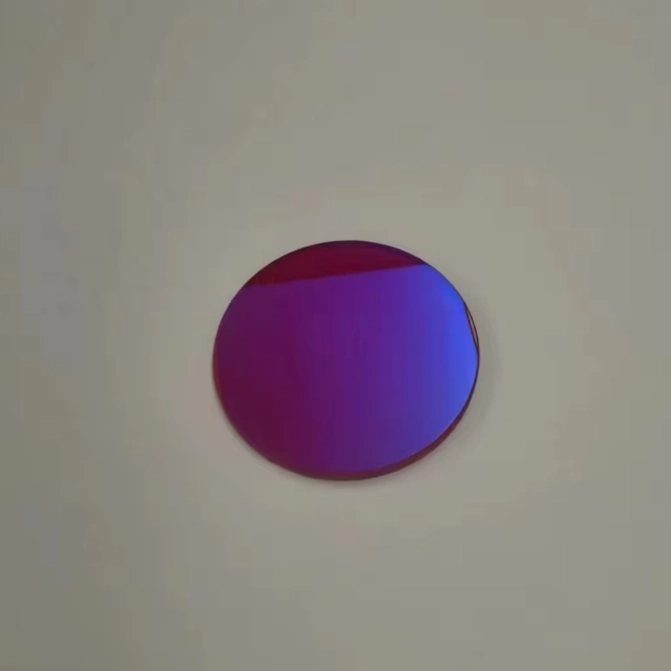
Optical coatings are ultra-thin layers of material applied to optical surfaces to modify how light interacts with them. These coatings, typically ranging from a few nanometers to several micrometers in thickness, can reflect, transmit, or absorb specific wavelengths of light. Their primary purpose is to optimize the optical performance of lenses, mirrors, filters, and other components.
Custom optical coatings go a step further by tailoring these properties to meet the unique requirements of a given R&D project. Whether it's enhancing light transmission or reducing unwanted reflections, custom coatings are designed to provide solutions that standard coatings cannot.
Types of Optical Coatings
Optical coatings come in various types, each serving a specific purpose:
| Type of Coating | Purpose | Common Applications |
| Anti-Reflective (AR) | Minimize surface reflections and enhance transmission | Camera lenses, eyeglasses, optical fibers |
| Dielectric | Control transmission and reflection using alternating layers | High-performance optics, lasers, telescopes |
| Metallic | Provide high reflectivity for mirrors | Telescope mirrors, laser systems |
These coatings can be applied to glass, plastics, and even polymers, depending on the material requirements of the project.
Why Standard Coatings Often Fall Short
Standard optical coatings are designed for general purposes and may not meet the specific demands of high-performance research. Off-the-shelf coatings typically come with predefined properties that are not customizable, limiting their effectiveness in specialized R&D applications. For instance, coatings designed for consumer electronics may not have the durability required for space research or medical imaging systems.
Tip: Custom optical coatings are essential when standard solutions fail to meet the unique needs of specialized R&D applications.
Tailored Performance for Specialized Applications
Optimized Light Transmission
In R&D, optimizing light transmission is crucial, especially in fields like spectroscopy and microscopy, where even slight variations in light intensity can affect results. Custom coatings can be engineered to enhance the transmission of specific wavelengths, ensuring that the optical system delivers the desired performance.
For example, in medical imaging systems, custom coatings can be designed to transmit particular wavelengths of light while blocking others, improving the clarity of the images.
Enhanced Durability and Reliability
In research, optical components often face harsh environmental conditions, from extreme temperatures to high humidity and radiation exposure. Custom optical coatings are designed to withstand these conditions, ensuring long-lasting reliability. Whether used in space telescopes or deep-sea exploration instruments, custom coatings can protect the substrates from physical damage and environmental stressors.
| Environmental Factor | Impact on Optical Components | Custom Coating Solution |
| Extreme Temperature | Can cause material degradation | Temperature-resistant coatings |
| Radiation Exposure | Can affect light transmission | Radiation-hardened coatings |
| Humidity | Leads to corrosion or fogging | Moisture-resistant coatings |
For example, coatings on aerospace components need to be durable enough to handle the harsh conditions of outer space, including temperature extremes and exposure to cosmic radiation.
Fine-Tuned Wavelength Control
Wavelength control is critical in various scientific instruments such as spectrometers, which analyze the composition of materials. Custom coatings can be fine-tuned to allow the precise transmission or reflection of specific wavelengths of light, enabling more accurate data collection and analysis. This level of customization is essential in fields like spectroscopy and environmental monitoring, where precision is key.
Custom coatings enable precise wavelength control, improving the accuracy of instruments used in scientific research and diagnostics.
Flexibility in Design and Innovation
Customization to Meet Unique R&D Needs
One of the most significant advantages of custom optical coatings is their ability to adapt to unique and evolving R&D requirements. Engineers and researchers can collaborate with coating suppliers to design solutions that meet the exact specifications of their projects. This flexibility ensures that optical components function optimally, even in highly specialized applications.
For example, the growing field of augmented reality (AR) and virtual reality (VR) requires custom coatings that reduce glare and enhance light transmission to create a more immersive experience. Such specialized needs would be challenging to meet with off-the-shelf coatings.
Problem-Solving Capabilities
Custom optical coatings are designed to solve specific technical problems. For instance, in medical imaging, researchers may need coatings that reduce distortion or enhance contrast to better visualize certain tissues or structures. Similarly, in aerospace, coatings are designed to handle the high reflectivity of space-based systems, ensuring that optical instruments perform at their best.
Integration with Emerging Technologies
As new technologies like quantum computing, autonomous vehicles, and 5G networks evolve, custom optical coatings are becoming essential. These technologies often require high-performance coatings that can support their advanced features. For example, autonomous vehicles rely on LIDAR systems, which use lasers and optical sensors. Custom coatings ensure that these systems can accurately detect objects and navigate in real-time.
Custom optical coatings are critical for integrating emerging technologies, allowing researchers and developers to keep pace with technological advancements.
Scalability: From Prototyping to Mass Production
Cost-Effective Solutions for Small-Scale and Large-Scale Needs
Custom optical coatings are not just beneficial for small-scale prototypes but also for large-scale manufacturing. During the early stages of product development, custom coatings can be used in low volumes for experimentation and testing. Once the design is finalized, the coating process can be scaled up for mass production, ensuring cost-effectiveness at every stage of the project.
For instance, in the development of satellite imaging systems, custom coatings are initially tested in small quantities before being scaled to meet the demands of mass production.
Adapting to Changing Research Requirements
As R&D projects progress, requirements may change. Custom coatings are flexible enough to adapt to evolving needs. Whether adjusting the properties of coatings or changing the materials used, custom solutions can be re-engineered to meet the new specifications of a project, ensuring continuous alignment with research goals.
Custom optical coatings offer scalability and flexibility, enabling cost-effective solutions from prototype to mass production.
Key Industries Benefiting from Custom Optical Coatings
Medical Imaging
Custom optical coatings are essential in medical imaging devices, where high precision and clarity are required. For example, in optical coherence tomography (OCT), custom coatings ensure that the light beam is optimized for capturing detailed images of internal tissues. Similarly, endoscopes and other imaging tools benefit from coatings that enhance image quality and light transmission, aiding in accurate diagnostics.
Aerospace and Satellite Imaging
In aerospace and satellite imaging, custom optical coatings are used to enhance the performance of lenses and mirrors, enabling clearer and more detailed images of distant celestial bodies. For instance, the Hubble Space Telescope employs custom coatings to achieve the high resolution needed for space exploration.
Environmental and Earth Observation
Custom optical coatings are crucial in environmental monitoring, where satellite imaging systems use specific coatings to detect subtle changes in the environment, such as shifts in vegetation or land use. These coatings allow satellites to capture precise data, which is essential for climate change studies and other environmental research.
Automotive and Autonomous Vehicles
As autonomous vehicles become more common, custom optical coatings are essential in the development of optical sensors and cameras used in LIDAR systems. These coatings ensure that the sensors work at peak efficiency, providing real-time, high-resolution data to guide autonomous driving systems.
Custom optical coatings enhance the performance of critical components in industries like medical imaging, aerospace, and automotive, ensuring high precision and reliability.
Choosing the Right Supplier for Custom Optical Coatings
Expert Consultation and Collaboration
Selecting the right supplier is crucial when working with custom optical coatings. It's essential to partner with companies that offer expert consultation and have experience in providing coatings tailored to specific R&D needs. The supplier should collaborate closely with researchers to understand their unique challenges and provide innovative solutions.
Quality Assurance and Rigorous Testing
To ensure the reliability and effectiveness of custom optical coatings, thorough quality assurance and testing are essential. Coatings must be tested for performance, durability, and environmental resistance, ensuring they meet the required standards and specifications for the project.
| Test Type | Purpose | Action |
| Environmental Testing | Ensure coatings withstand harsh conditions | Perform temperature, humidity, and UV exposure tests |
| Performance Testing | Verify optical efficiency and durability | Use optical metrology tools to assess performance |
Track Record and Experience
Experience matters when selecting a supplier for custom optical coatings. Choose a supplier with a proven track record in delivering high-precision coatings for R&D projects. A reputable supplier will have the expertise to handle complex projects and deliver reliable results.
Collaborate with experienced suppliers who offer expert advice and ensure rigorous testing to meet your project's custom optical coating needs.
Conclusion
Custom optical coatings are vital in modern R&D, providing tailored solutions that improve the performance, durability, and functionality of optical systems. These coatings are crucial in fields like medical imaging and aerospace research, where precision is key. They enable the development of advanced scientific instruments and support emerging technologies. By partnering with experienced suppliers like TAIYU OPTICAL GLASS, researchers can fully unlock the potential of custom optical coatings. TAIYU OPTICAL GLASS offers high-quality coatings that drive innovation and push the boundaries of R&D, delivering exceptional value in critical applications.
FAQ
Q: What are optical coatings, and why are they important in R&D?
A: Optical coatings are thin layers applied to optical surfaces to enhance light interaction. They are crucial in R&D for improving system performance, durability, and precision, particularly in medical imaging, aerospace, and emerging technologies.
Q: How do custom optical coatings differ from standard coatings?
A: Custom optical coatings are tailored to meet specific project needs, offering optimized performance for specialized applications. Unlike standard coatings, they provide more flexibility, durability, and precision, especially for advanced research.
Q: What are the benefits of custom optical coatings in research and development?
A: Custom optical coatings enhance light transmission, improve durability, and provide wavelength control, enabling more accurate and reliable results in research applications, from medical imaging to space exploration.
Q: Are custom optical coatings cost-effective for large-scale R&D projects?
A: Yes, custom optical coatings are cost-effective for both small-scale prototyping and large-scale production. They ensure optimal performance, reducing long-term costs in critical research and development phases.
Q: How do optical coatings impact emerging technologies like AR and autonomous vehicles?
A: Optical coatings are essential for emerging technologies, such as AR and autonomous vehicles, where they improve sensor efficiency, reduce glare, and enhance image quality, enabling more precise and reliable operation.
 English
 العربية
 Français
 Русский
 Español
 Português
 Deutsch
 italiano
 日本語
日本語 한국어
한국어 Nederlands
 Tiếng Việt
 ไทย
ไทย Polski
 Türkçe
 አማርኛ
አማርኛ ພາສາລາວ
 ភាសាខ្មែរ
 Bahasa Melayu
 ဗမာစာ
ဗမာစာ தமிழ்
தமிழ் Filipino
 Bahasa Indonesia
 magyar
 Română
 Čeština
 Монгол
 қазақ
қазақ Српски
 हिन्दी
 فارسی
فارسی Kiswahili
 Slovenčina
 Slovenščina
 Norsk
Norsk Svenska
 українська
 Ελληνικά
 Suomi
Suomi Հայերեն
 עברית
עברית Latine
 Dansk
Dansk اردو
اردو Shqip
Shqip বাংলা
বাংলা Hrvatski
 Afrikaans
 Gaeilge
 Eesti keel
 Māori
Māori


